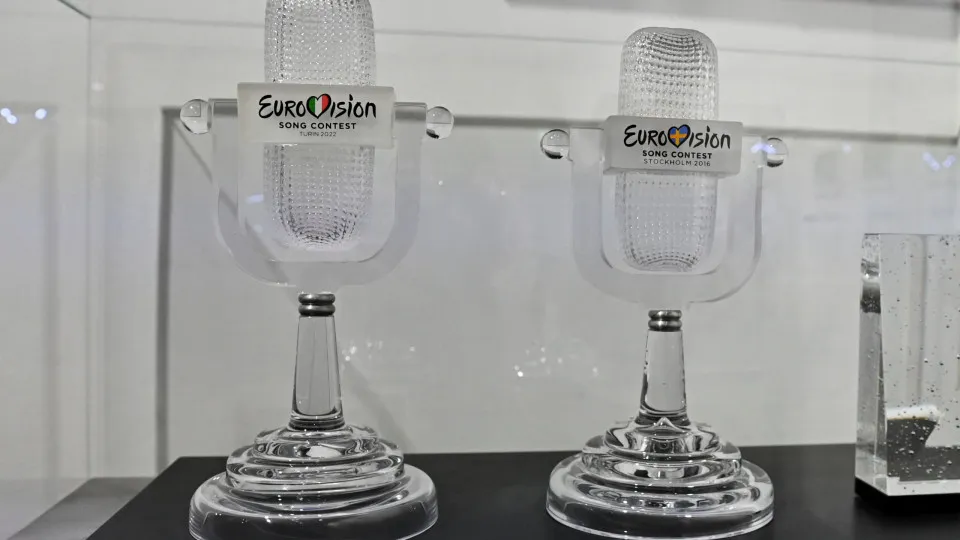
The European Broadcasting Union (EBU) announced significant updates to the Eurovision Song Contest voting framework to enhance trust, transparency, and public engagement in the event.
“The changes follow an extensive consultation process with EBU members [including RTP] after the 2025 Festival,” stated the organization.
For the 2026 edition, the maximum number of votes each viewer can cast (online, via SMS, or phone call) will be reduced from twenty to ten.
The semifinals will be judged by professional juries, a practice not seen since 2022. Both semifinals and finals will feature approximately a 50/50 split between jury and public votes.
Juries will now include seven members, up from five, and must represent a diverse range of professional experiences related to music and the arts. They will be required to sign a commitment to impartiality.
“Each jury will include at least two jurors aged between 18 and 25,” noted the EBU.
The EBU further emphasized in a statement that participating broadcasters and artists “are not allowed to actively participate in, facilitate, or contribute to third-party promotional campaigns that could influence the voting outcome.”
“Any attempt to unduly influence the results will be sanctioned,” it warned.
These measures arrive amid controversies over the voting system, notably involving Israel.
Several European countries, including Slovenia, Spain, Ireland, Iceland, and the Netherlands, have considered boycotting the 2026 edition, which will take place in Vienna, should Israel participate.
In the Netherlands, public broadcasting association Avrotros accused Israel of “proven interference during the last edition, involving political manipulation of the event,” referring to Israeli singer Yuval Raphael’s second-place finish via televote in this year’s contest.
Avrotros also cited “severe violations of press freedom” by Israel in Gaza as a reason for their stance.
Belgium, Sweden, and Finland have also expressed reservations about participating. The proposed boycotts are linked to Israel’s military actions in the Palestinian territory of Gaza over the past two years, which a United Nations independent international commission has classified as genocide.
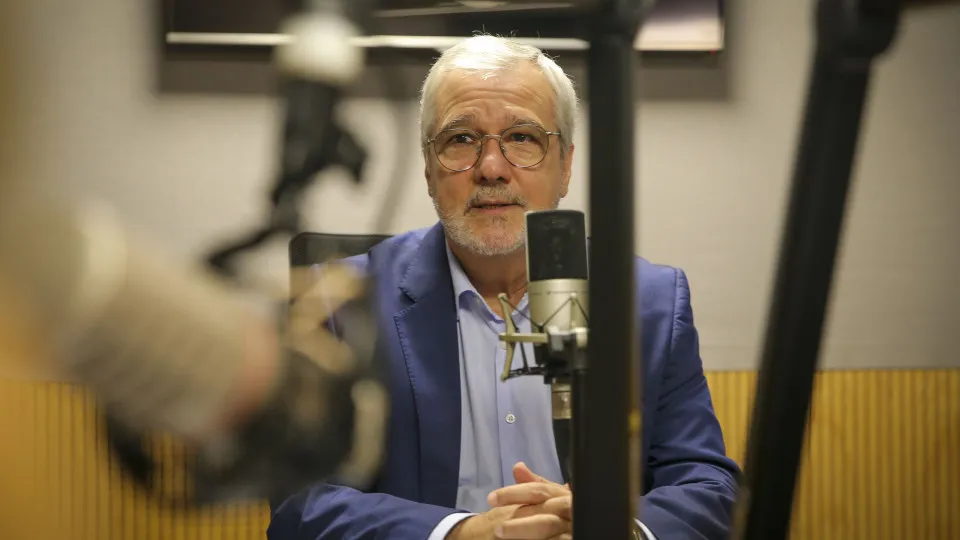
At a press conference on Tuesday, Roland Weissmann, Director General of Austria’s public broadcaster ORF, said, “The time has come for diplomacy” to ensure Eurovision 2026 proceeds smoothly.
Weissmann expressed hope for a resolution by December regarding Israel’s participation, aiming to host “the greatest number of participants” in Austria.
The European Broadcasting Union will reach a decision at a general winter assembly scheduled for December 4th and 5th.
The 70th Eurovision Song Contest final is set for May 16th, preceded by two semifinals on May 12th and 14th.
The Eurovision Song Contest is organized by the EBU in collaboration with public broadcasters from over 35 countries, including RTP.
The competition has been held annually since 1956, with instances of countries being excluded, such as Belarus in 2021 after President Aleksandr Lukashenko’s re-election, and Russia in 2022 following the invasion of Ukraine.
Israel was the first non-European country allowed to participate in 1973 and has won four times.
Austria claimed victory in the 69th Eurovision Song Contest held last May in Basel, Switzerland, with the song “Starmania” performed by JJ. Portuguese representatives, NAPA, finished in 21st place with the song “Deslocado.”
Portugal first joined Eurovision in 1964 but missed five editions (in 1970, 2000, 2002, 2013, and 2016).
Portugal won the contest for the first and only time in 2017 with the song “Amar pelos dois,” composed by Luísa Sobral and performed by Salvador Sobral.