
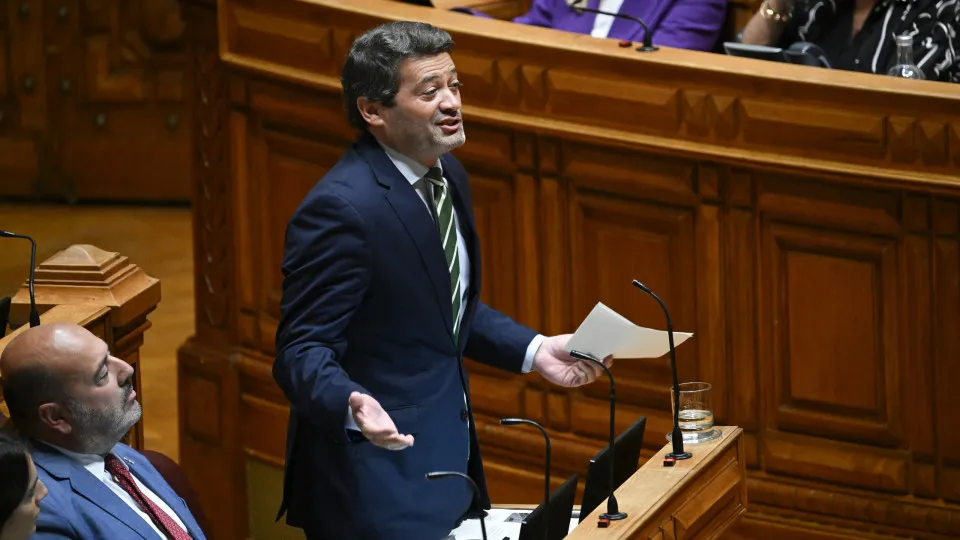
The party led by André Ventura has experienced growth in legislative elections since 2019, the year it was officially recognized by the Constitutional Court and participated in elections for the first time. Within a few months of its formation, Chega entered the parliament, with its leader elected as the sole deputy, garnering over 67,000 votes.
In 2022, Chega rose to become the third political force and managed to form a parliamentary group of 12 deputies. In the 2024 legislative elections, the party maintained its position as the third political force but reinforced its parliamentary group with the election of 50 deputies.
In the most recent legislative elections on May 18, the party led by André Ventura became the second-largest force in the Portuguese parliament, with 60 seats secured.
However, the party trailed the PS in both the number and percentage of votes, with 1,438,000 votes, while the socialists achieved 1,442,000 votes and secured 58 seats.
On election night, when Chega was the most voted in various constituencies, Ventura described the result as a “great victory” and proclaimed the end of bipartisanship.
André Ventura, who during the campaign urged the Portuguese to give him “an opportunity” to govern, stated he would not “stop until becoming the Prime Minister of Portugal.”
In 2024, after expressing readiness to reach the peak of the political hierarchy, Ventura warned the Prime Minister: “Luís, we are coming after you.”
In this legislature, the Chega parliamentary group has been embroiled in controversies, with accusations of insults or complaints, such as those against Deputy Filipe Melo, who two PS deputies accused of blowing kisses from the Assembly table or shouting “go back to your land.”
The early legislative elections on May 18 were called by the President of the Republic, Marcelo Rebelo de Sousa, following the resignation of the first PSD/CDS-PP Government led by Luís Montenegro imposed by the rejection of the motion of confidence in the executive by parliament on March 11.
This motion was justified by the need for “political clarification” after weeks of doubts concerning Luís Montenegro’s personal and asset life and the family business Spinumviva, prompting two motions of censure against the Government by Chega and PCP, both rejected, and a PS proposal for a mandatory inquiry into the case.
A day after the resignation, the Public Prosecutor’s Office launched a preventive investigation based on three complaints to assess whether there are grounds to open an inquiry, which is still ongoing.
In the elections, the AD coalition (PSD/CDS-PP) secured a victory, gaining votes and increasing the number of deputies supporting the Government from 80 to 91 (89 from PSD and 2 from CDS-PP), widening the parliamentary gap between the second political force, Chega, with 60 seats.
“The Portuguese people want this Government and no other. The people want this Prime Minister and no other,” stated Montenegro on election night.
That same night, after losing 20 deputies and becoming the third-largest parliamentary force, PS Secretary-General Pedro Nuno Santos resigned, succeeded by José Luís Carneiro, the sole candidate for the direct elections at the end of June.
In these elections, the IL remained the fourth political force, but increased its parliamentary group from eight to nine deputies.
Libre was the only left-wing party to see an increase, moving from four to six deputies, while the PCP fell from four to three, BE from five to one, PAN maintained its sole deputy, and JPP made its debut in the national parliament with one representative.
At the end of May, IL President Rui Rocha also announced his resignation due to insufficient party growth, with Mariana Leitão assuming the position from mid-July.
BE also changed leadership this year, following Mariana Mortágua’s announcement on October 25 that she would not seek re-election, citing poor results in both legislative and local elections. Former Deputy José Manuel Pureza was elected as BE coordinator at the convention at the end of November.
PAN has an elective congress scheduled for December 20, in which the current leader, Inês de Sousa Real, is running for re-election.