
The Portuguese government issued a statement on its official page shortly before Guinea-Bissau’s National Election Commission (CNE) announced the confiscation of electoral records, hindering the announcement of election results.
Amid the political crisis destabilizing Guinea-Bissau, the Portuguese government urged non-violence and respect for democratic institutions, emphasizing the urgent need to restore constitutional normalcy, as outlined in the official statement.
Portugal called upon all parties to avoid acts of violence, whether institutional or civic, underscoring that political stability is crucial for the safety of the populace and the country’s democratic future.
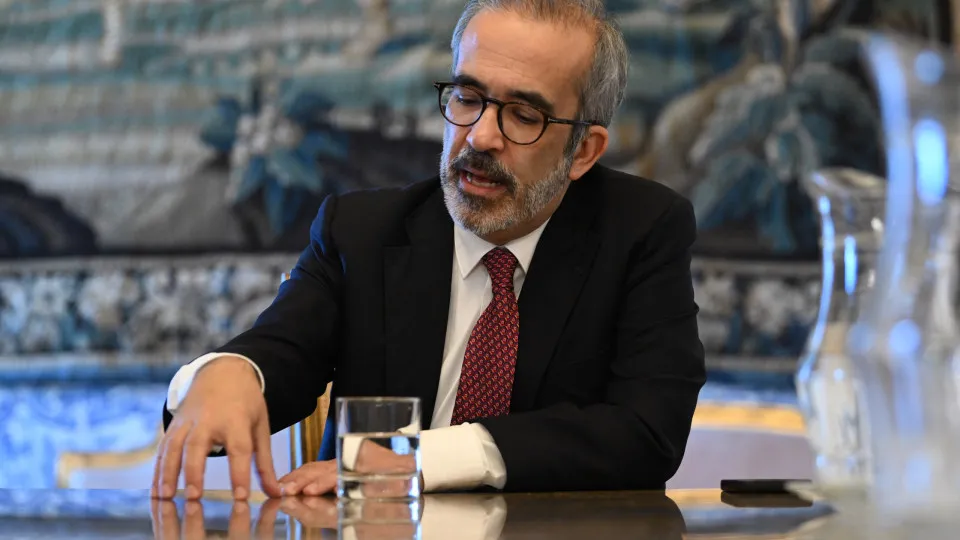
Quoted in the statement, Foreign Minister Paulo Rangel stressed the absolute necessity to “never resort to violence,” appealing for a return to constitutional normalcy and “restraint in the use of force.”
The minister reassured that “at this moment, the community remains perfectly calm” and is being kept informed regarding any updates on the situation.
He further stated that, in close collaboration with the Portuguese Embassy in Bissau, the government is closely monitoring the situation to ensure the protection of Portuguese citizens.
The official emphasized the critical need to revert to constitutional normality, pointing out that Portugal, alongside other international entities like the United Nations, Brazil, and the European Union, issues an “urgent appeal” to those in authority to facilitate this return.
The Portuguese government highlighted that the current crisis marks another disruption in Guinea-Bissau’s constitutional normalcy, which has experienced five coups, 17 attempted coups, and multiple government changes since its independence.
Portugal stands firm in defending democratic values, maintaining vigilance over the unfolding events, and advocating for a return to constitutional order.
The political-military crisis in Guinea-Bissau followed general, presidential, and legislative elections on November 23, which international observers noted occurred without incidents.
On election night, Guinea-Bissau’s CNE announced that provisional official results would be available by November 27.
The following day, opposition candidate Fernando Dias claimed victory in the first round against President Umaro Sissoco Embaló, who was seeking a second term.
On November 26, a day before the official results were to be announced, the military seized power following a shooting in the capital.
The Military High Command assumed control, ousted President Embaló who left the country, halted the electoral process, and appointed General Horta Inta-A as transition president, who in turn formed a transition government including deposed government members.
A delegation from the Economic Community of West African States (ECOWAS) is in the country to mediate the conflict.
Guinea-Bissau is suspended from both ECOWAS and another regional organization, the African Union, due to the coup d’état, during which several politicians and state officials, including the leader of the African Party for the Independence of Guinea and Cape Verde (PAIGC), Domingos Simões Pereira, were detained. The PAIGC was excluded from the elections and decided to support independent candidate Fernando Dias.
Fernando Dias is currently undisclosed but has been posting videos on social media stating he is safe and calling for the release of Domingos Simões Pereira and other detainees, as well as for the completion of the electoral process.
Some detainees, including CNE members and five Public Prosecution Service magistrates involved in the electoral process, have since been released.