


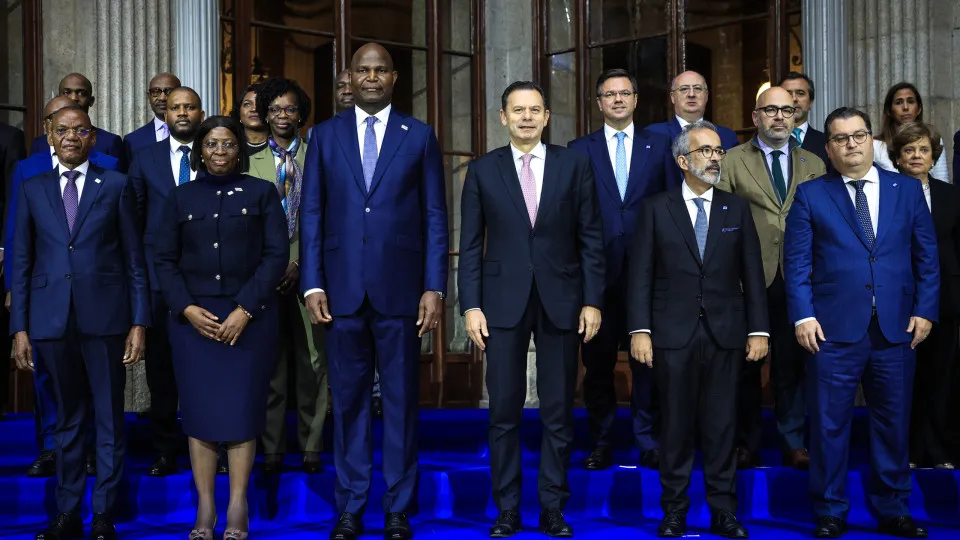
The final declaration of the summit, attended by the Portuguese Prime Minister Luís Montenegro and Mozambican President Daniel Chapo, saw both governments reaffirm their commitment to strengthening the Community of Portuguese Language Countries (CPLP) as a forum for political consultation and cooperation among Portuguese-speaking nations.
The declaration strongly condemned the seizure of power by force in Guinea-Bissau, expressing concern about the evolving situation in the partner country. They also supported initiatives to ensure the return to constitutional order and the completion of the electoral process there.
At the summit, Portugal congratulated Mozambique on its first term as a non-permanent member of the United Nations Security Council for 2023-2024.
Mozambique, in turn, reaffirmed its support for Portugal’s candidacy for the 2027-2028 term, with elections scheduled for June 2026.
Fernando Dias, a presidential candidate claiming victory in Guinea-Bissau, demanded on Wednesday that the National Election Commission (CNE) convene to announce the election results as soon as possible.
A statement on social media responded to the CNE’s announcement of its unavailability to continue the electoral process and disclose the results of the November 23 legislative and presidential elections due to alleged vandalism at its premises.
CNE’s deputy executive secretary, Judge Idriça Djaló, stated the acts were perpetrated by “armed and hooded men” on November 26, a day before the provisional results were to be announced.
The campaign of Fernando Dias da Costa, currently exiled in the Nigerian embassy in Bissau, condemns the CNE’s “illegal stance,” accusing it of “usurping powers” from the plenary that should have been convened to address the situation.
The candidate demands the rapid convening of the CNE’s plenary and the announcement of results to respect the popular will expressed at the polls.
Guinea-Bissau is suspended from ECOWAS and the African Union, following the coup on November 26, when a High Military Command took power, ousting President Umaro Sissoco Embaló, who fled, and suspended the electoral process.
The general elections proceeded without incident, yet a gunfight in Bissau occurred on the eve of the official results, preceding the military takeover that installed General Horta Inta-A as interim President.
The general declared a maximum one-year transition period, appointing Ilídio Vieira Té, a former minister under Embaló, as Prime Minister and Finance Minister.
A new transitional government has since been sworn in, including members from the ousted executive and five military officers among its 23 ministers and five state secretaries.
In the coup, PAIGC leader Simões Pereira was detained, with opposition decrying the military takeover as an attempt to prevent election result announcements.