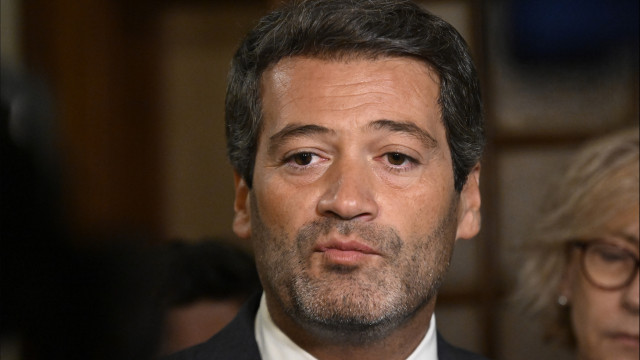

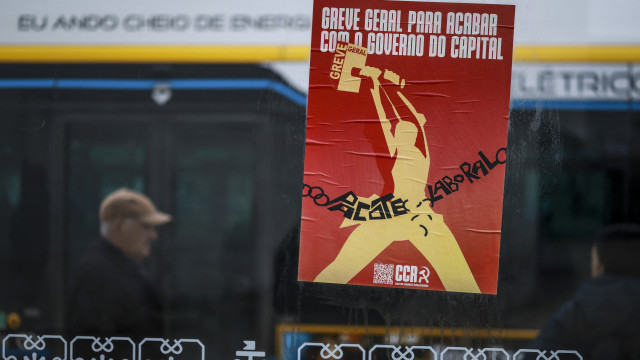
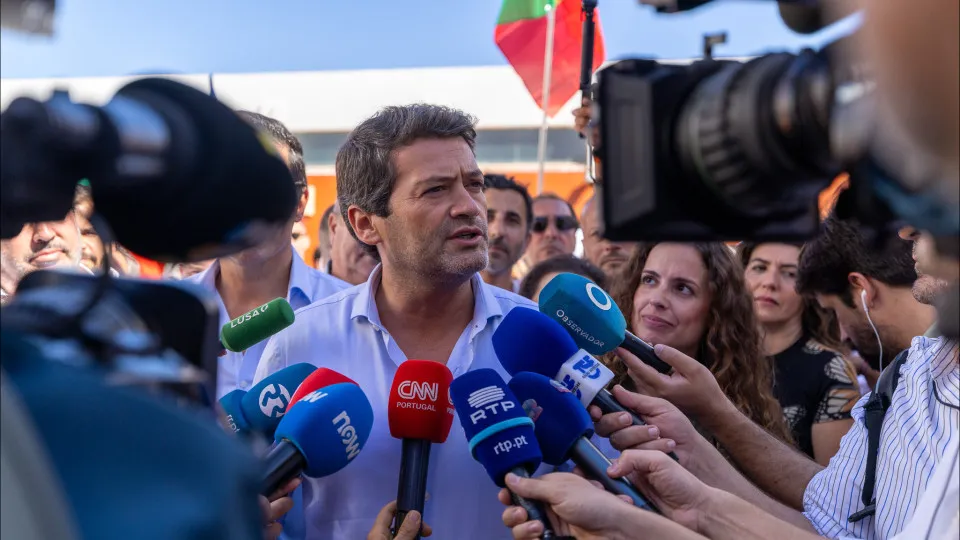
“I hope the country doesn’t come to a halt [Thursday], that’s my wish, that the economy doesn’t stop, that we as a country don’t incur a loss of hundreds of millions of euros, and that’s a wish I have. But one cannot deny that there are reasons for widespread discontent,” acknowledged André Ventura while speaking to journalists in the Agualva-Cacém district of Sintra.
The leader of Chega was speaking on the sidelines of a pre-campaign event for the January presidential elections, where he took the opportunity to highlight what he called the “somewhat decontextualized and rather weak reaction of the prime minister” in response to the strike.
Ventura reiterated that Chega “did everything” to prevent the strike from being called, offering to negotiate with the Government to amend labor laws, and considered that the administration led by Luís Montenegro is committing “a political, social, and human error” and is generating “a great sense of insecurity and disrespect” among the population.
The president of Chega cited as an example the revocation, foreseen in the Government’s draft project, of the rule that imposes restrictions on ‘outsourcing’ in cases of dismissal, arguing that productivity is not at issue and that this potential decision gives people the notion that they are “disposable.”
“I cannot fail to oppose a law that is a free-for-all for layoffs, an attack on people working shifts, with overtime, and in areas where change was really needed, none were made,” he criticized.
Ventura accused the Government of taking “the easiest path, that old right-wing a bit outdated,” in wanting to create “a kind of labor market jungle.”
“This seems more like something from the Liberal Initiative than from the PSD,” he remarked.
The Chega leader also argued that by proposing a law that “gives everyone who works the idea that they are disposable,” the Government is conveying the sensation that “work is worth nothing.”
From André Ventura’s perspective, the political right should focus on “avoiding dependency on subsidies.”
“However, this law goes in the opposite direction, it’s saying to those who work that they will have even more difficulties, that they will have fewer rights. This is a mistake,” he insisted.
Despite criticizing the labor package presented by the Government, Ventura once again lamented the “bad trade unionism” and also criticized the suppression of trains already recorded today by Comboios de Portugal (CP), on the eve of the strike, pointing out that there are people who have already paid for a monthly pass or purchased tickets and were left without a journey.
The president of Chega was also questioned about Luís Montenegro’s statements, who said today in Porto that the goal of achieving a national minimum wage of 1,600 euros is realistic, after having also stated on Saturday that he wants the average salary to be “2,500, 2,800 or 3,000 euros.”
Ventura agreed with the need to raise the average salary, warning that it is increasingly close to the minimum, but stressed that such a move “depends on what work the Government will do in the economy.”
“I don’t know if the Government will have the same strategy for the economy that it had for the labor law. If so, it is deeply erroneous. Until now, I have not seen this Government doing anything economically beneficial for the country,” he lamented.
[News updated at 18:55]