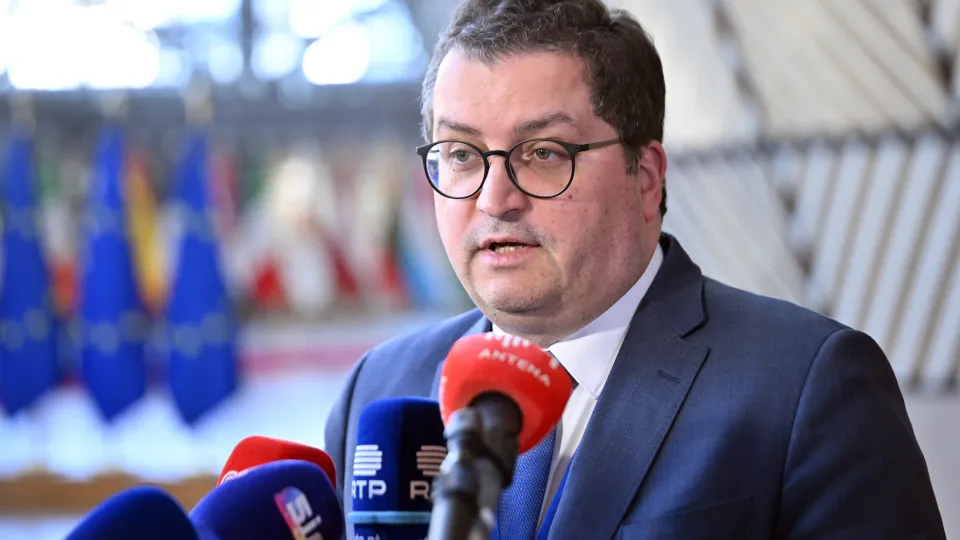
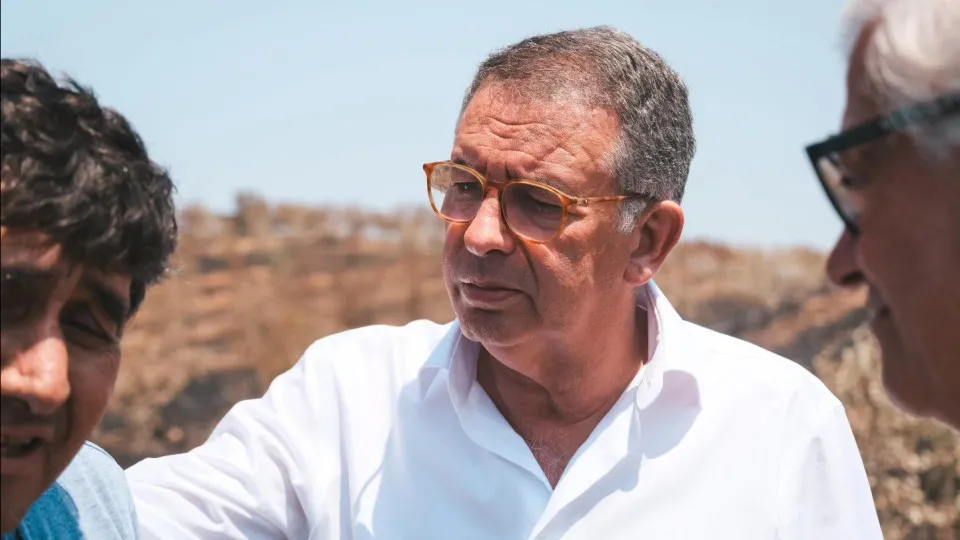
“The newspaper is an element of social cohesion, and only those unfamiliar with the interior don’t realize this, because a newspaper in a barbershop, a café, or another place, serves as a gathering point for people to read and discuss issues,” he highlighted.
In this regard, he argued that “the newspaper in the interior must continue to reach everyone so that all Portuguese are treated equally.”
“There is a need for the interior to continue having print newspapers. There’s an aging part of the interior that wants access to news and can only get it through newspapers,” he emphasized.
Seguro asserted that “the interior needs a voice, and to have more voice, its issues need to be publicized and reported in newspapers,” and if they don’t reach the interior, “naturally, there won’t be news from the interior.”
The candidate spoke to journalists after meeting with João Azevedo, the mayor of Viseu, who won the municipal elections on October 12 and became the first mayor of the municipality elected by the Socialist Party (PS).
To journalists, João Azevedo stated that he would welcome all candidates wishing to visit the Viseu City Hall, but he expressed support for António José Seguro, acknowledging that “he is a man with diverse layers of knowledge” and “well-prepared” to assume the role of head of state.
The candidate expressed gratitude for the support, emphasizing that, like him, he is also from the interior, and for this reason, among others, promised not to let this region fall off the political agenda.
“I know the importance of the interior for our country. There are no disposable territories in Portugal, nor are there first- and second-class Portuguese. Our economy stands to gain from the development of the interior,” he stated.
António José Seguro further advocated for “a more balanced development” and suggested that “there are many public services in Lisbon that could be in the interior, which would help anchor people,” as well as the provision of “incentive policies” to settle and attract new populations.
For instance, he indicated that “higher education schools in the interior should not be disadvantaged by access rules,” remarking that “there has been significant damage” under this perspective.
In the interior “there are conditions and ideas,” but there needs to be “access to culture, health, and education,” and he exemplified that “other countries have done this,” and if Portugal “cannot do better, at least it should do it equally” to what has been done in many countries.
Among the solutions, he pointed to the necessity of agreements between intermunicipal communities (CIM) and the government, “to develop development contracts for each specific region.”
In his view, the interior “has common problems, but also specific needs and opportunities,” suggesting that this requires “resources associated and allocated to very concrete objectives.”
For the candidate, the mayors and entrepreneurs know the interior best, and it is up to the mayors, who have political representation, “to work together with the government on agreements that help develop the interior, because that’s what they want most.”
“But they expend a lot of energy going to Lisbon to plead, drawing attention to the problems, which naturally makes situations more difficult,” he indicated, emphasizing that the contracts “will enhance” the interior.