

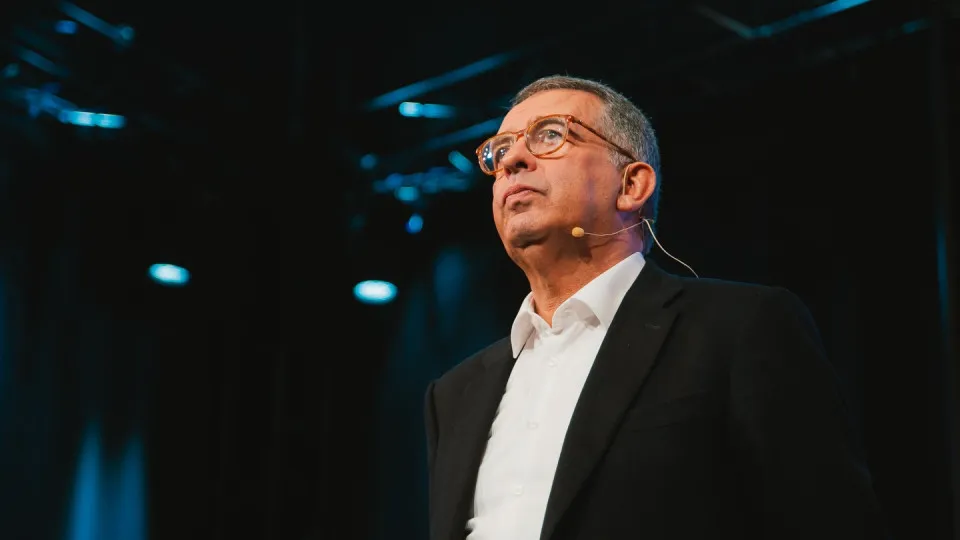

In an interview regarding his latest project, which premiered live in 2023, Nuno Côrte-Real expressed his attraction to the unusual and extraordinary, as well as his aspiration to collaborate with ANIMP, the sole Afghan music school established in 2010 by Ahmad Sarmast. The students of this school sought refuge in Portugal in 2021 and have been operating since 2022 in Braga and Guimarães.
Nuno Côrte-Real also emphasized the unique intersection of cultures and perspectives on music present in this initiative.
The Afghan institute, which taught both traditional Afghan music and Western classical music, was banned from reopening by the current authorities in Kabul. As a result, the last group of approximately 300 students and teachers sought asylum in Portugal, where the school is now registered as the ANIMP Association, founded in 2022.
Côrte-Real remarked, “The example set by these young individuals who fled to Portugal shows that hope never fades,” which inspired the album’s title, “Hope.”
“When I proposed this project to ANIMP, I aimed to merge these two worlds, these two musical and artistic realities [of Afghanistan and Portugal],” Côrte-Real told Lusa, adding that “the idea to combine fado with traditional Afghan music emerged, and the CD revolves around this unusual intersection, particularly since fado is traditional music rooted in the people.”
The album, released this week, features traditional Afghan songs, fados, and a song titled “Tejo,” composed by Nuno Côrte-Real at the age of 19.
The recording of the album included participation from ANIMP students with traditional instruments like rubabs and ghichaks, alongside the Ensemble Darcos, guitarist Miguel Amaral, and fado singer Marco Oliveira.
The tracklist of “Hope” includes “Não Venhas Tarde” (Aníbal Nazaré/João Nobre), a creation of Carlos Ramos (1907-1969), “Vielas de Alfama” (Artur Ribeiro/Max), “Fado à Janela” (Marco Oliveira), “Fado Darcos” (Marco Oliveira/Miguel Amaral), “Fama de Alfama (Hermano Sobral/Fado Lopes, by José Lopes), “Era já tarde” (A. Ribeiro/Max), “Fado Antigo” (Manuel de Almeida), “Eterna Namorada” (Ana Sofia Paiva/Miguel Ramos), “Trova do Vento que passa” (Manuel Alegre/Alain Oulman).
These fados are presented alongside traditional Afghan compositions such as “Gulf De Par Zulf/Flores nos teus cabelos,” “Rasha Janana/Vem meu amor,” and “Logari,” all arranged by Mohammad Qambar Nawshad, and “Megom ke Dostet Darom/Amo-te,” by Ustad Hafizullah, with arrangements by Nawshad.
The conductor and composer stated that fado served as “the possible vehicle” for the fusion of these two musical universes, declaring his admiration for the fado genre.
“Many elements in fado, particularly with the Portuguese guitar, are improvised; there’s significant improvisation in the comments, in those melodies accompanying the singer. This aspect of improvisation is also prominent in Afghan music, even though they have rhythmic and melodic structures. Still, it often occurs, and there are connections. I’m not talking about the musical style but the very manner of playing, which is evident in the CD,” he noted.
Addressing the parallels with fado, the composer and conductor highlighted the scales and melismas in Afghan songs, akin to fado, contributing to “a certain coherence in the CD.”
The album features fados without Afghan musicians and fados including Afghan musicians who improvise within the melody and harmony, and vice versa, noted the maestro, highlighting “a certain melodic enrichment—not that fado needs it.”
Nuno Côrte-Real further emphasized the rubabs’ participation in “Trova do Vento que Passa,” “with an improvisation over the voice and the Portuguese guitar.”
The conductor pointed out that “in the more lively fados, the corridos, the two Afghan percussion instruments, the dohl and tabla, contribute to a rhythmic enrichment, let’s say, of the color, […] within the scope of this project.”
“It was a happy idea that worked very well, not due to any opportunism concerning fado, which I respect and love dearly,” but because “fado is a music conducive to such encounters,” clarified Côrte-Real.
The project premiered live in two concerts at the Maria Matos Theater in Lisbon in 2023, followed by another in Torres Vedras, and subsequent performances. The album was recorded last September in Braga.