
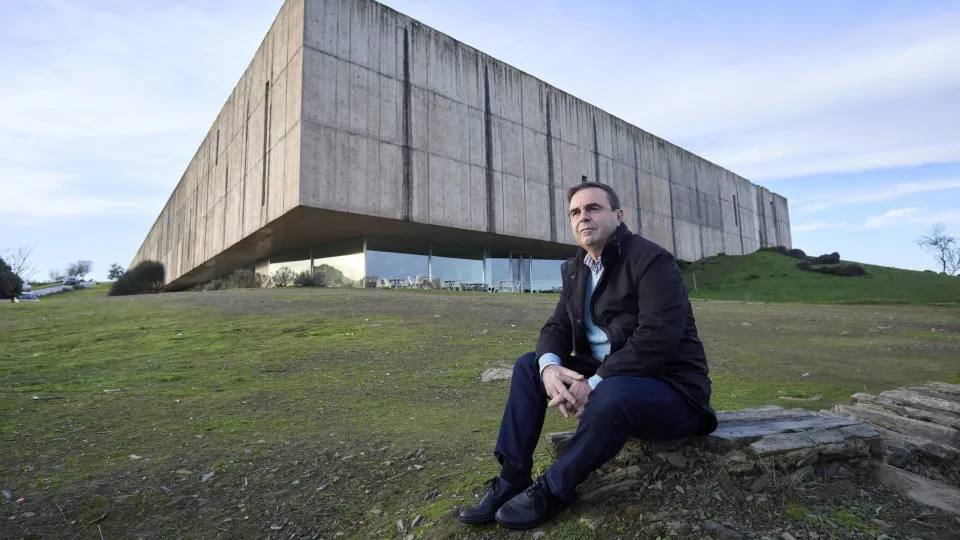

A report on “Autonomy and Decentralization,” presented today at the XXVII Congress of the National Association of Portuguese Municipalities (ANMP), underway until Sunday in Viana do Castelo, highlights that despite the association’s efforts, many issues related to health decentralization remain unregulated. This has complicated the full implementation of transferred competencies and created uncertainties regarding some services’ municipal management.
Manuel Cordeiro (PSD), Mayor of São João da Pesqueira and the report’s author, stated, “To ensure the full success of health decentralization, it is essential to advance with the missing regulations and concrete, coordinated measures to address existing gaps.”
The municipalities demand the creation of a recovery or rehabilitation program for health centers and the approval of a map detailing facilities and equipment needing priority investment, new infrastructure construction, or major modernization and requalification interventions.
The municipalities note that criteria and calculation formulas have yet to be defined to determine the allocations transferred for paying operational assistant career workers, causing human resource management difficulties and affecting adequate personnel distribution.
The report states that the government’s decision to allocate financial resources to the recovery of health centers, without the agreed-upon mapping with the ANMP, has breached institutional trust and political confidence between central and local authorities.
“As a result, municipal planning uncertainty increases, the risk of widespread delays intensifies, and territorial inequality perceptions deepen, as not all municipalities can offset this funding loss with their resources,” it emphasizes.
The ANMP criticizes the lack of transparency in the Decentralization Financing Fund (FFD), indicating that funds do not cover the actual expenses assumed by municipalities. It calls for the re-establishment of the Monitoring Committee, “responsible for evaluating the adequacy of transfers and ensuring amounts correspond to expenses effectively assumed by municipalities.”
The municipalities’ association further advocates for “greater coordination between the Government, the ANMP, and municipalities, to set clear priorities and realistic deadlines,” ensure “the transfer of sufficient funds to meet the financial responsibilities arising from decentralization,” and establish control and auditing mechanisms to guarantee efficient and transparent resource use.
Besides health, decentralization in areas such as education and social action continues to face “structural problems,” despite agreements reached with the Government in 2022 and 2023. In education, the association warns that 526 schools, with an expected investment of 1.73 billion euros by 2023, are still waiting for requalification, many in an “urgent or very urgent” condition.
The Government and the ANMP signed agreements to clarify decentralization in areas like Education and health in 2022, and social action in 2023.
Regarding health, the Government committed to ensuring the financing of construction, recovery, or rehabilitation works in a set of health centers through funds from the Recovery and Resilience Plan (PRR) and Portugal 2030, guaranteeing, according to municipalities, 100% funding for interventions.
At the XXVII ANMP Congress, happening today and Sunday in Viana do Castelo, mayors elected Pedro Pimpão, the Mayor of Pombal from the PSD, as president for the upcoming term.