
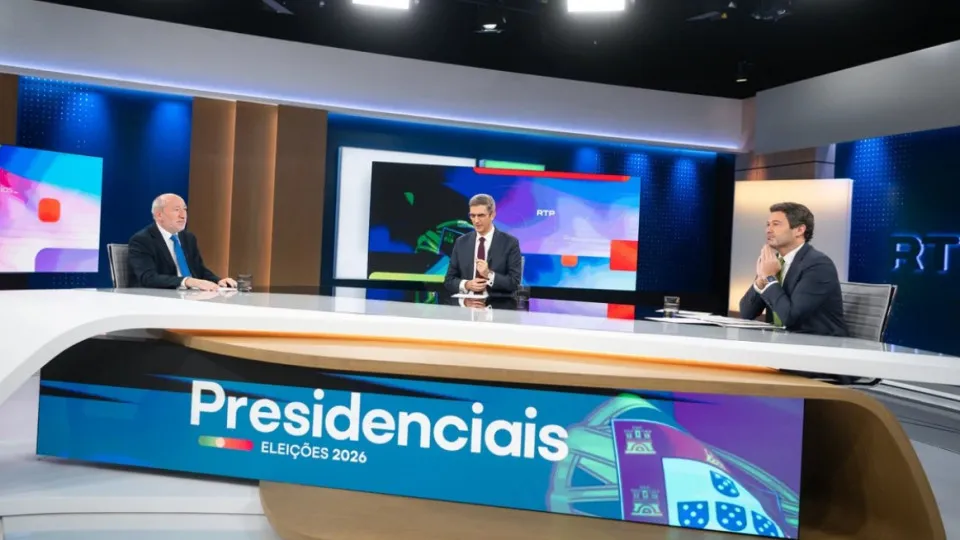
During a televised debate on RTP, André Ventura strongly denied the suggestion that he altered his stance on labor legislation. Citing a news article from August, Ventura indicated his intention to vote against the government’s proposal if certain provisions, such as those concerning breastfeeding and overtime pay, were retained.
“Chega was the only one that remained firm and consistent from the beginning,” Ventura claimed, countered by António Filipe, who argued that Ventura had recently changed his rhetoric due to the “great success of the strike” on Thursday.
Filipe stated, “I think [Ventura] had a change in rhetoric, not necessarily a change in position. The change in position will be evident when the government presents this proposal to the Assembly of the Republic. It will be the true test.”
Ventura retorted that he would vote against the government’s proposal if it stays unchanged, although he expressed willingness to negotiate. He accused António Filipe of criticizing the proposal only because he knows the PCP “will not count in its approval or rejection.”
“I have a responsibility: whether there is or isn’t labor reform,” Ventura stated, while Filipe highlighted Ventura’s openness to approving other parts of the law if certain elements were removed by the government.
Filipe accused, “The difference between us is this: I am clearly on the side of the workers, and André Ventura is on the side of big economic interests,” recalling that Ventura admitted he would not have run for the presidency if former Prime Minister Pedro Passos Coelho had entered the race.
“This says everything about the intentions of his candidacy: he supported the worst government since April 25, which was Passos Coelho’s government, that pushed beyond the ‘troika,'” Filipe charged, claiming Ventura aligns with “neoliberal consensus,” while he stands “against the system” — one of Ventura’s slogans.
In response to these connections to Pedro Passos Coelho, Ventura fired back: “António Filipe likes dictators, he likes Fidel Castro, Nicolás Maduro, China, North Korea.”
Ventura continued, “But we are not a communist country, and if you ask me, I would prefer and take pride in having a candidate like Pedro Passos Coelho,” accusing Filipe of posing as a “protector of workers,” yet collaborating with a government that saw housing prices and immigration rise and security decline during the Geringonça period.
“Nonsense Talk” and Security Issues
The candidates then tackled alleged threats to democracy, with António Filipe suggesting Ventura poses a risk to the regime by advocating for a constitutional revision despite being a presidential candidate who must vow to “uphold and enforce” the current fundamental law.
Ventura countered, accusing Filipe of wanting to exit the euro and NATO — a claim Filipe denied — suggesting Filipe is the actual threat to democracy.
“This is nonsense talk,” Filipe retorted before both discussed security issues, with Ventura advocating for a state of exception to grant extraordinary powers to the police to combat crime.
“I prefer a dead criminal to a dead police officer,” Ventura said, with Filipe criticizing this stance as “very serious,” noting that a head of state “does not grant powers to the police” and accusing Ventura of modeling himself after El Salvador’s leader, Nayib Bukele, with whom Ventura admitted he aligns politically.
[News updated at 10:48 PM]