
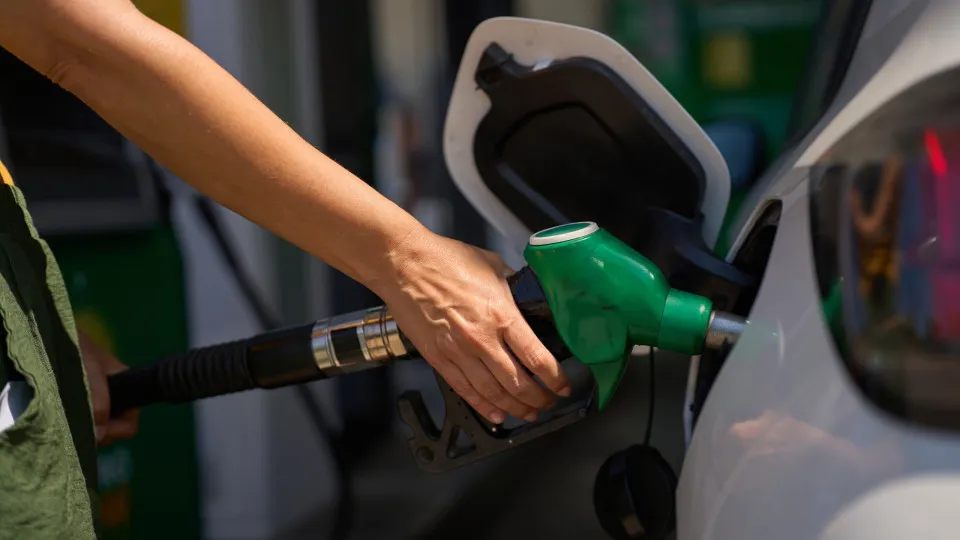
Fuel prices are set to decrease at the start of next week. Diesel prices are expected to drop by 2.5 cents, while gasoline will see a reduction of 2 cents, as forecasted by the Automobile Club of Portugal (ACP) on Friday.
“If the forecasts for the week of December 8 to 14 are confirmed, the average price of simple diesel will settle at 1.548 euros, and that of simple gasoline 95 will decrease to 1.676 euros,” stated the ACP.
However, “these forecasts are based on the assumption of the continued application of extraordinary fiscal reduction measures implemented by the government to mitigate price increases.”
“The measures in place include compensating for the additional VAT revenue and the reduction of the Petroleum Products Tax (ISP), which the Government has already started to reverse with a view to ending next year,” the ACP reminded.
Reduction of ISP Discount? “We Did Not Cause an Increase in Final Price”
Prime Minister Luís Montenegro denied that reducing the discount on the Petroleum Products Tax (ISP) would result in higher fuel prices for consumers.
“We did not cause any increase in the final price for consumers. We are correcting a discount that had to be corrected, with no impact on the final price for consumers,” said the head of Government in response to the leader of Chega during the biweekly debate in the Assembly of the Republic last week.
Luís Montenegro noted that the Government decided, “in light of a very significant drop in gasoline and diesel prices, to take advantage, not reflecting this in the final price, to recover a discount that was in effect.”
The Prime Minister stated that gasoline and diesel are now about 20 cents cheaper per liter than they were on March 1, 2022.
In his remarks, the leader of Chega noted that the Government claimed that the increased ISP revenue anticipated in the 2026 State Budget was due to “an estimate that the Portuguese would have more money and, therefore, would spend more on fuel for their cars.”
“In the week when the figures pointed to a rare drop in gasoline prices, the Government took the first step to end the ISP discount,” with the “partial reversal of measures adopted three years ago,” criticized André Ventura.
The Chega MP pointed out that during the State Budget discussion, he warned that the Government was “deceiving” the Portuguese.
“We said at the time they were deceiving us and that it wasn’t true, because they were ending the discount that allowed people to pay less for fuel. Today we know the truth; the truth is the Government wanted, accepted, and tolerated increased pressure on fuel,” he argued, predicting that “the Portuguese will pay more” to fill their tanks.
Through a decree published in the Diário da República on November 28, the PSD/CDS-PP Government reduced the discount in effect on the ISP applicable to unleaded gasoline and road diesel, partially nullifying the reduction in fuel prices.
According to that decree, which took effect on December 1, the ISP rate applicable on the mainland for gasoline with a lead content of 0.013 grams per liter or less rose from 481.26 euros to 497.52 euros per 1,000 liters, while the ISP rate applicable to diesel increased from 337.21 euros to 361.60 euros per 1,000 liters.
According to estimates from the Automobile Club of Portugal (ACP), these amounts represent an effective tax increase per liter of about 1.6 cents for gasoline and more than two cents for diesel.