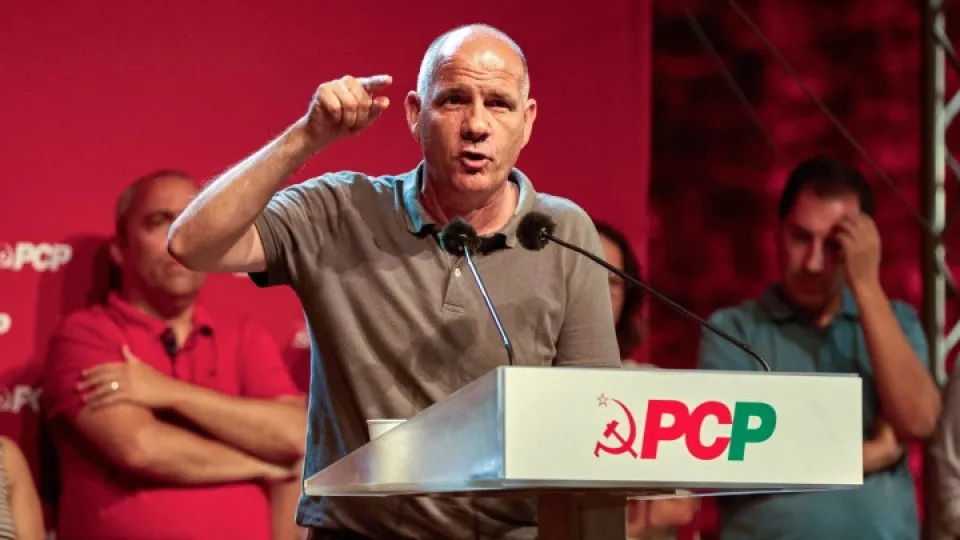


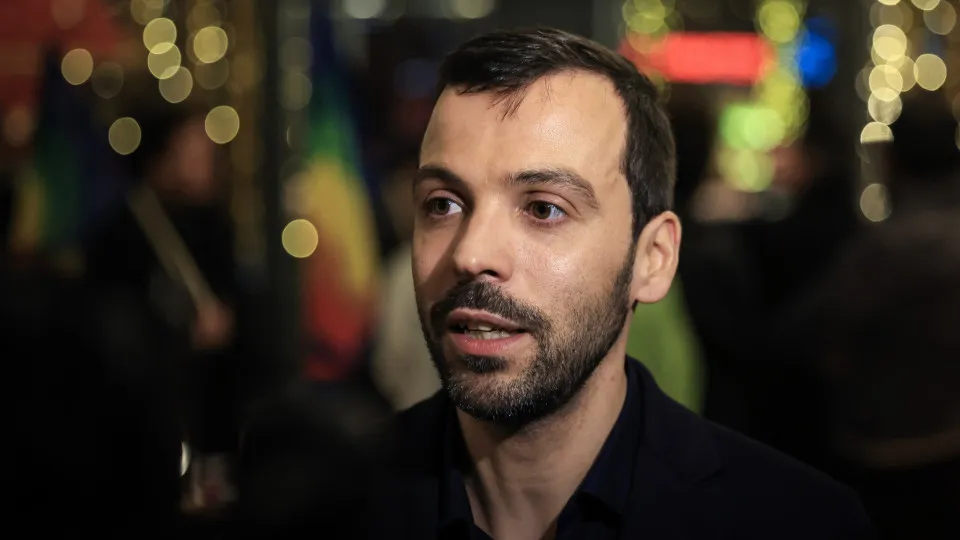
“This whole debate is poisoned from the start. All discussion concerning what it means to be national, regarding immigration policy, is poisoned from the start because there are political agents interested in this toxic climate when we talk about immigration,” stated Jorge Pinto to journalists in Brussels.
On the day he visits the Belgian capital to meet with the Portuguese community, a city where he once lived and worked as an official of the European Commission, the Livre candidate was responding to a question about the expectations from the Constitutional Court’s decision on the nationality law, which is expected to be announced on Monday.
“Let us look around, see what is happening in a country like Italy, which has a government that came to power with a completely anti-immigration discourse and has surrendered to the facts. The facts are that Portugal, Europe, and Italy need these people to work,” he remarked, referring to the retreat by Italian Prime Minister Giorgia Meloni, who is now seeking immigrants due to the labor market crisis and the collapse of the pension system.
According to Jorge Pinto, Portugal now faces “one of two paths.”
“Either we allow these people to come, as they will continue to do as long as there is a need for workers, but come without conditions that lead to exploitation — cases like those shown by Operation Harvest [on a criminal organization aiding illegal immigration] in Portugal, which were very close to slavery — or the opposite, which I believe is a dignified reception, providing conditions for workers,” he listed.
For the Livre candidate, “regulation is to ensure that these people on the ground, who ultimately ensure the survival of our own country, have working conditions, have decent housing, have employment contracts,” which “unfortunately, does not always happen.”
The Constitutional Court is reviewing the new Nationality Law, approved in October 2025 by Parliament, which alters naturalization regimes and residency requirements, following a preventive constitutionality assessment request submitted by the PS.
This review automatically suspended the law’s implementation until the Court decides whether parts of the text violate constitutional principles such as equality or legal security.
The decision is expected to be announced on Monday.