

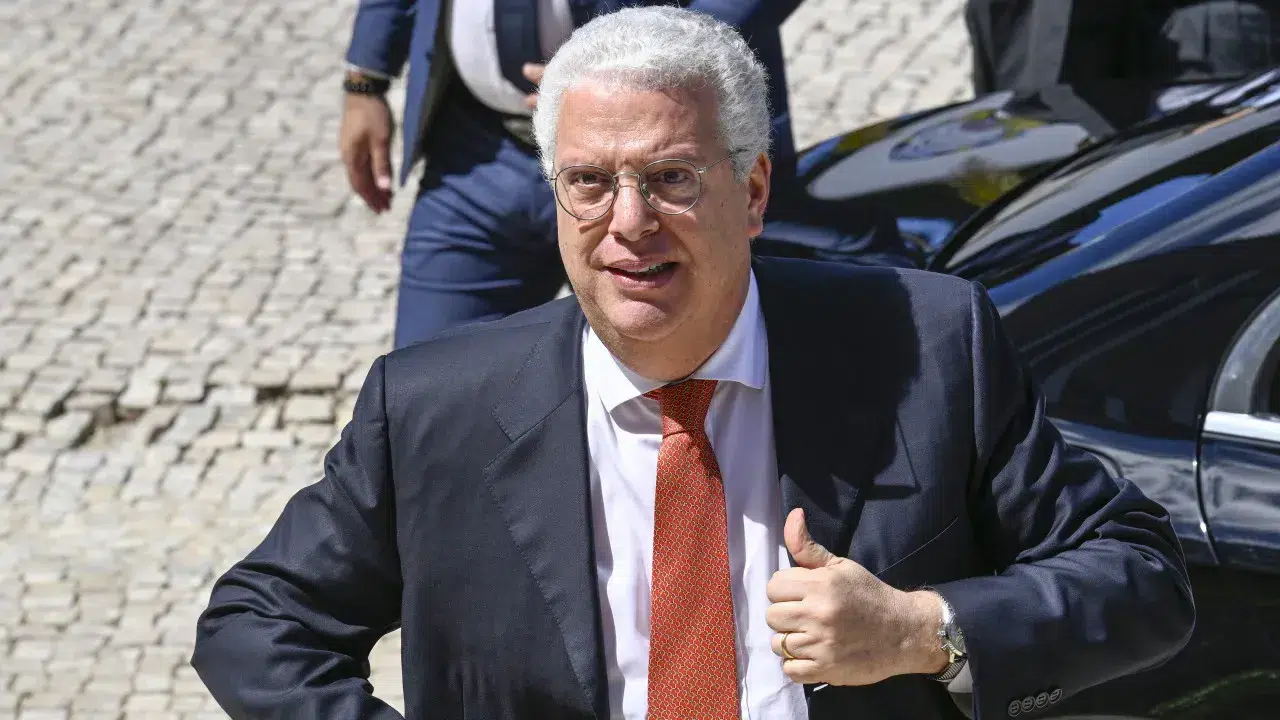
The Minister of Economy, Pedro Reis, along with the Secretary of State for the Economy, João Rui Ferreira, will commence a series of meetings next week involving 16 business associations. These discussions aim to evaluate the impact and mitigation strategies for the tariffs announced by the U.S. administration affecting Portuguese companies and the national economy, as outlined in a statement from the ministry.
The meetings are scheduled from Wednesday to Friday in Lisbon and Porto and will also include representatives from the Portuguese Trade and Investment Agency (AICEP), IAPMEI, Compete, the Directorate-General for Economic Activities (DGAE), and the Portuguese Development Bank (BPF).
The goal is to establish a dialogue with sectors most impacted by the ‘reciprocal tariffs’ model, specifically the automotive industry, fuels, rubber, the electric and electronic sector, metallurgy and metal mechanics, wood and furniture, cork, footwear, tanning, textiles and clothing, home textiles and woolens, in addition to employer associations AIP, CIP, and AEP.
“The aim is to consult with the representative associations of companies in these economic activities regarding their assessment of the impact of the imposition of the new customs duties on European products,” stated the Ministry of Economy.
Simultaneously, the government seeks to hear “proposals to mitigate and minimize this impact on national exports.”
During the bilateral meetings with the associations, followed by “broader meetings,” the Ministry of Economy aims to share ongoing collaborations with the European Union in response to the new tariffs and the protective measures being designed for different sectors of activity.
In an earlier written note sent to the Lusa news agency, the Minister of Economy emphasized that the tariffs announced by the U.S. president “are not good news for the world” and will have an impact “contrary to what is desired,” noting that the European Union will “respond as a whole.”
“The European Union will certainly respond as a unified entity and react with caution, firmness, and intelligence. This includes evaluating the application of excessive taxes on U.S. products, which could escalate protectionist measures that might negatively affect the prices of our intermediate goods,” stated Pedro Reis.
For the Economy Minister, the new tariffs announced by Donald Trump “are not good news for the world,” as “tariff wars create inflation, slow growth, and necessitate the redesign of the international production chain.”
“Their impact is precisely the opposite of what is desired: rather than accelerating competitiveness, innovation, and productivity, they hinder these developments because they damage economic growth,” defended Pedro Reis.
Donald Trump announced on Wednesday new 20% tariffs on imported European Union products, adding to previous tariffs of 25% on the automotive, steel, and aluminum sectors.
Trump’s new tariffs are an attempt to boost the U.S. industry while penalizing countries for what he described as years of unfair trade practices.
The new tariffs were implemented by the United States on all imports, with surcharges for countries deemed particularly hostile to trade.