
Since 2007, Casa da Música has annually invited a young composer to take on a “residency” role, which involves composing for the Casa’s ensembles and engaging in knowledge exchanges with musicians and other artists.
The initial five Young Composers in Residence were contacted to reflect on this significant moment and discuss its impact on their careers.
All were either concluding their studies or further developing them, with limited exposure of their music to the public. They consistently expressed joy at learning they would spend a year attached to Casa da Música, under which they would develop pieces for groups like the Orquestra Sinfónica do Porto and the Remix Ensemble.
For the first invitee, Vasco Mendonça, receiving the news of becoming Young Composer in Residence at Casa da Música was “the first time I felt this career could become a reality,” he revealed in an interview.
He described the composer career in Portugal as “always some sort of occult science” and acknowledged it as a marginal profession. In the previous year, Mendonça was a Senior Composer in Residence at Casa da Música, timed with Portugal being the thematic focus of their programming.
Discussing the impact on his career, Vasco Mendonça explained that “the exposure to the environment and society translated into requests, and contacts to develop work in various contexts, from institutions, musicians, and ensembles.”
Luís Lopes Cardoso, selected in 2008, shared similar excitement: “It generated immense expectations for me because I would have the opportunity to write music for the two resident ensembles at the time, the Remix and the Orquestra Sinfónica do Porto.”
Now more active in choral direction than composition, Cardoso emphasized that the experience played a vital role in his artistic development, citing the “high level of demand and responsibility,” through either writing for high-quality musicians or the venue’s significance.
“I think it was very important for my formation, but in ways I can’t quantify or materialize,” he commented, reflecting on the necessity of contributing to artistic creation spaces: “There’s got to be musical groundwork for major artistic events to occur.”
Daniel Moreira, who joined the program the following year, was in his second year of studying Composition at the Escola Superior de Música e Artes do Espetáculo (ESMAE), gaining significant visibility from the year’s association with Casa da Música’s programming.
“I was fortunate since both pieces I composed for the Remix and the Orchestra were performed multiple times. The Remix took the piece to a festival in Germany and then another festival in Strasbourg the following year. Therefore, the piece kept evolving. In contemporary classical music, many works are performed only once,” remarked the composer, currently a professor at ESMAE.
In 2010, still a student, Daniel Martinho described the experience as “indescribable,” marking a year of “immense learning, coupled with anxiety and nervousness.” “It was a year of extensive research, of hard work to develop my compositions as best as possible,” he noted.
“I believe my name gained recognition in the field for having been a Young Composer in Residence. Afterward, I received further commissions throughout my career, and I am certain that having been a Young Composer helped propel those opportunities,” he stated in an interview.
â?ngela da Ponte, Young Composer in Residence in 2011, recalled being with her family in São Miguel when she received the call from then-artistic director António Jorge Pacheco. “I could hardly believe it. I was euphoric but panicked at the same time. The responsibility was immense: composing music for resident ensembles of one of the country’s leading concert halls. Concurrently, I had embarked on another significant venture: a master’s in composition at the University of Birmingham, and I felt my life had taken a special direction.”
“Undoubtedly, this appointment was a crucial milestone in my development as a composer. The residency and Casa da Música served as a visibility platform for compositional work at a time when social media was just emerging. Suddenly, numerous other commissions came my way,” wrote â?ngela da Ponte in an email.
The five composers mutually praised Casa da Música’s role and the significance of its artistic director from 2009 until March this year, António Jorge Pacheco, in promoting contemporary music.
As a spectator, Vasco Mendonça views Casa da Música as a “fundamental space not only in the region but the country, being the sole cultural facility dedicated to music, embracing a multiplicity of languages and styles without prejudice. This is extraordinarily valuable and modern,” he stated, describing António Jorge Pacheco as a “champion of contemporary music, especially Portuguese contemporary music.”
Mendonça — expressing optimism about the new artistic direction maintaining Casa da Música’s “unique features” — added that the venue is “utterly unique, as evidenced by last season’s programming,” which included programs “solely comprised of works composed in the past 10, 20 years that filled a hall—a unique, or very rare, occurrence even among European institutions.”
Daniel Martinho also highlighted Casa da Música’s capability to program contemporary works in Sinfonica concerts, emphasizing its importance for “educating the audience to appreciate that type of music, which can often be very challenging for those with no or little exposure to music.”
“One can always hold critical views regarding one or another aspect, but when considering the scope of 20 years and the impact Casa da Música has had, the conclusion can only be that it has been an absolutely positive and transformative impact,” Daniel Moreira concluded.
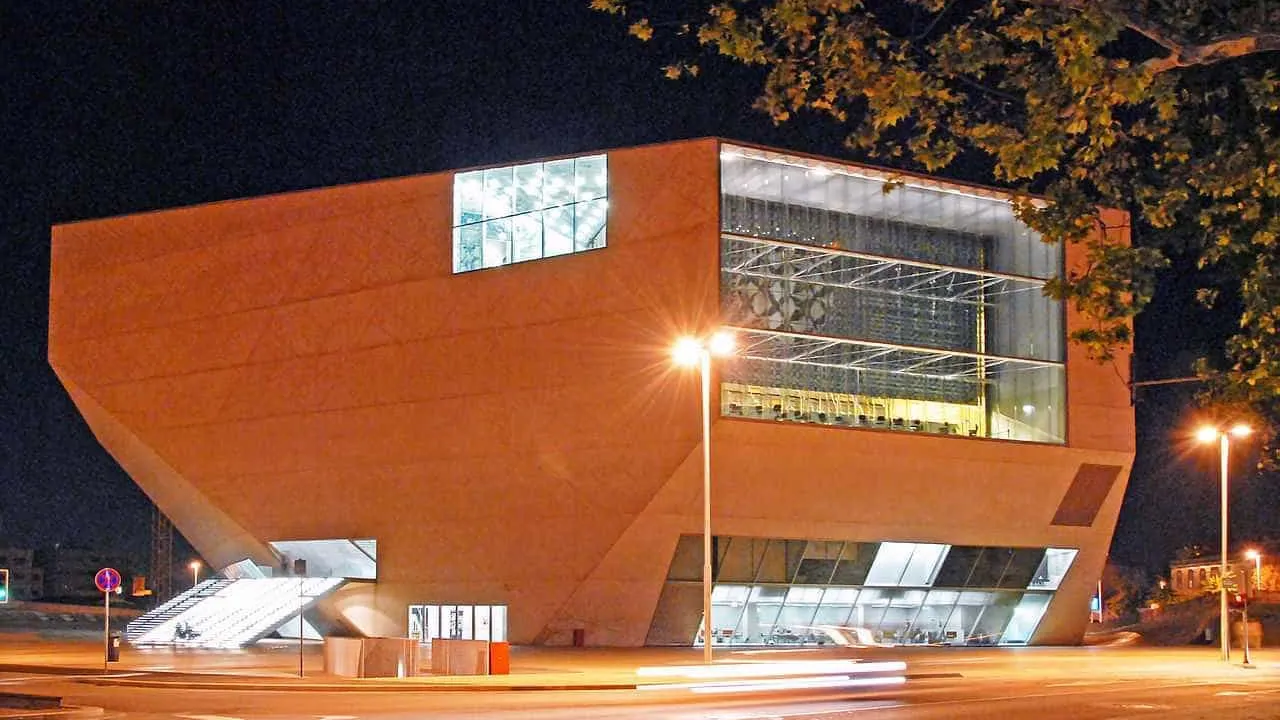
The construction of Casa da Música, designed by architect Rem Koolhaas, began in 1999, with the official inauguration taking place on April 15, 2005.
Over 20 years, Casa da Música has conducted more than 6,000 concerts, welcomed 3.8 million spectators and participants, and commissioned over 300 musical works.
In these two decades, Casa da Música has carried out over 26,000 activities, collaborated with 1,000 community groups, and hosted 35,000 guided tours for a total of 570,000 visitors.
You may also like: