

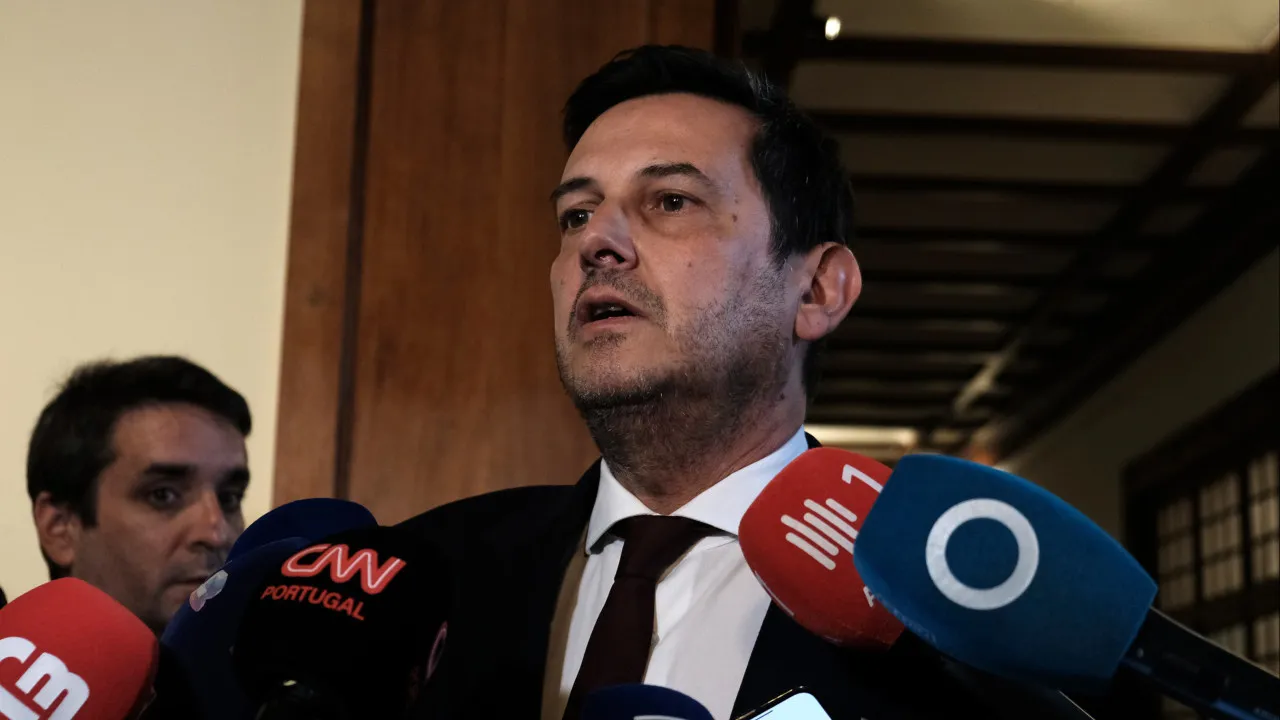
“The SNS, in its current form, would need to be equipped to serve 10 million Portuguese citizens. That’s impossible. So, what makes more sense? To leverage the existing capacity, ensure the State negotiates effectively, and secures the necessary resources so that the Portuguese people can benefit from the installed capacity,” stated Rui Rocha.
The leader of Iniciativa Liberal (IL) spoke to journalists after visiting the Hospital of the Misericórdia of Vila Verde in Braga, a social sector entity with a protocol with the SNS. Rocha highlighted it as a model the party advocates for healthcare.
“Many Portuguese have waited for the SNS for months, even years, and have only been able to benefit from the health services due to the role played by Misericórdia of Vila Verde,” he emphasized, stating that his party believes there is no reason for the Portuguese to wait for consultations or surgeries.
“We must utilize all available healthcare capacity so that the Portuguese do not wait months or years. That’s why, in our proposal, it’s the users who are at the center of the Portuguese health system, deciding where they want to be treated,” Rocha defended.
Rocha reiterated that “it is not feasible for the SNS to have the capacity for 10 million Portuguese” and stressed the need to make use of the resources available to ensure responses for all users.
“Do people care whether it’s public, private, or social? What they want is a solution, not to be in suffering, what they want is to find an open door,” he remarked.
When questioned if this means the IL model would lead to the disappearance of the SNS as it currently exists, Rocha clarified that it means those who cannot find open urgent care services, are on waiting lists, or cannot get surgery, will find a “solution funded by the State, regulated by the State.”
Regarding what cost this would present to the State, the IL leader argued it would not exceed the current expenditure on the SNS, emphasizing that its budget has been increasing annually without ensuring “a universal health service.”
“There is no need to spend more; rather, an accurate allocation and management of resources is necessary, and even within the SNS, there’s much to be done. We want the SNS itself to be more productive, with incentives for health professionals’ productivity,” he asserted, stressing the need to “change the management of the SNS.”
Asked if he advocates for the end of the SNS’s executive board, Rocha responded, “that’s not the way,” and contended that this entity “plays a very important role.”
“The executive board is crucial to removing management decisions from a ministry overtaken by political interests. Therefore, it makes perfect sense to have an executive board with management competencies and the ability to implement management measures,” he noted.
Rocha stated that the essential criterion is for the executive board to be “well managed, with competent individuals,” criticizing the AD for having three executive directors within a year.
When asked if this was a compliment to the PS, given his acknowledgment of the executive board’s importance, Rocha replied that he was praising “the right measures.”
“I saw AD, at certain moments, with considerable doubts about the executive board and even discussions about reducing its powers. That’s the wrong path, because reducing the executive board’s powers is returning authority to the politically entrenched machine in the Ministry of Health,” he stated.