

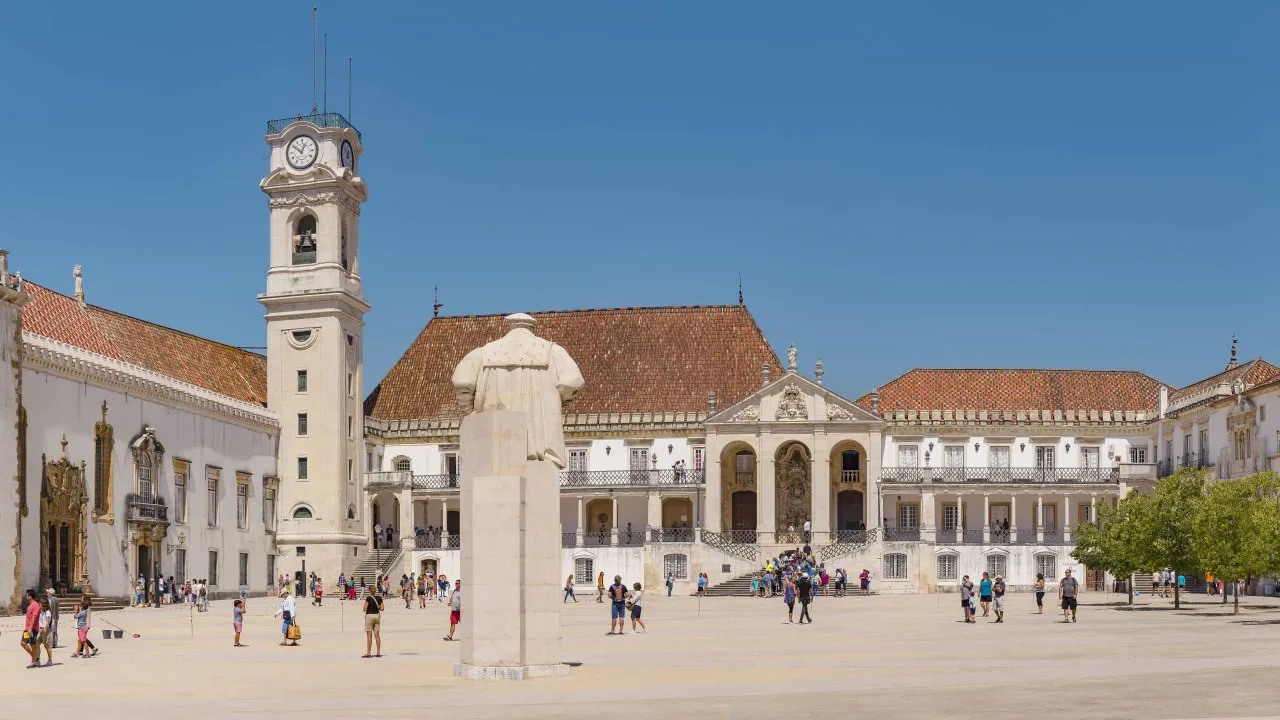
An open letter addressed to Rector Amílcar Falcão has highlighted significant issues in the management of doctoral programs at the University of Coimbra. The letter pointed out a major problem: “the inequality in the management of doctoral programs between different organizational units.”
While tuition fees vary among programs, the Foundation for Science and Technology provides a fixed amount of 2,750 euros annually to cover fees for all scholarship recipients. However, the management of any surplus compared to the actual tuition costs remains non-transparent and inconsistent.
The National Association of Science Researchers (ABIC) noted that some programs allow doctoral students access to part of this surplus for research expenses, whereas others do not offer information or support regarding these funds.
Furthermore, the letter revealed disparities in financial support, with some organizational units offering budgets for materials or scientific event participation, while others do not provide any type of funding or clarity on such possibilities.
In the open letter titled “For a Dignified Early Research Career at UC,” the authors also expressed concern over “the disparity in the allocation of physical workspaces to each researcher.”
“Often, the allocation of space is solely dependent on the conditions and goodwill of the supervisor, creating unacceptable inequality among researchers at the same institution,” stated ABIC.
ABIC also voiced concerns over the precarious conditions facing research fellows, especially regarding short-duration fellowships linked to research projects within the University of Coimbra.
“Despite this being a possibility outlined in the Research Fellowship Regulations, its use by the institution is troubling,” ABIC stated, emphasizing that short periods such as three-month fellowships, without contract renewals, hinder “adequate scientific work execution, compromising both research quality and the stability of researchers.”
According to ABIC, researchers experience significant demotivation and a lack of recognition from the University of Coimbra when “after completing a doctorate and contributing to the institution’s research, their options are limited to research fellowships, particularly short-term ones.”
The association also criticized the lack of curriculum-based courses at the university, where enrolled researchers “undertake significant scientific work without receiving educational components, yet are still required to pay tuition fees, which are not always fully covered by available scholarships.”
“We call for concrete measures to ensure equity in the management of doctoral programs, transparency in fund utilization, dignified working conditions for early career researchers, as well as recognition of these professionals. Rather than opening fellowship competitions for research projects at UC, we advocate employment contracts,” summarized ABIC.