


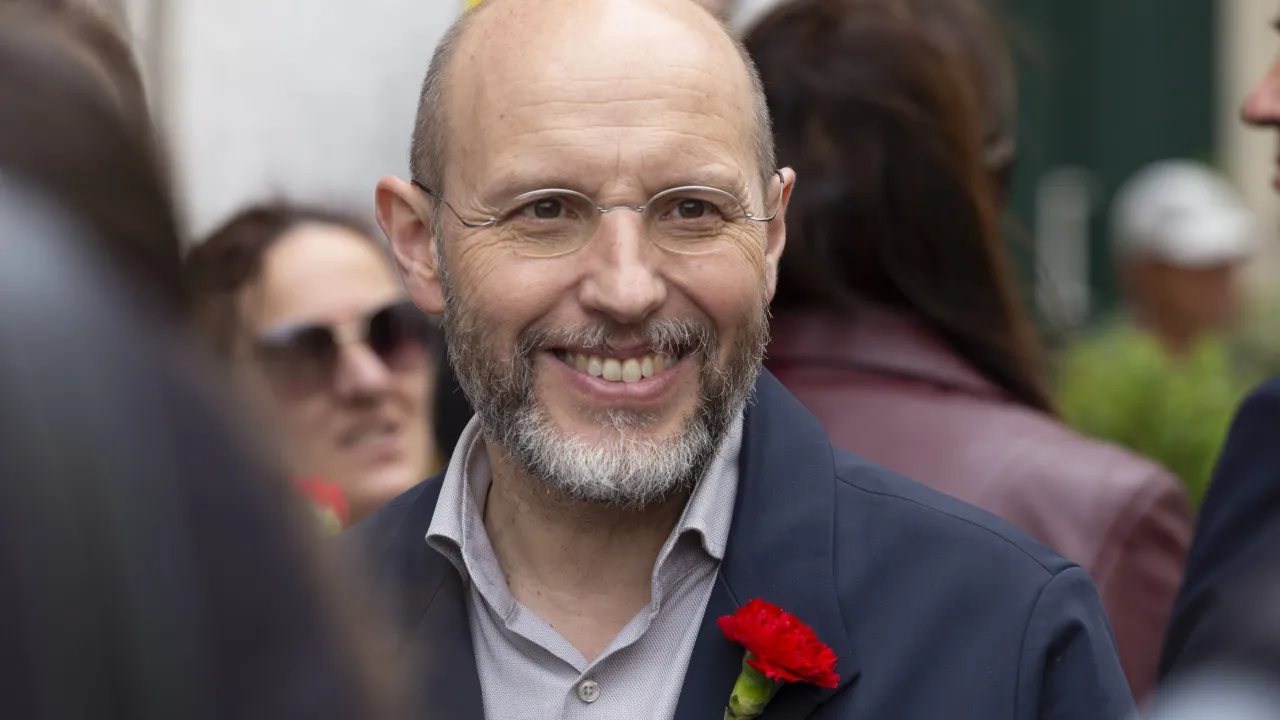
“It would have been important for that message of clarity [from Pedro Nuno Santos] to have arrived earlier, but it is good that it is arriving now. This is called parliamentarism, and parliamentarism works by seeking a majority in parliament,” said Rui Tavares at the end of a visit to the Vila Nova de Gaia/Espinho Local Health Unit.
The leader of Livre suggested that if this clarity had come sooner, it could have mobilized people differently for the campaign for the May 18 elections.
“But, evidently, there is something good in this change of discourse, in this course correction because people understand that by voting for Livre, they are voting for a government alternative. A deputy from Livre represents a change in government, and those who want to see Luís Montenegro no longer as prime minister can freely vote for Livre because it means we have this governance alternative,” he emphasized.
He insisted: “From this point of view, it’s good because it dispels the so-called phantom of the useful vote.”
Rui Tavares was commenting on the PS leader’s assurance on Tuesday night that after the legislative elections, a “solution of political stability in Portugal” will be found in dialogue with the parliamentary groups emerging from the elections, recalling his experience during the `geringonça´ period.
For the Livre spokesperson, what matters is not who comes first, but who provides the conditions for governability, and he argued that the right does not provide these conditions, claiming “the proof is clear.”
“The right has not provided stability; the right cannot agree; it cannibalizes,” he reinforced, adding that the country is going to elections about a year later precisely due to “the right’s fault.”
“It was Luís Montenegro who brought down his own government, and it was André Ventura who brought down Montenegro’s government,” he stated.
Without easing the criticism of the right, Rui Tavares stressed that considering this “cannibalization of the right,” the left must respond with clarity and show people that there is a compatibility of programs in defending the National Health Service (SNS), investing in education and housing, or recognizing Palestine’s independence.
In his view, these are the central elements that can mobilize the electorate and, subsequently, clarify a left-wing alignment.
In the event of a left-wing government solution, Rui Tavares highlighted the necessity of having a written agreement that can later be scrutinized and monitored.
“Livre is very clear on this, negotiations as they are done everywhere in Europe, as we have recently seen in Germany,” he exemplified.
In addition to the agreement, Rui Tavares reiterated his willingness to assume executive responsibilities, which would mean a new level of response for the country.
“For us, accepting executive responsibilities is about showing that we feel comfortable with the government program to be implemented and therefore would be accountable for it in frontline roles,” he concluded.