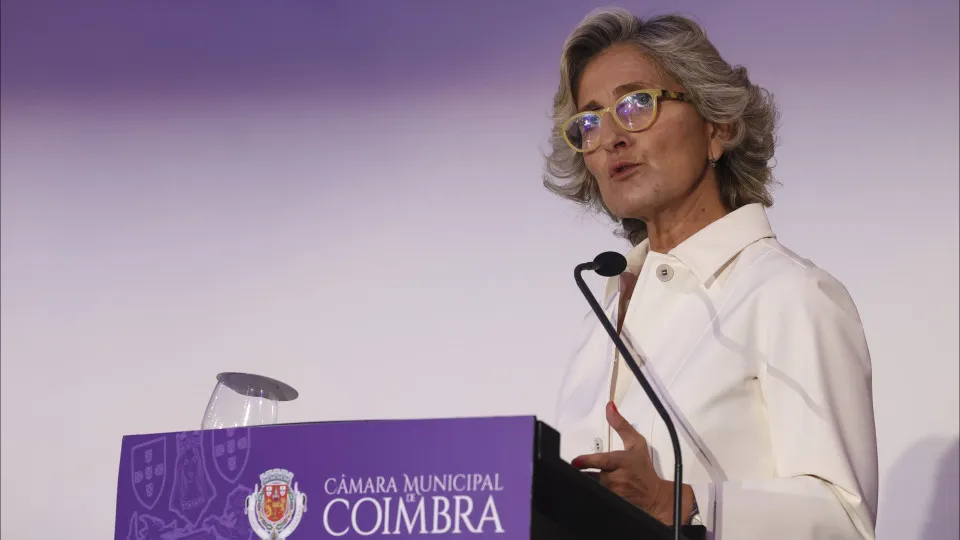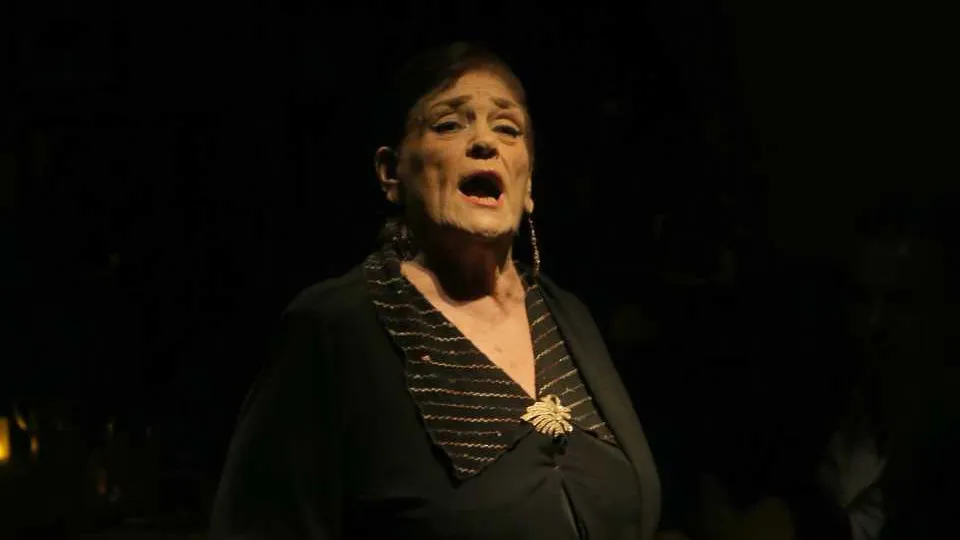


Marcelo Rebelo de Sousa spoke during a session of the ‘Encontros no Palácio de Belém’ program, which today brought together actress Inês Castel-Branco for a discussion with students from schools in Lisbon, Benavente, Batalha, and Vila Nova de Famalicão.
Miguel, a secondary school student from Agrupamento de Escolas Camilo Castelo Branco in Famalicão, asked the President of Portugal if any work by Camilo Castelo Branco had a significant impact on his personal or intellectual life.
The President began by stating that “an author is read at various ages” and that “at each stage, there is a book that resonates more,” eventually choosing “A Queda de um Anjo” as a book that gained more significance for him over the years, particularly as he engaged in political analysis.
“As you know, I have been analyzing politics for 60 years,” said Marcelo Rebelo de Sousa, who is 76 years old.
The Head of State described ‘A Queda de um Anjo’ as “a story of someone who essentially ends up involved in politics and who comes from a particular environment, moves to a much larger setting, and is dazzled by that larger milieu, dazzled by the opportunities,” demonstrating “a certain naivety, endearing yet occasionally a bit disoriented.”
In his view, “it somewhat reflects what one sometimes encounters in political life across various countries, when people suddenly leave a certain milieu, move to an entirely different environment, and struggle to adapt, spending some time feeling lost.”
“It ends up being a mini-portrait of some situations I analyzed,” added Marcelo Rebelo de Sousa, without providing specific examples.
He justified his choice of ‘A Queda de um Anjo’ by acknowledging it as “a very light book” and “not among the primary works” of Camilo Castelo Branco.
In this context, he observed that, between Camilo and Eça de Queiroz, “there is a current trend favoring Eça, who is more cosmopolitan,” yet Camilo Castelo Branco “is being rediscovered.”
According to the President, Eça “wrote with more difficulty, rewrote phrases numerous times, and had a cult-like precision in his very elaborate writing,” whereas Camilo “was the opposite” and “produced prolifically,” with “a prose featuring more adjectives and movement, flowing rapidly.”
“Eça represents the urban country, the metropolitan nation, the traveled, French-influenced country,” while “Camilo was, if possible, more Portuguese, more connected to roots,” he continued.
“As I am from Minho, I tend to prefer Camilo over Eça,” declared the President, who has Minho lineage on his father’s side.