

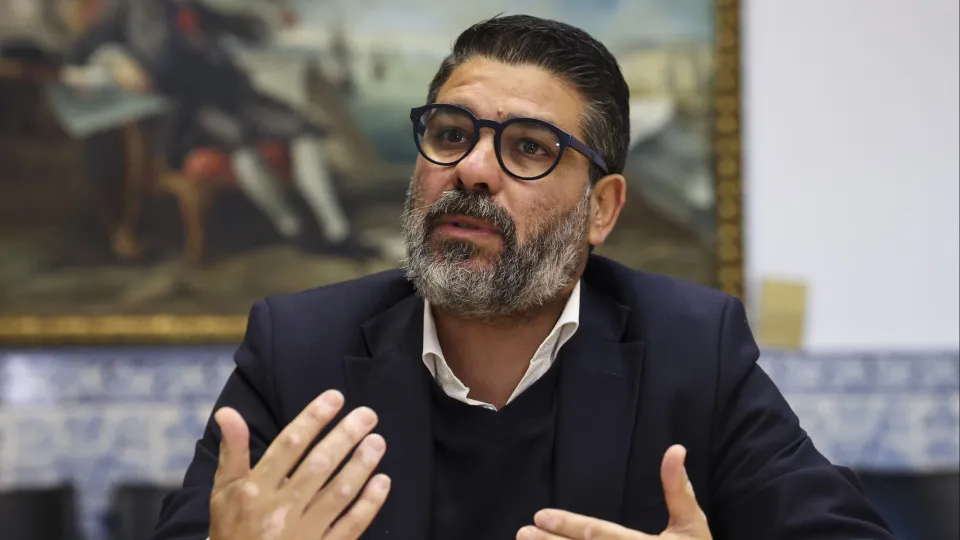
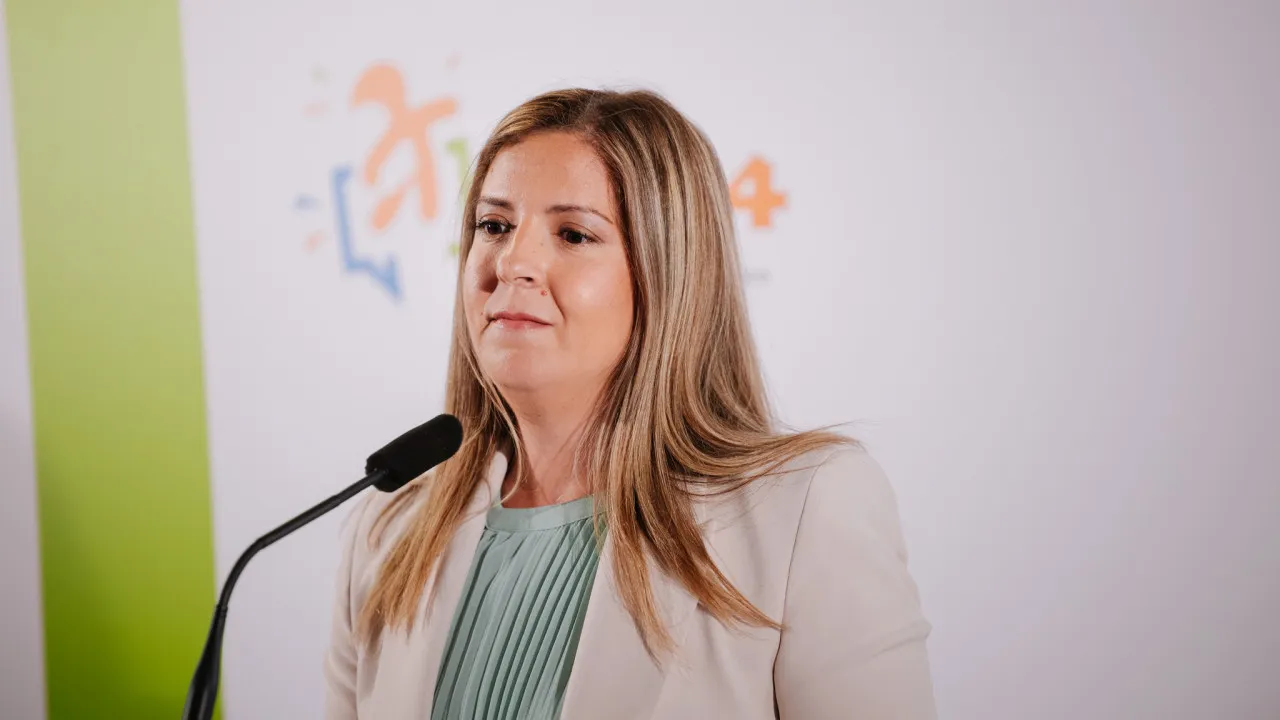
The second government headed by Prime Minister Luís Montenegro, which took office today, has the Ministry of Culture, Youth, and Sports led by jurist Margarida Balseiro Lopes, previously the Minister of Youth and Modernization.
Alberto Santos, who was the president of the Scientific Committee of the Romanesque Route, cultural commissioner of the Escritaria Literary Festival since 2014, and former mayor of Penafiel, assumed the role of Secretary of State for Culture last February, replacing historian Maria de Lurdes Craveiro.
At the time, Alberto Santos outlined objectives such as valuing heritage, effectively supporting the arts, and internationalizing Portuguese culture, also expressing interest in overseeing the book sector, highlighting the importance of democratizing access to reading and the need for greater public entity awareness in stimulating reading.
Taking on the Culture portfolio, which in the last decade has been a standalone ministry always with one or two secretaries of state, Alberto Santos is expected to handle dossiers ranging from the PRR implementation in the cultural heritage and digital transition areas to the revision of the Sponsorship Law, as well as the Fixed Book Price.
The expanded Ministry of Culture will also address the issue of VAT on art transactions in Portugal, which continues to be contested by artists and galleries, the Statute of Cultural Professionals, also criticized by the sector, and competitions for leadership positions at the Cultural Heritage Institute and the General Inspectorate of Cultural Activities.
In the cinema and audiovisual field, the implementation of the “Audiovisual and Cinema Industry Financing Program,” SCRI.PT, approved by the Council of Ministers in April, in coordination with the Ministry of Parliamentary Affairs, is expected.
The legislative diploma, aimed at reforming the support and incentive system for cinema and audiovisual with a total allocation of 250 million euros, was open for public consultation until June 13.
The oversight of the Directorate-General for the Arts, with its support programs ensuring funding and the existence of artistic structures and events across the country, is another competency to assume.
At the outset, Margarida Balseiro Lopes and Alberto Santos also face challenges regarding the new design of the Ministry of Culture, with Youth and Sports, already voiced by sector organizations, from cinema and audiovisual areas to performing arts.
Professionals, consulted by Lusa, believe that the new structure signals “a certain weakness” or uncertainty regarding the importance of Culture, maintaining expectations about who would assume the Culture portfolio.
The State Budget for this year had a total consolidated expenditure allocation of 597.3 million euros for Culture.
The electoral program of the PSD/CDS-PP Coalition promised to achieve a value 50% higher than that of 2024 by 2028. In that year, Culture’s actual expenditure was 450.9 million euros.
As for Deputy Secretary of State Carla Rodrigues, the competencies assumed in February are now extended to Youth and Equality.
Carla Rodrigues was a PSD deputy, participated in the Equality Subcommittee, coordinated the working group on Prevention and Combat against Violence Against Women and Domestic Violence, and was chair of the National Council for Medically Assisted Reproduction.
Pedro Dias, Secretary of State for Sports in Luís Montenegro’s first government, held the position of board member of the Portuguese Football Federation from 2011 until March 2024. He has a background in futsal and academic sports.
[News updated at 00h01]