
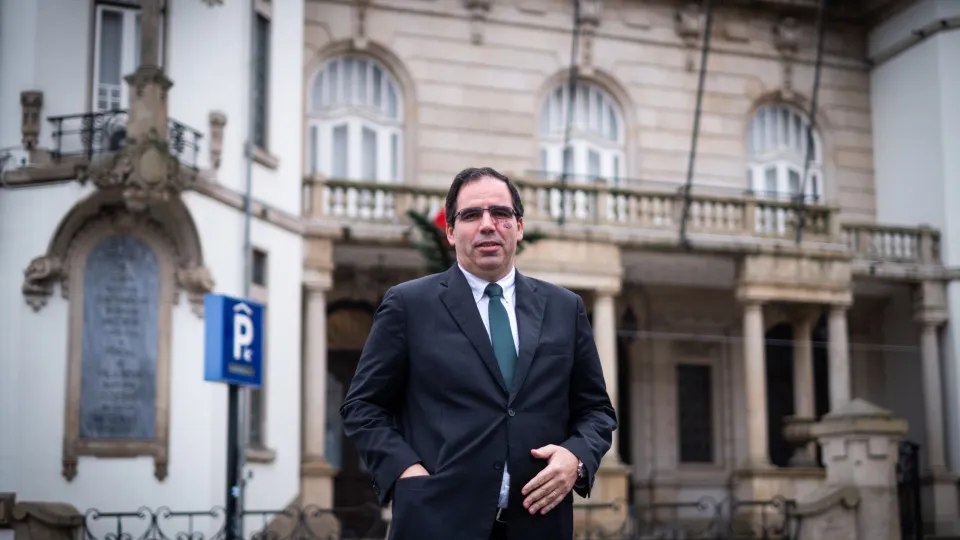

“The Portuguese state actively promotes the survival of customs and experiences among its emigrants, having even a dedicated day for Portuguese communities,” while simultaneously demanding “full integration” from immigrants, stated Rui Pena Pires of the Observatory of Emigration.
There is “a schizophrenia” in public policies on migrations: the government “demands of immigrants the opposite of what it promotes in emigration,” remarked the researcher during a commemorative meeting for the 10th anniversary of the Migration Experiences Meetings, organized by Iscte — University Institute of Lisbon, Universidade Nova, and the Observatory of Emigration.
Liliana Azevedo, one of the coordinators of the meetings, agreed with this assessment, highlighting that “migrations are not treated the same way when it comes to Portuguese abroad or foreigners” in Portugal.
“There is a dominant narrative about the Portuguese abroad, presenting them as ambassadors of Portugal, good workers who integrate well, preserving the language and traditions,” but this “is a superficial image, happening with some, but not with others,” she emphasized.
Today, the discourse on immigrants in Portugal portrays them as individuals “taking advantage of the system and subsidies,” but it neglects the history of Portuguese emigration.
Even today “many Portuguese face problems in housing, access to health, integration, and stigmatization” in their host countries, so “pointing the finger at immigrants coming from other continents and not looking at Portuguese migrations abroad is indeed hypocritical,” considered the researcher, lamenting the lack of communication between academia and decision-makers.
“There is no established channel of dialogue between academia and policymakers,” acknowledged the researcher, noting that politicians seldom attend scientific meetings, despite being invited, and analysts “are rarely called to the dialogue table.”
When migration policies are developed, “numbers and economic elements” are referred to, but “sociologists, anthropologists, or geographers,” who have studied the subject, are not brought into the debate.
“It’s not a problem of lacking data, it’s a problem of political unwillingness to find solutions based on scientific data,” explained Liliana Azevedo.
One of the officials present at the meeting, Iscte researcher and former Secretary of State for Migrations Cláudia Pereira, acknowledged that the bridge between academia and politicians is not always easy.
“It wasn’t in my case, I had a minister who was a sociologist and a prime minister [António Costa] who was knowledgeable about the subject and read articles on migrations, in some cases before we did,” recalled the researcher, emphasizing that many sector measures “were based on studies.”
The “truth is that most politicians do not follow academic recommendations,” but “one thing that Covid taught us is that we need science and data to build better policies and act on the ground,” recognized Cláudia Pereira.
Today, the country faces a “politically demanding and challenging climate” and “Portugal is one of the epicenters of hate speech in Europe,” so the topic is captured by “myths and falsehoods.”
“Comparatively, Portugal has fewer immigrants than other European countries,” and “refugees in Europe are less than 1%, but they have gained visibility that has made them the center of attention,” the researcher exemplified, considering it wrong to adopt restrictive policies on foreigners entering in a context of economic growth.
The labor market regulates flows: “There is work, people migrate; there is no work, people do not migrate,” explained Cláudia Pereira.
“Very provocatively, the best way to keep immigrants away is to create an economic crisis,” stated the former socialist official, recalling the beginning of the migration meetings, now celebrating 10 years: “we were in a context of the sovereign debt crisis” and “witnessed new emigration,” because “there was little employment in Portugal and much in the UK, for example.”
Then, “youth unemployment increased significantly and those without jobs in Portugal” sought other destinations, mainly in Europe.
“Portugal never ceased to have emigrants, about 65,000 Portuguese leave each year,” explained the researcher from the Observatory of Emigration.
Liliana Azevedo admitted that the most mediatic topic now is immigration, following a global trend. Portugal was a country “that attracted people and there were legislative changes in terms of immigration laws that constituted an attraction factor, the media talked about the subject, and Chega took advantage of it and used immigrants as scapegoats” for “emerging problems.”
Rui Pena Pires agreed that the “political context has changed” and there exists “a loose discourse and political practice on immigration that was unimaginable a few years ago,” in a process “dangerous because it creates divisions and hatreds and creates, in the long term, conflicts.”
“If we normalize xenophobia towards immigration, we accept that other similar processes happen to others” and there is the risk of repeating history: “at one time it’s the Jews, at another time it’s the Gypsies, and at others, it’s the immigrants,” he concluded.