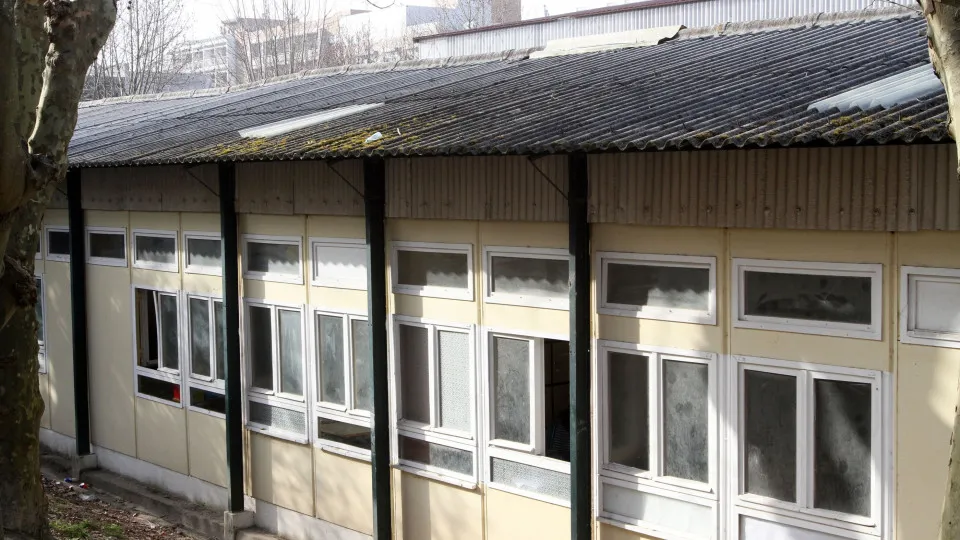


The Centro Social da Musgueira, established in 1963 when it was “the largest shantytown in Lisbon,” now serves a population ranging from “3 to 100 years old,” says director Ana Barata, who is at a loss for words to describe the “incredible” changes in an area currently undergoing rapid development.
In Alta de Lisboa, shared by the neighborhoods of Lumiar and Santa Clara, approximately 40,000 people reside. However, the Urbanization Plan of Alto do Lumiar, approved in 1996, aims for 60,000 inhabitants, making the area attractive for condominiums built alongside the PER-designated housing clusters managed municipally.
The Centro Social da Musgueira has been “a steadfast companion” for the community. “We spent 50 years in the old facilities near the shantytown and then followed the entire rehousing process into this new urban and social reality that is Alta de Lisboa,” recalls Ana Barata.
Since moving to its current location in 2013, the transition “was an opportunity for an entire community to empower itself,” she notes.
Statistics underscore its impact: 100 children in kindergarten (another 100 on a waiting list); 100 children and young people in after-school activities; 200 youths in a media library (offering informal education in the afternoon and evening); 60 children and young people receiving academic support; 60 elderly people in a day center; 50 beneficiaries in home support services.
The center also manages an employment integration office, offers training programs, and hosts “numerous community intervention projects,” including the summer CineConchas outdoor film festival.
Currently serving “more than 600 people daily,” the director notes a significant increase in demand: “We have new residents from Alta de Lisboa attending the institution, alongside those who came from the old Musgueira Norte neighborhood, residents of Alta de Lisboa since the early 2000s.”
Emphasizing that the institution’s mission is to serve “the most vulnerable,” Ana Barata highlights the center’s focus on “bringing together different people,” in a territory still lacking “services, leisure sites, points of interest,” but “increasingly consolidated,” assuming “a new centrality.”
The construction fences block the entrance to the Maria Keil Library, which has long requested “a larger space” than the one it’s occupied for 20 years to carry out the “various activities” requested of it.
“The space we have is already quite limited,” states coordinator Cristina Dias, hopeful of a change given “the growing community” in Alta de Lisboa.
According to her, “everyone uses the library, from local community members to market-rate housing residents.” The difference in the number of families participating in activities, storytelling hours, and reading promotion events has significantly increased over the years, she explains.
“People interact among themselves, the children from the neighborhood participate with those from market-rate housing. Things have gone very well and they help each other, so we don’t notice this difference,” she assures.
The examples of the social center and the library are cited by Gebalis, the manager of municipal housing, to showcase Alta de Lisboa’s unique character, where institutions are attended by both market-rate and rehoused residents.
Mikaella Andrade, Gebalis’ director of local intervention, highlights that “the strong partnership existing on the ground” has paved the way for social inclusion.
João Tito Basto, coordinator of Centro Periférico, a project by the Alto do Lumiar Residents Association, agrees, underscoring that beyond the larger institutions, numerous local grassroots associations work in the area, fostering “a spirit of mutual aid and support.”
Through Centro Periférico, “an artistic experimentation space” with a sound studio and rehearsal room, João Tito says a quarter of the participants in the “Talentos do Bairro” contest, organized by Gebalis, have passed. “This shows that community work later bears fruit and results,” he emphasizes, highlighting the “valuable people” living in Alta de Lisboa who need to be “pushed forward.”