

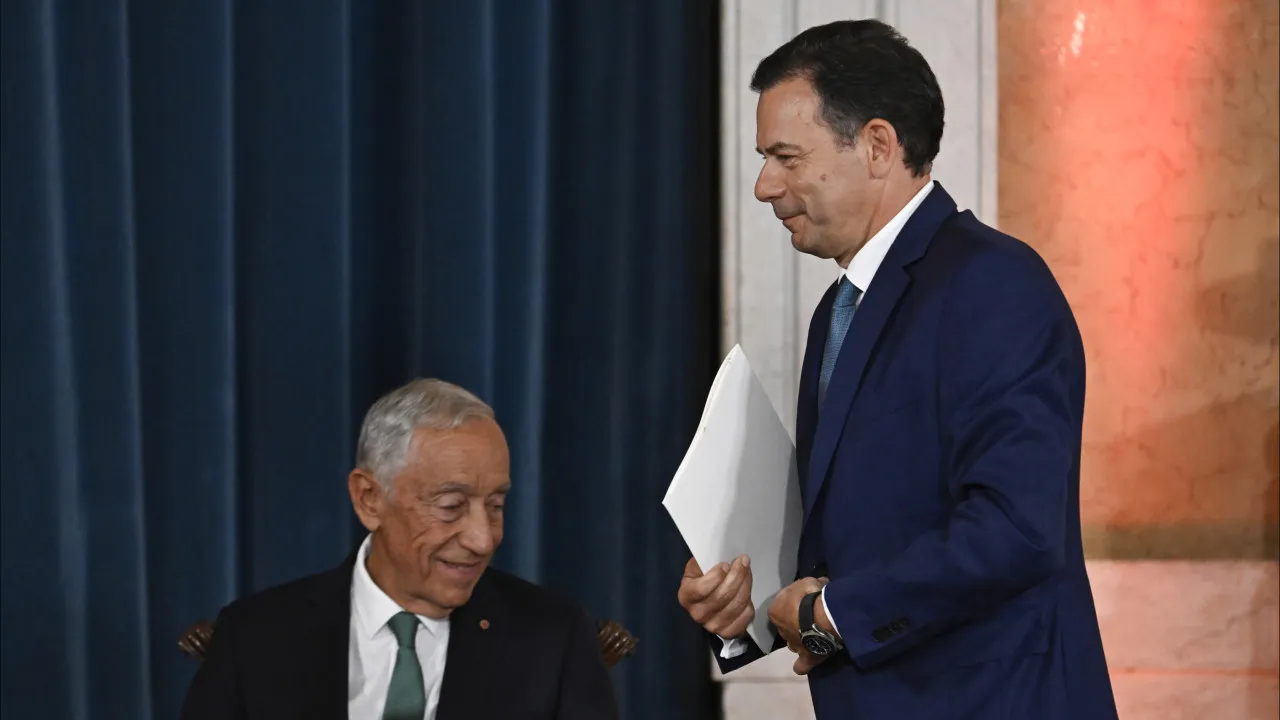
The President of the Republic, Marcelo Rebelo de Sousa, today approved the list of 43 secretaries of state put forward by Prime Minister Luís Montenegro for the XXV Constitutional Government, which features two more secretariats of state than the previous XXIV Government.
Overall, the government will consist of 60 officials, including the prime minister, of whom 20 are women (33%), compared to 24 out of 59 (approximately 40%) in the previous administration.
Among the newly announced secretaries of state, 13 are newcomers (30% of the total), notably including Rui Rocha, vice-president of the PSD, former vice-president in Rui Rio’s leadership and former mayor of Ovar, Salvador Malheiro, and João Manuel Esteves, who served as mayor of Arcos de Valdevez until the end of March, completing his third term.
Other new appointees include João Valle e Azevedo, a deputy and economist at the Bank of Portugal, Tiago Macieirinha, former legal advisor to Passos Coelho, Bernardo Correia, director-general of Google in Portugal, and Cláudia Sarrico, an OECD analyst for higher education.
Notable departures from the government (11 at the secretary of state level) include José Cesário, who held various roles in PSD governments within the Communities portfolio, now replaced by Emídio Sousa, the former secretary of state for the Environment, and second in line for Aveiro in the May 18 elections.
Secretaries of state such as Cristina Vaz Tomé from Health and Paulo Marcelo from the Presidency, who have been elected as deputies, may now return to parliament, as will José Cesário, who led the list for the Outside Europe circle.
Some secretaries of state are transitioning between ministries, such as Ana Isabel Xavier, moving from Defense to Foreign Affairs, while others change due to government reorganizations affecting the portfolios of Economy, Culture, and Sport.
Several ministries, including Finance, Territorial Cohesion (which inherits the secretaries of state from Economy), Internal Administration (despite a change in the ministry’s leadership), Infrastructure, Housing, and Labor, retain their current secretaries of state.
Conversely, both secretaries of state in the Justice Ministry have been replaced, and Parliamentary Affairs is the only ministry without any secretariat of state, having lost the portfolios of Sport and Communications to other areas.
In addition to establishing a new Ministry of State Reform, with two new secretariats of state, a politically significant change is that Rui Freitas, formerly Secretary of State for the Presidency, will now also address Immigration, an area central to public debate.