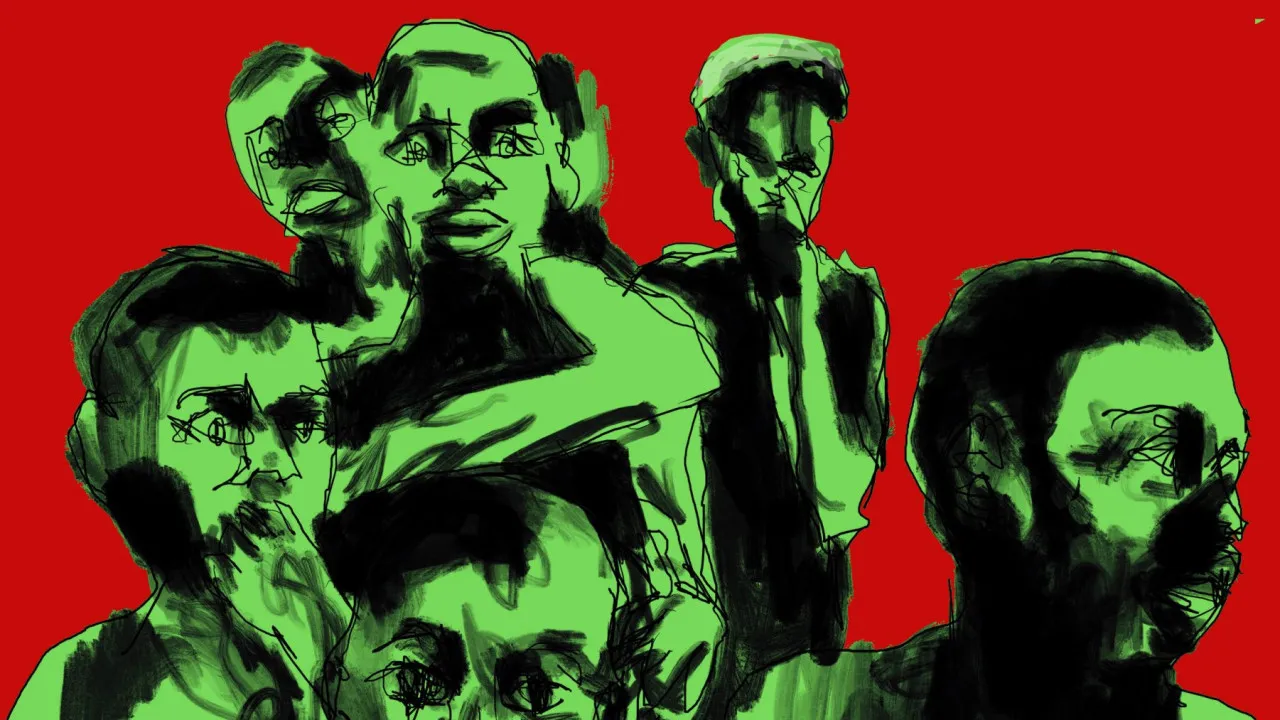
Written over the past four years by Pedro Galiza, the play narrates “the story of a black soldier serving in the Portuguese armed forces, siding with the colonizer against the colonized,” as the author explained.
Galiza explored what it would mean for this individual to win or lose the war. “It would always mean both winning and losing it. He would find himself in an impossible situation,” he stated.
Although recognizing April 25 as the most celebrated date of all, the author offers a clarification: “When we say that April 25 is a bloodless revolution, be careful; there were thirteen years of colonial war, and the entire unfolding of the colonial war leads to April 25.”
“There is a lot of blood on April 25, many victims about whom we do not speak. These people massacred in Wiriyamu contributed, with their deaths, to the occurrence of April 25. Indirectly, yes, but they contributed,” he remarked.
The creation of the text, which will premiere at São Luiz on April 24, was also an exercise in confronting the war crimes committed overseas and accepting them as part of the history of Portugal and those countries.
“It is part of our history, meaning it leads us to where we are today, these deaths, these massacres. Our shroud of concealment brings us to today’s Portugal, and at a time when there is a somewhat deliberate process of amnesia ongoing, it is good to talk about these things,” he argued.
He added, “Every time we say that our colonialism, for example, was a more civilized colonialism than that of other countries, the colonizer wants to exert power over the colonized, period; and uses whatever tools necessary.”
Artistically, Pedro Galiza believes that “there is merit in mentioning” it in theater. This is true of ‘The Tragedy of Aristides Inhassoro,’ a play divided between “the before and the after of the Wiriamu massacre” of 1972 by Portuguese troops, resulting in 385 deaths across five villages, a third of their population.
The ‘before,’ as explained by the playwright, is depicted by “a certain colonial life in Mozambique, with its racism, its classism, its ignorance, the obscurantism.” In the post-Wiriamu section, a character married to a DGS inspector attempts to denounce the massacres, only to be told by her husband: “You will be swallowed by the future. You will talk to yourself. No one will know. No one will care.”
The performance includes a list of the victims’ names of this “war crime,” about which, in Pedro Galiza’s opinion, there is not enough discourse.
“What’s most interesting today is for us to confront these war crimes directly and, first, accept that this is part of our history,” said the author, who is part of the cast, adding, “It is necessary not only to know that this happened but also to understand what did not happen regarding this.”
Directed by João Cardoso, this play emerged from a proposal by the artistic director of the Assédio company for Pedro Galiza to write a piece commemorating the 50th anniversary of April 25 last year, but one that was not “too laudatory.”
‘The Tragedy of Aristides Inhassoro’ features actors Daniel Silva, Daniel Martinho, Catarina Gomes, Inês Afonso Cardoso, Maria Inês Peixoto, Pedro Galiza, Pedro Mendonça, Pedro Quiroga Cardoso, Susana Madeira, João Cardoso, and Gracinda Nave.