

The Government’s proposed legislation, voted on in general, in specialty, and in a final global vote, was opposed by the PCP in all three votes, while Chega abstained. In the final vote, the legislation received favorable votes from PSD, PS, IL, Livre, CDS-PP, PAN, and JPP.
PS and Livre also voted favorably in general but abstained in the specialty vote.
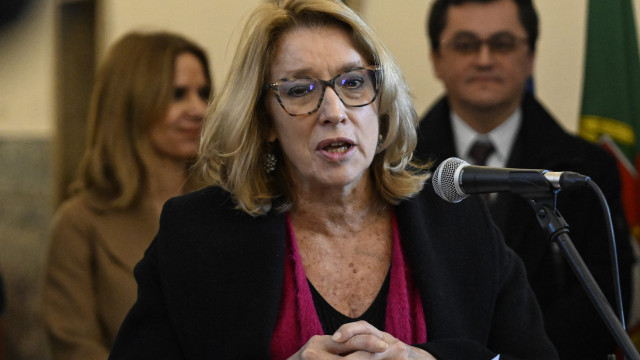
The European directive 2024/1226, approved on April 24, 2024, was supposed to be transposed by May 2025. Justice Minister Rita Alarcão Júdice explained in parliament that the delay in presenting the transposition bill was due to the fall of the previous government in March 2025.
During the debate, socialist deputy Pedro Delgado Alves stated that the PS found nothing “structurally problematic with the Government’s work” in transposing the directive, but noted that “a brief specialty phase would have been useful.”
The specialty phase is typically when parties refine proposals considering feedback from various entities, though in this case, it did not occur as the Government requested an urgent legislative process.
Deputy from Livre, Paulo Muacho, and PCP deputy Paula Santos, also emphasized the usefulness of the specialty phase, with all three deputies noting that the opinion of the Superior Council of Magistracy, submitted to the AR, highlighted the need to clarify maximum limits to be applied to legal entities.
Rita Alarcão Júdice, in presenting the proposal, mentioned fines of up to 40 million euros depending on the political-diplomatic measures violated.
In the debate, the communist deputy explained PCP’s opposition, citing the Government’s bill as pursuing a “logic of imposing coercive sanctions” on sovereign nations, which will have a “negative impact on the Portuguese people.”
Idalina Durães of Chega acknowledged “the proposal’s merit” and the importance of aligning national legislation with European law, warning that the party will “continue to closely monitor” the bill’s implementation.
While the proposed law does not specifically mention Russia, the directive’s origin was in the context of sanctions imposed following the 2022 invasion of Ukraine, including asset freezes.
For PSD deputy Carolina Marques, the bill ensures that “Portugal is not used as a means to escape European sanctions” by creating a “firmer” and “fairer” normative framework that distinguishes between intentional and unintentional evasion of diplomatic measures.
“This regime is absolutely essential to ensure that punishment is real and that sanctions are enforced and not just words,” emphasized IL deputy Rui Rocha.
The proposal’s significance was also highlighted by CDS-PP’s João Almeida and PAN’s sole deputy, Inês Sousa Real.
The bill will now proceed to the President of the Republic, Marcelo Rebelo de Sousa, for promulgation.