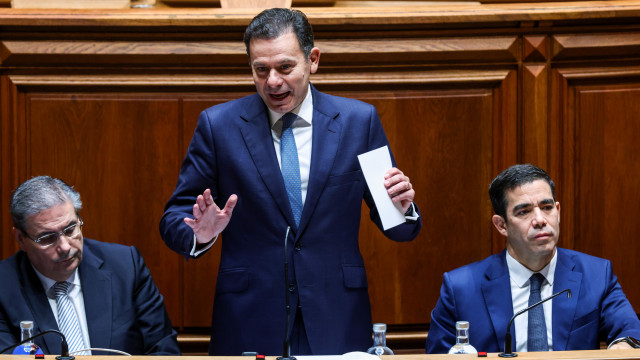

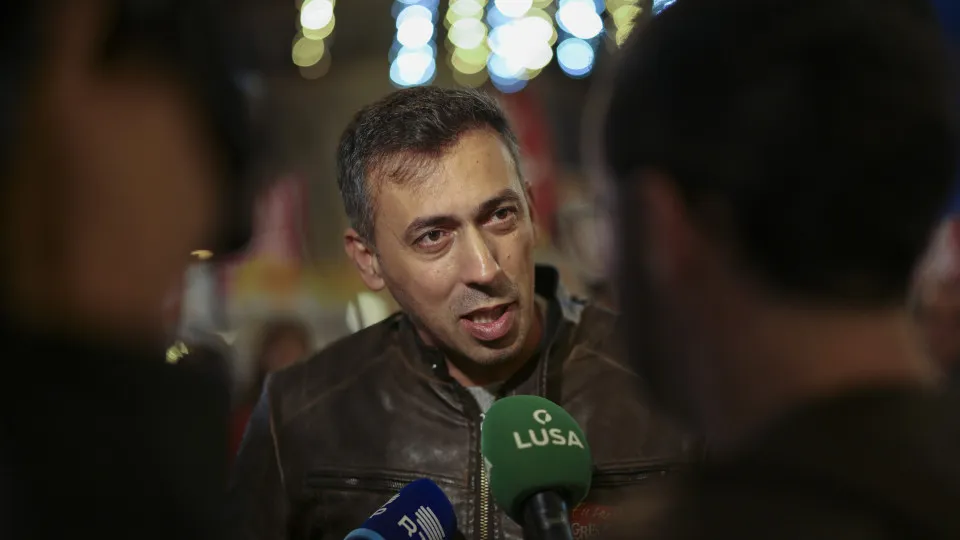
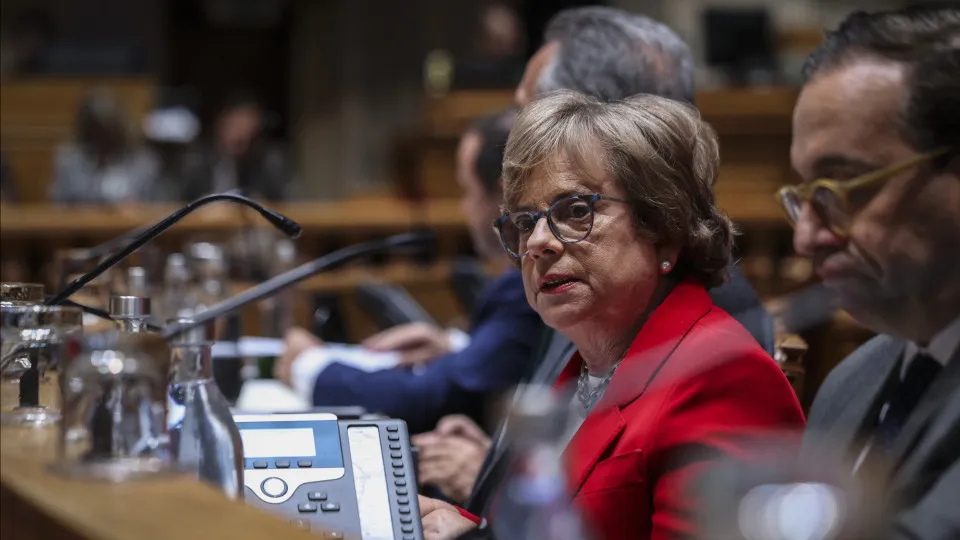
“We must regulate the flow at our borders and ensure a regime and practice that makes it clear we do not encourage the most iniquitous practices, those that exploit porous regulatory systems, insufficiently supervised and implemented,” stated Maria Lúcia Amaral.
The minister, speaking at a meeting organized by the General Inspection of Internal Administration on “Forced Returns and Monitoring,” described these practices as “an invitation” to “human trafficking and all associated activities.”
On the day the government opens a public consultation on changes to the laws governing immigrant returns, the minister, responsible for the National Unit of Foreigners and Borders (UNEF) of the PSP, which will manage the process, emphasized that the laws are still subject to public debate but advocated tightening rules to facilitate the expulsion of foreigners.
In her speech, she recalled her 2018 visit to the Temporary Installation Center (CIT) at Lisbon airport, when she, as the Ombudswoman, was confronted with detained women “originating from Anglophone Africa, all of them unconnected with each other,” who told her they knew they would be detained for 60 days, the maximum period allowed by current legislation.
They “were there because someone had directed them, someone who knew the intricacies of Portuguese law well” and “instructed the people on what to say,” all the while filing appeals or asylum requests, waiting for that period to elapse.
“Afterwards, they would be free and someone would take care of them, already introduced into the Schengen area, within the European continent,” she noted.
“The issue of return that arises in our consciousness and our national community tasks” stems from “moral convictions and European legal commitments,” the minister justified, defending the legal changes proposed by the PSD/CDS government.
“Our borders are not porous, they are regulated and adhere to a legal structure,” she said, stating that “those who do not comply cannot remain in national territory,” respecting human rights.
“Anyone under our roof must be treated with the dignity each person deserves,” she affirmed.
At the conclusion, the minister reminded journalists about the importance of UNEF, which will ensure compliance with the new legislation, which “must be enforced through police actions, not administrative ones.”
So far, she explained, “when someone was in national territory improperly, they were notified to leave, but there was no police force throughout the territory that could enforce this order, which was an administrative order.”
Therefore, this PSP unit bears the “fundamental mission of ensuring” the legal model is “uniformly implemented.”
Regarding the lack of detention spaces for immigrants (CIT) — with currently about 80 beds — the minister reminded that there are other coercive measures for those subject to expulsion, and the new law introduces new measures such as an open regime, bond deposits, or the surrender of travel documents.
On the open regime in CIT, the discussion “is still a bit premature”: “We are at the beginning of the legislative process on this topic,” but there will be this possibility.
The government has already announced the construction of two new CITs, with capacities of up to 300 beds, ruling out the use of wings in prison facilities.
“People are not detained by judicial decision, they have not committed any crime, they entered Portuguese territory illegally, they must be returned to their territories of origin, and in the meantime, as they cannot move freely,” they are “temporarily housed until their return,” the minister explained.
With temporary housing periods exceeding 60 days, there will be impacts on families, and the open regime will allow “for instance, children to attend school,” the minister added.