
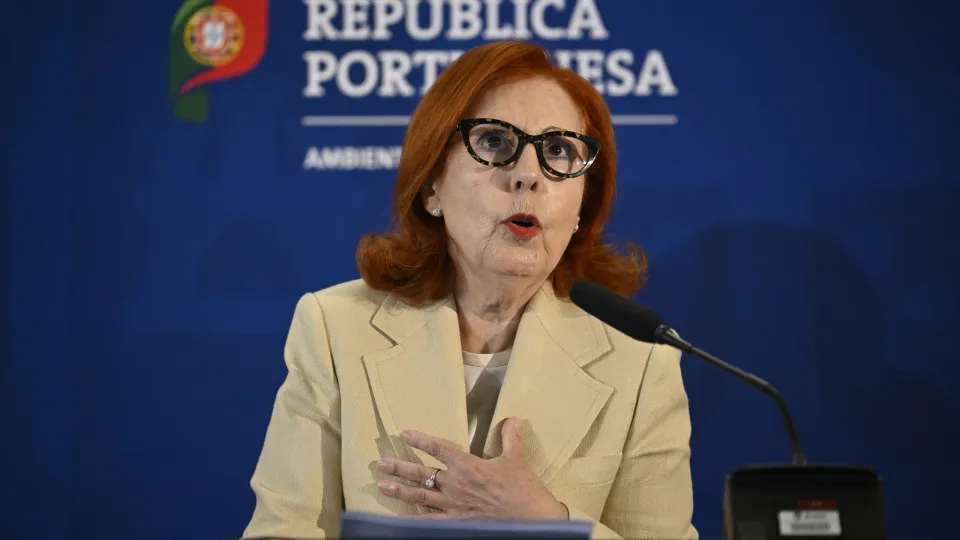
“In November 2025, the Ministry of Environment and Energy, through the Climate Agency (APC), executed payments totaling 36.5 million euros, funded by the Environmental Fund and the Recovery and Resilience Plan (PRR), demonstrating a high execution rate,” stated a press release from the office of the Minister of Environment and Energy.
“We are ensuring that support reaches the ground in time to make a difference, whether in protecting our forests or in tackling the energy vulnerability of families,” said the Minister of Environment and Energy, Maria de Graça Carvalho. She noted that the execution of 36.5 million euros in one month “proves the ability to convert European and national funds into concrete and immediate actions.”
From the total investment of 36.5 million euros, the Ministry of Environment and Energy emphasizes the focus on “energy efficiency and fair transition, with support to families, and resilience and forest management.”
“In the area of Energy Efficiency and Fair Transition, more than seven million euros were paid to ensure access to domestic energy for vulnerable families (with the Solidary Gas Cylinder program), greater energy efficiency in homes and services, aiming to reduce energy costs and improve people’s thermal comfort (with programs like PAES, Energy Voucher, E-Home, among others), and also ensuring the professional reconversion of former workers from the Pego Coal Center,” the ministry stated.
Another priority was designated to “Resilience and Forest Management,” where the ministry indicated that over 8.8 million euros were invested, for example, in emergency measures to support post-fire recovery.
“A further 4.5 million euros were paid for carbon sequestration projects,” it added.
Among other main vectors, 5.5 million euros were directed at the decarbonization of public transport and sustainable mobility.
Another area where the Portuguese government invested was in water use efficiency.
According to the minister’s office, “one million euros were paid for management in water supply and quality on Terceira Island,” in the Azores.
Nature conservation and biodiversity received a boost of “3.5 million euros dedicated to conservation plans for priority species, such as the Iberian lynx, monitoring of wolf packs, and the training of nature guards.”
For the “blue economy” field, linked to the maritime economy, the investment was strengthened with 3.3 million euros for “research, monitoring, and technological innovation in the maritime domain.”
“We are ensuring that support reaches the ground in time to make a difference, whether in protecting our forests or in tackling the energy vulnerability of families. These investments are the driving force behind a greener and fairer economy,” concluded Maria da Graça Carvalho.