


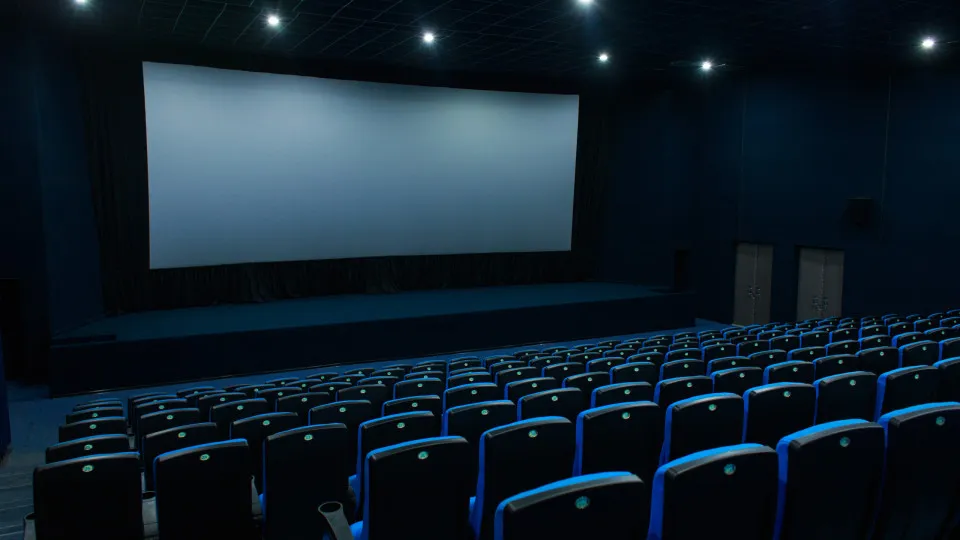
The formation of a working group was announced in November by Culture Minister Margarida Balseiro Lopes, acknowledging “the increase this year in requests for the declassification of cinemas.”
This working group includes members from the Inspectorate-General for Cultural Activities (IGAC), the office of the Culture Minister, and the Institute of Cinema and Audiovisual (ICA) and is “gathering contributions from different sector agents, promoting a broad and substantiated reflection to support future action proposals,” according to a source from the ICA.
The issue of cinema exhibition and the “correction or reduction of regional asymmetries” is outlined in the Strategic Plan for Cinema and Audiovisual 2024-2028, which was approved over a year ago and, as the ICA acknowledged, “faced some constraints at its inception,” partly due to two recent legislative elections.
An official ICA source stated that “very soon it will be possible to share concrete actions already in the application phase,” related to that strategic plan.
In September, it was reported that several requests for the declassification of cinema activities were made this year, and there were closures of cinema halls, mostly operating in shopping centers managed by Sonae Sierra in various locations.
For example, Arrábida Shopping in Vila Nova de Gaia, the largest cinema complex in the country operated by exhibitor UCI, was authorized to declassify cinema activities in nine of its 20 halls due to “economic viability” issues.
Requests were also made to declassify the four halls at Estação Viana Shopping in Viana do Castelo and six of the 12 halls at Cinemas Cineplace Braga, with operations in both locations still ongoing.
NOS Cinemas, the largest exhibitor in the country, ceased operations in five halls at MaiaShopping (Porto), five halls at Tavira Grand Plaza (Faro), and six halls at Fórum Viseu.
In October, it was reported that exhibitor Cineplace closed halls at Algarve Shopping in Guia (Faro), Madeira Shopping in Funchal, and Rio Sul Shopping in Seixal (Setúbal).
In the Algarve, local press reported in November the closure of cinema exhibition in Portimão, in halls operated by Cineplace.
Among all these exhibitors, only NOS Cinemas responded to a request for clarification, with spokesperson Nuno Aguiar stating that “the exhibition sector in Portugal is dynamic,” and that “it is normal for halls to open in some regions and close in others.”
A request was also made to Sonae Sierra regarding future plans for cinema exhibition in their shopping centers, but no response was received.
In Portugal, according to ICA data, three districts—Beja, Bragança, and Portalegre—lack commercial and diverse cinema exhibition. The city of Viana do Castelo is at risk of losing its cinema in a shopping center, as declassification of halls was authorized.
There are dozens of municipalities in the country, especially outside major urban centers, where cinema is only available, sometimes weekly, in auditoriums, cine-theaters, cultural houses, or film clubs in municipally managed spaces.
In 2025, the latest ICA data, recorded until November, indicates the existence of 565 halls, of which 169 operate in the Lisbon region, 172 in the north, 123 in the center, and the remaining dispersed across Alentejo (41), Algarve (34), Madeira (16), and the Azores (10).
With December data still pending, cinema exhibition in 2025 accounted for 9.6 million spectators and 61.9 million euros in box office revenue. In 2024, 11.8 million spectators attended cinema halls, generating 73.3 million euros in revenue.