

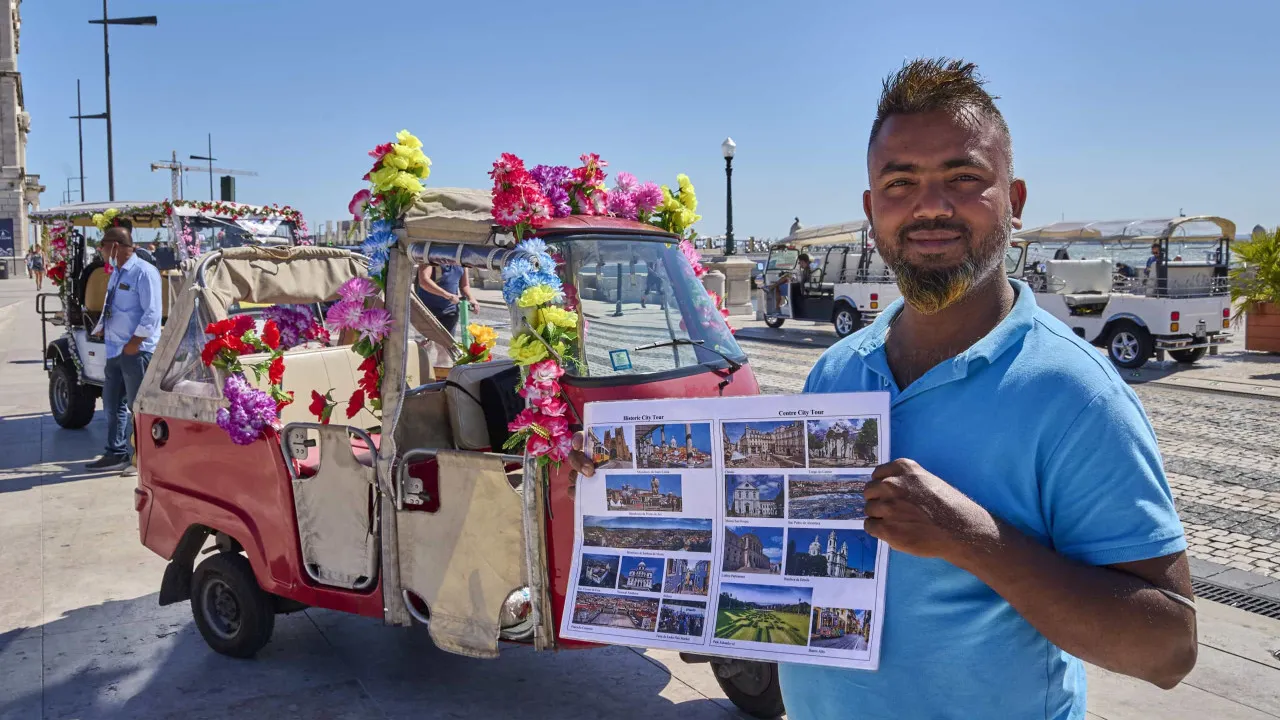
“The first round of the initiative will allocate up to 400 badges to over 1,000 tuk-tuks currently operating in the city,” stated the executive led by Carlos Moedas (PSD) to Lusa.
During a private meeting of the City Council, the proposal to submit for public consultation the Regulation of Parking and Stop Management for Non-Heavy Vehicles Dedicated to Tourist Activities in Lisbon, drafted by the PSD/CDS-PP leadership (ruling without an absolute majority), was approved with abstentions from the PCP, Livre, and BE, alongside votes in favor from the proponents, PS and Cidadãos Por Lisboa (elected by the PS/Livre coalition), according to an official source of the municipality.
“In addition to the ban on tuk-tuk circulation in 337 streets, which took effect on April 1st, and increased enforcement by EMEL and the Municipal Police, this regulation marks another decisive step towards managing and regulating this activity,” said Filipe Anacoreta Correia (CDS-PP), Deputy Mayor of Lisbon, responsible for Mobility.
In a note sent to Lusa, Anacoreta Correia emphasized the necessity to “promote respect for the residents of Lisbon and achieve better balance between the local inhabitants and the tourist activity,” adding that the approved regulation will now enter a 30-day public discussion period and could be implemented during the summer following this phase.
According to the PSD/CDS-PP leadership, this regulation aims to “reduce the number of tuk-tuks” by introducing a permit for parking in public spaces.
Other measures stipulated in the regulation include establishing operating hours for the vehicles from 9:00 a.m. to 7:00 p.m.; enhanced supervision and enforcement of fines for various violations, such as “revocation of the permit for violating regulation rules more than five times”; and the prohibition of combustion tuk-tuks “from December 31, 2026.”
While recognizing the “essential” need to regulate the sector of light tourist vehicles in Lisbon due to its impact on city mobility, the PCP justified its abstention in the vote to allow stakeholders to be heard in this initial phase, reserving their final decision until later, addressing concerns such as permit allocation.
Livre expressed that “the regulation has long been needed, although this particular one is not what Lisbon truly requires,” considering it “an unjustifiable setback” to allow combustion vehicles until 2027 given that the transition to electric vehicles was announced as far back as 2017.
BE argued that the municipal council must regulate the number of tuk-tuks in the city, pointing out that the PSD/CDS-PP initiative comes “after over a year of announcements,” criticizing the regulation proposal for not limiting the number of vehicles or permits, and suggesting the possibility of demanding a “law enabling” the restriction of this tourist activity, which “only requires registration.”
In support of the proposal, the PS stated that the regulation is “overdue,” indicating that the proposal by Carlos Moedas’s municipal management comes “in proximity to the local elections,” scheduled between September and October.
PS warned that the proposal could cause issues because “it fails to set a limit on the number of permits to be issued or specify restricted circulation areas, which should be addressed in areas heavily burdened by high tourist pressure.”