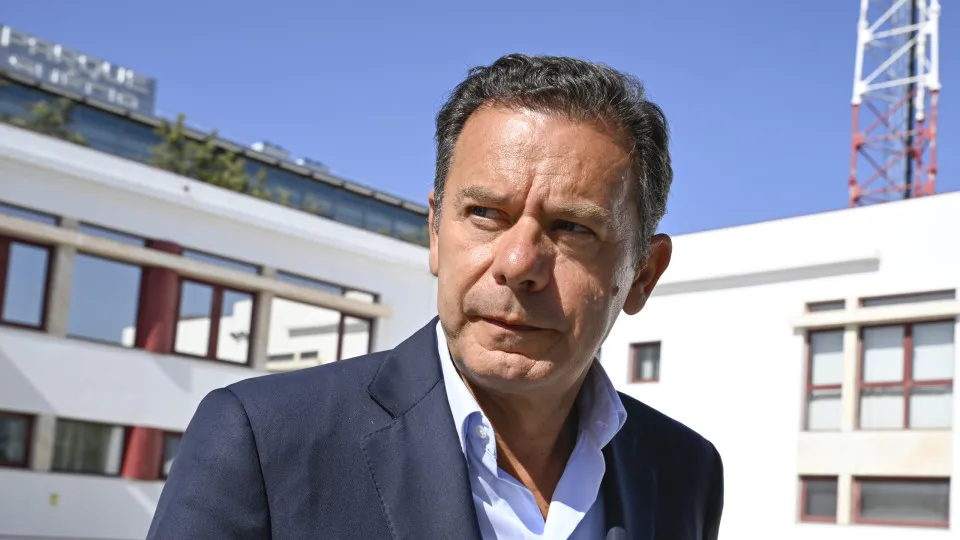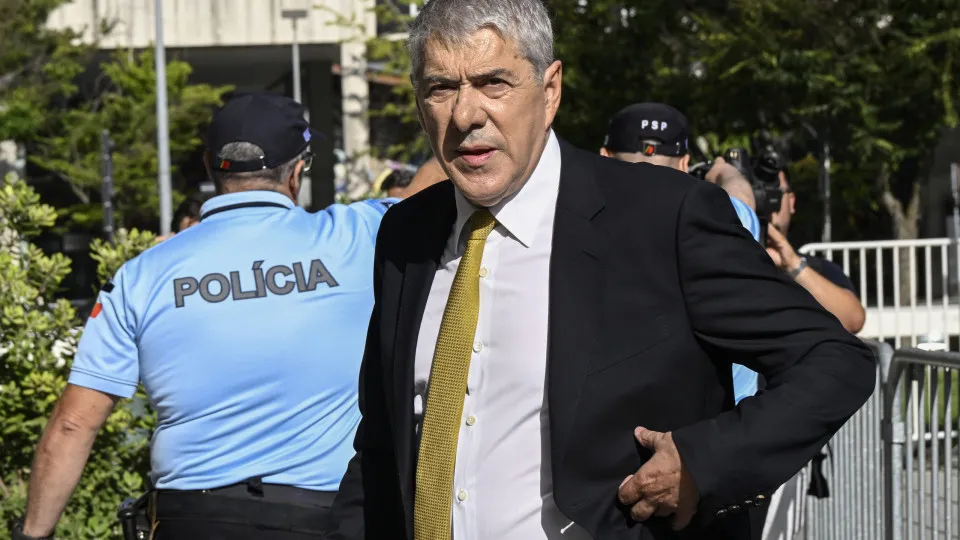


The two candidates attended a presentation today on the rights of people with disabilities. At the end of the event, they were asked by journalists about the recent comments made by the Minister of Labor, who stated that people are “tired of strikes for political reasons,” and that the government does not wish to facilitate dismissals, hoping that compliance with minimum services will make civil requisition unnecessary.
“It is undeniable that the content of labor legislation seeks to make working relationships more flexible, and this is one of its objectives. It is not about facilitating dismissals; it also facilitates recruitment. If it is not with this intention to make the law more flexible, I do not understand why the government has undertaken this entire ordeal,” remarked Cotrim Figueiredo.
For the candidate supported by the Liberal Initiative (IL), “to attribute political motivations to any strike from the outset” is a mistake.
“What we can do is to combine historical data of strikes, especially general strikes that have taken place in Portugal, and recognize that there is a pattern of systematic alignment between CGTP institutions and the PCP, something that we must historically acknowledge,” he stated, refusing to apply this reasoning to the current strike “when there are still contacts and chances of negotiation with the UGT.”
Concerning the issue of minimum services, Cotrim Figueiredo described it as “a type of pressure that was perfectly dispensable,” reminding workers that there is the possibility of civil requisition at any time, because they already know this and are aware “that the minimum services decreed must be adhered to.”
“I believe that this type of statement does not help a swift and as negotiated and consensual outcome as possible,” he pointed out.
Meanwhile, Jorge Pinto noted that these statements are “a line that this government has been following, particularly concerning workers,” indicating that these changes to labor laws were not part of the AD’s electoral program during the last legislative elections.
“The new statement by the Minister proves this: that this government, in truth, talks a lot about dialogue but is not very interested in having that frank dialogue, certainly with workers and their representatives,” he criticized.
Jorge Pinto argued that labor law changes cannot be made “without dialogue” and “against workers,” considering Minister Maria do Rosário Palma Ramalho’s statement as a “threat” that aligns with the government’s own labor law proposal.
“It also attempts to weaken the right to strike by wanting to broaden what is considered essential sectors to ensure minimum services. That is not at all my vision for work,” he condemned.
For Jorge Pinto, “anything that serves to weaken” the right to strike “is wrong.”
“The government is now trying to catch up with the losses, but with such statements, it does not seem to be fostering or seeking a frank dialogue, certainly not with workers and their representatives,” he condemned.
Regarding political reasons, the candidate supported by Livre questioned: “What is not political in our lives?”
“Is it not equally political that the government has advanced with these proposals without them being in the AD’s Electoral program? Is it not also political that the government now makes these statements by wanting to weaken workers’ right to strike? All of this is politics,” he emphasized.