

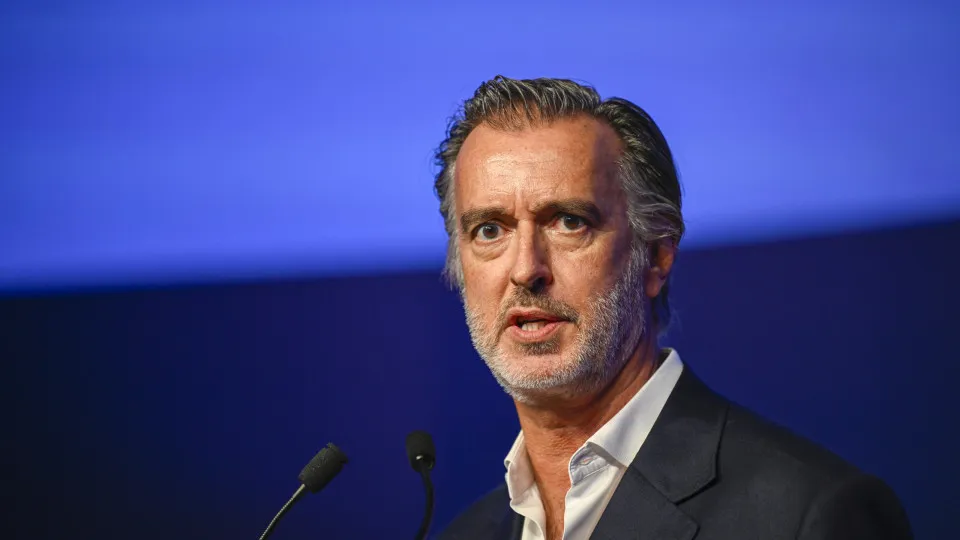
“It’s yet another decision where the medium and long-term consequences are not considered,” stated João Cotrim de Figueiredo. He remarked that the dissolution of the Foreigners and Borders Service (SEF) has worsened the queues problem at Lisbon airport.
Responding to statements by the Secretary of State for Infrastructure, Hugo Espírito Santo, who acknowledged that “the border situation is an embarrassment for the Government,” the presidential candidate recalled warnings at the time of SEF’s dissolution that the situation would worsen and that transferring border control duties to other entities would lead to such difficulties.
The PSP “did not have an excess of resources to handle this,” he noted, advocating for a solution until a new airport is built, where “it isn’t only the PSP conducting the verification of passenger entries and exits outside the Schengen area.”
Firmly believing that “the limitations of Humberto Delgado airport’s capacity already cost the country a lot of money,” the candidate lamented that Portugal did not prepare for something “that was foreseeable,” adding that health, housing, and education issues should have been anticipated.
“All of this was foreseeable five or ten years ago,” he stated, adding, “What bothers me is predictable things we end up not anticipating due to a lack of political initiative or courage, because some solutions may displease one party or another.” Moving forward, “not solving these issues displeases everyone,” he said.
Assuming that if elected President of the Republic, his stance on the problems will never be “not anticipating them,” Cotrim de Figueiredo emphasized the need to address this “lack of political courage, providing governments with the support of a President of the Republic who recognizes that reforms in all these areas, although they may have transition costs and face resistance, are the best solution to prevent widespread public discontent.”
Inaction and negligence “are unacceptable,” according to the candidate, who believes a President can “change a country’s political and civic culture,” anticipate problems, and, in some areas, establish agreements.
“When there is so much talk about agreements across various sectors, the only agreements that matter are those based on a consensus on existing diagnoses and solutions responding to those diagnoses,” he said, explaining that he sees no point in “making agreements just for the sake of consensus.”
Cotrim de Figueiredo spoke in Benedita, within the Alcobaça municipality, where he participated in an entrepreneurship class as part of the Entrepreneur Gymnasium, an educational program targeted at middle and high school students.
“Coming here and supporting this initiative is exactly what I would like the office of the President to do: recognize the free initiatives of people who believe they can do more for their country,” he said.
“A society with this attitude is closer to not being caught off guard by destiny and unresolved problems without preparation,” concluded Cotrim de Figueiredo.