

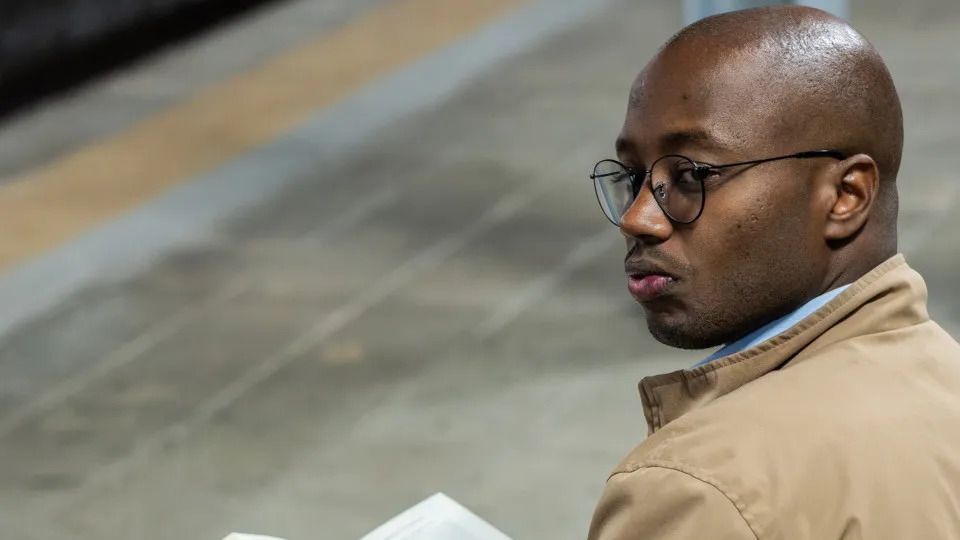
O director Fábio Silva launched the Instagram page “Biblioteca Negra” last June, offering recommendations on works “about African roots, struggles, and freedom,” as well as films by Black filmmakers. Today, it also has a website and aims to expand it into a larger project.
In a conversation with Notícias ao Minuto, the 33-year-old Fábio Silva explained that the website specifically gathers “curated books about themes related to colonialism, post-colonialism, diaspora, blackness…”. “The idea is to be a page where people interested in these topics can search and view lists.”
“For instance, we have a list of Nobel Prize winners with African authors, resistance, our history – books solely about the history of Black people. Through search engines, people can look for essays, short stories, or just novels. Essentially, it is a curated page with books on these topics, allowing people to find such works more easily.”
The site is still in its early stages and currently serves as a recommendation platform. Fábio Silva plans to take this initiative further and invites everyone to join this project, also through “donations.”
“I called local associations ‘partner homes’ where this library can also have a physical presence – initially, it is virtual. For now, we have associations on the outskirts of Greater Lisbon, such as Ponto Kultural in Algueirão-Mem Martins, Mbongi 67 in Queluz, and Associação Cavaleiros São Brás in Amadora. These spaces promote related events, often addressing these issues – cinema, book presentations, etc. They already have books available for consultation and reading, essentially bringing this concept to these spaces.”
Book donations “can be made by anyone.” However, one of the goals is “to form partnerships with publishers.” “We already have our first partner, VS, which has donated some books.”
On the site, people can only “consult and research” works. One of the aims is to make it easier to locate books that, Fabio hopes, will be available in these partner spaces. This step is still being “coordinated.”
Although still an evolving idea, the launch at this moment is a sign of hope for “people to see the project, gain interest, visit the site,” interact, and express whether they have certain books and are willing to make “donations.”
Fábio Silva is “very open” to sharing new books and reveals that “he has received various suggestions.” On the Instagram page dedicated to “Biblioteca Negra,” he credits the ‘authors’ of specific suggestions not originating from him.
“I created the project and am advancing with it, but I eventually want it to be a joint library, not just me, with a shared sense of recommendation. That is very important to me.”
But, when and how did the idea of creating “Biblioteca Negra” arise?
Fábio Silva explained in conversation with Notícias ao Minuto that he is pursuing a doctorate in Representation of the Cape Verdean Community in Portuguese Cinema, which “requires him to read a lot of books, especially essays.”
His girlfriend also developed an interest in the topic, specifically in novels, leading them to “create an Excel list.”
“Then I started searching for pages where I could find all these books but found none. There are similar pages, but not like this. I initially thought of creating an Instagram page. Initially, I only shared the books I read or planned to read. Later, I contacted Casa do Comum about gathering people and turning this into a sort of book club,” he detailed.
In that contact, the idea came up to make it “more official.” At the time, there was an upcoming BANTUMEN event – associated with MIA (African Identity Month). After returning home from that suggestion, Fábio Silva thought that launching just the Instagram page might be ‘insufficient’ and that he should develop the idea into something less personal. He kept the social network page, which is more his own, but decided to create the website.
“Many people have a poorly constructed idea about Portugal’s historical past”
What has Fabio Silva gained from the knowledge acquired through these works? “It’s a way to discover myself. That’s what attracts me to my research and the works I read – not only because I read works related to blackness and colonialism. I understand the past and, in some way, this allows me to understand the intricacies of our current times, concerning issues related to racism…
I am quite open to discussing these subjects, but I often encounter people who have a very poorly constructed idea about what the Portuguese historical past is. What were the ‘discoveries’? All the implications, all the bloodshed involved. I think there’s a significant romanticization of these topics. It makes me realize that Portugal is part of me as well,” he shared.
“It also helps me understand my ancestry. I’ve read many books about Cape Verde, about all these migratory processes. Understanding what Cape Verde was during my parents’ time, the colonial project associated with the islands, helps me understand why they migrated and how they had to live during the post-New State era in the 1970s. It helps me understand who I am, who my parents are… my family”, he continued.
“But also, this project fuels my desire – especially with younger people, not only black people but also non-racialized individuals – to share with the world a perspective of black people, which most do not have,” he explained.
Referring to schools and focusing on primary and secondary education, Fábio Silva believes there is still a long way to go “in this field,” where “this romanticization of the entire enslaving process continues to be overlooked.”
A project aiming to extend further
Fábio Silva disclosed one of his main aspirations for the project: “For me, it’s crucial in the very near future to start going to schools and bring this project. To extend it beyond books, readings, and the archives available on the site. To hold conversations where we can discuss the invisibility that continues to shroud all these topics.”
But he not only aims to reach schools; he also wishes to “take it to cultural hubs, like libraries.”
“One thing that concerns me is the fact that – I study a lot in libraries – there’s a significant lack of books related to these themes in libraries. They exist, yes, but they are limited. For me, it’s incomprehensible,” he lamented.
“I live along the Sintra line, and library spaces are blind to a large segment of the population here, who are Afro-descendants. If we only find books that are unrelated to these topics, it seems challenging for a young Afro-descendent to see themselves represented or even engage with literature when there is no content that dialogues with their experiences. They will feel completely detached. Art, literature, is a bridge to self-discovery,” he commented.
The importance of schools, education
Fábio Silva believes it’s essential to address these topics within education. “Some time ago, I attended an event with Cristina Roldão, and she was showcasing how surreal the contents in school textbooks are. One impactful example was a passage from a 5th or 6th grade History textbook depicting indigenous children – drawn – pointing at the sea, indicating a boat and saying today is a day to celebrate because the Portuguese have arrived. This kind of imagery is completely surreal,” he commented.
“I discuss these issues with adults and they tell me the task ahead is to deconstruct a series of things we’ve been taught. Nowadays, it’s not taught that colonization was a benevolent endeavor, that the Portuguese went to these lands to do good without any violence. But I’m unsure if Amílcar Cabral still remains a footnote,” he added.
“For me, it’s crucial for schools to change this narrative, but also to have writers’ gatherings. I vividly remember Alice Vieira visiting my school, but having a black author there, like Telma Tvon, reflecting on issues related to my identity, would have been incredible. Schools need to be places of integration. And if these topics aren’t addressed, it’s natural for an African or Afro-descendant person to feel disintegrated,” he shared.
“This project is a page of resistance”
Considering the recent debates, especially political, about topics like immigration, Notícias ao Minuto sought Fábio Silva’s views on how he reacts to those who aren’t open to change. Are such projects increasingly necessary?
“For me, this project is a page of resistance. Combating a repeated lie is very difficult,” he explained. Phrases often cited by extremists, if we’re not historically informed, make it challenging to debate or prevent a negative impact.
It’s easy to stereotype a child from the suburbs, accusing them of criminality. But context is necessary. Who were the responsible parties? How did this originate? How did the urban fabric of major cities form? Not just in Portugal, but globally. Why are minorities situated in these areas?
Understanding, studying, shows that things aren’t as they appear. It’s challenging to counter or argue, but understanding reveals how certain narratives are trapped and fallacious. These times demand vigilance for self-defense, even for me as a black individual. I hope this project brings some level of calm,” he stated.
Fábio Silva’s steps in Portuguese cinema
Fábio Silva – who voiced the animated character Miles Morales – is a filmmaker with projects like “Fruto do Vosso Ventre,” (2021) and “Hip to da Hop,” (2018) to his name. Starting his career from scratch, he confided to Notícias ao Minuto that “it’s not easy.”
“I made three films without any funding – and I don’t mean this as victimization. At that time, I wasn’t very aware of how the film industry worked; I just had a strong desire to create projects and went ahead. In truth, I didn’t apply for funding. Nowadays, my approach is different, and I’m seeking financing,” he began explaining.
“Fortunately, things have been going more or less well – there are always obstacles and various issues to tackle. The beginning isn’t easy, but once we start understanding where to find funding and get involved with production companies, we make connections in this artistic field that make it less difficult.”
Cinema is an art that requires substantial funding even to begin thinking about producing, and that’s the tricky, challenging part. Then patience is needed as projects take time and raise many issues. Despite everything, it brings me great joy, and it’s something I’ll continue doing forever.”
Asked about the seventh art in Portugal, Fábio Silva remarked that “there’s a lot of great Portuguese cinema, with increasing methods of producing cinema in Portugal.” However, “this cinema remains confined to festival circuits.”
“Unless a film wins international awards followed by greater exposure, acceptance, and availability, it seems more aligned with engaged, Hollywood-style, mainstream narratives. There’s room for all, and no cinema should limit or prohibit another’s existence. Remarkable films are being made in Portugal, even those related to Afro-descendants,” he further commented.