


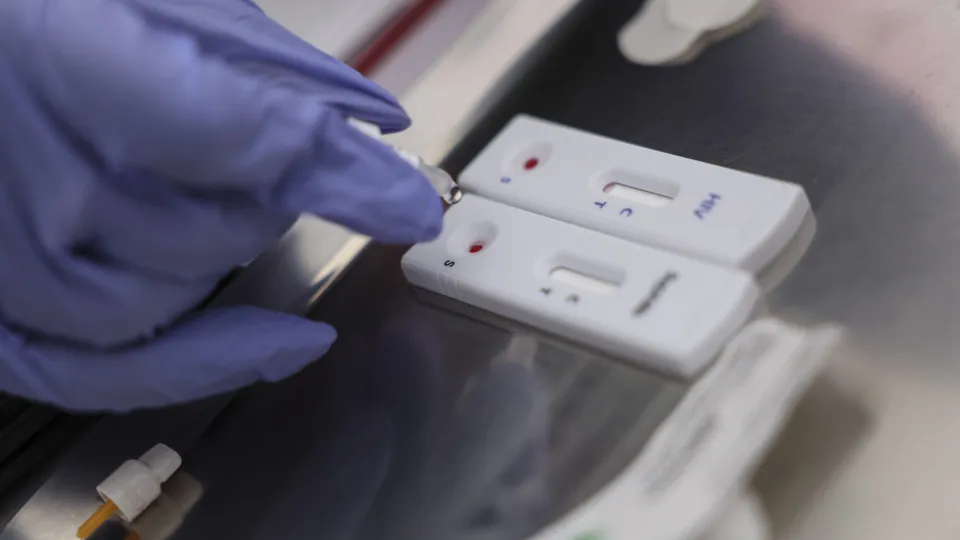
In 2024, a reduction in reported cases is observed compared to the total in 2023, with the overall decreasing trend in recent years concerning new diagnoses,” stated the new director of the National Program for Sexually Transmitted Infections and Human Immunodeficiency Virus (HIV)/AIDS.
Bárbara Flor de Lima highlighted that about 54% of new diagnoses are still late.
“In the first clinical evaluation, asymptomatic cases predominated (58.5%), but the presentation to healthcare services was delayed in 53.9% of cases, particularly among individuals aged 50 or older (65.4%) and in men with heterosexual transmission (67.6%),” notes the report “HIV Infection in Portugal 2025”.
“We have some concerns in this population, which implies implementing specific measures to address missed diagnostic opportunities and increase testing and screening in this specific population,” the infectious disease specialist advocated.
The report by DGS and the National Institute of Health Dr. Ricardo Jorge (Insa) noted that out of the 997 new cases reported last year, 951 occurred in the country, corresponding to 8.8 cases per 100,000 inhabitants (value yet to be adjusted for notification delays).
The majority of diagnoses occurred in men, at a ratio of 2.7 cases for every case in women. Five cases were reported in children under 15, three of which were mother-to-child transmission and diagnosed in Portugal.
For the remaining cases, the median age was 37 years, with 27.6% being under 30 years of age. Among these, 68.7% were men who have sex with men (MSM), with a lower median age (31 years).
The highest diagnosis rate was recorded in the 25-29 age group, particularly among men, with 46 cases per 100,000 inhabitants.
The largest number of new diagnoses (14.6 cases/100,000 inhabitants) was recorded in Greater Lisbon, followed by the Setubal Peninsula (13.3) and Madeira (8.5).
More than half of the new cases (53.6%) involved individuals born abroad; however, the document underlines, “Portugal was indicated as the probable country of infection in 52.5% of the cases with this available information and in 69.9% of the cases involving people from Latin America”.
Among foreign men, 59% were from Latin America, while among foreign women, 79.2% were from African countries.
Sexual transmission was cited in 97% of diagnosed cases. Heterosexual transmission predominated (52.5%), although 60.6% of new diagnoses in men occurred in MSM.
In 2024, there were 194 new AIDS cases diagnosed (1.8 cases per 100,000 inhabitants), a higher value than in the previous two years (3.4), with only 77 (39.7%) involving individuals born in Portugal.
Bárbara Flor de Lima emphasized that the new AIDS cases decreased by 43% between 2015 and 2024, and new HIV infection cases by 35%.
“Despite the late diagnoses, not all effectively translate into AIDS diagnoses,” the official commented.
In 2024, 108 deaths were reported, of which 46.3% occurred more than 20 years after diagnosis and 17.6% five years later, as mentioned in the report presented four days before World AIDS Day.
Between 1983 and 2024, Portugal recorded 66,421 cases of HIV infection and 16,050 deaths, the report states, highlighting that, since 2021, deaths from other causes, such as cancer and cardiovascular diseases, have become predominant over HIV-related ones.
Despite the sustained downward trend, the report warns that Portugal remains among the European Union countries with the highest annual AIDS diagnosis rates, approximately three times the European average.
Regarding World AIDS Day (December 1), Bárbara Flor de Lima reminded of “the importance of diagnosis, early screening” and “safe sexual relations” to “ensure sexual health and prevent sexually transmitted infections, including HIV”.