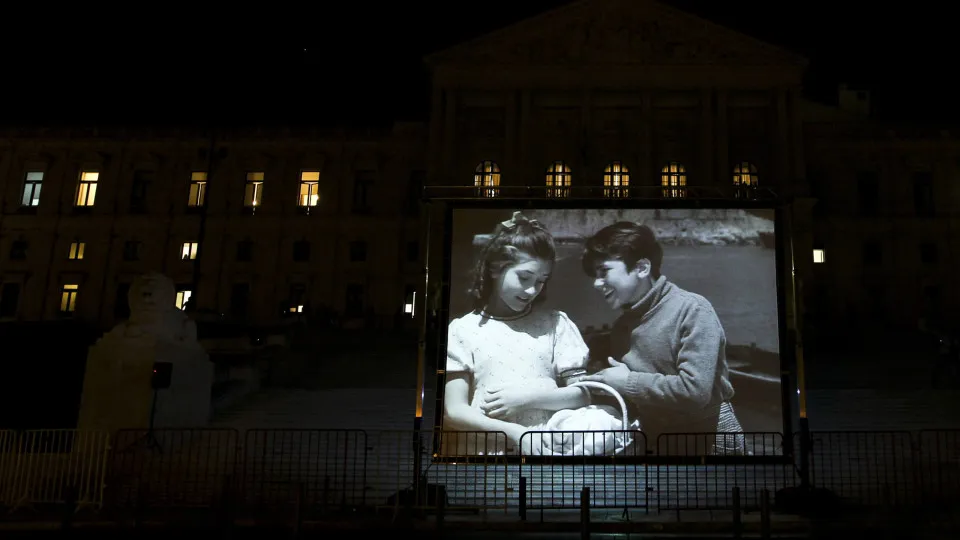
According to the distributor Nitrato Filmes, the film “Aniki-Bobó” will be screened in Porto (Cinema Trindade), Coimbra (Casa do Cinema), and Lisbon (Nimas and Cinema Ideal), with the potential for additional locations.
“Aniki-Bobó,” which premiered on December 18, 1942, is now regarded as a classic of Portuguese cinema, having undergone a new restoration by the Portuguese Cinematheque. This restoration has led to several screenings at international festivals.
In August, the film was showcased at the Venice Film Festival in Italy as part of a program dedicated to “restored masterpieces.” Subsequent screenings took place at festivals in Toronto, Canada; San Sebastián, Spain; and São Paulo, Brazil.
Produced by António Lopes Ribeiro, “Aniki-Bobó” is inspired by the short story “Meninos milionários,” by Rodrigues de Freitas, and was filmed in the riverside area of Porto with child actors Fernanda Matos (Teresinha), Horácio Silva (Carlitos), and António Santos (Eduardinho).
The children’s world depicted in “Aniki-Bobó” “is a reproduction of the real world of men as we know it, reduced, however, to its most profound and bare structure: Good and Evil, justice and injustice, hope and fear, happiness and unhappiness, desire and death, love and hate,” wrote Manuel António Pina in an essay on the film, published in 2012.
In the same book, Manuel António Pina recalls that “Aniki-Bobó” was deemed immoral and subversive, booed at its premiere in Lisbon, and caused the director to wait almost twenty years before making another film.
“His name was erased by the official good taste of the Salazar regime, and all the projects he submitted to the Cinema Fund were successively rejected,” he writes.
Manoel de Oliveira was born in Porto in 1908 and lived for over a century, accompanying cinema’s own history. In 2004, at the age of 95, he received the Golden Lion for lifetime achievement at the Venice Film Festival.
“Douro, Faina Fluvial,” a short documentary about life along the banks of the Douro River, was his first film, shot at the age of 23 with a camera given by his father. His last film, “O Velho do Restelo” (2014), was filmed in a garden near his home in Porto.
Following Manoel de Oliveira’s death in 2015, the film “Visita ou memórias e confissões,” which he shot in 1982, was revealed to the public, with the instruction to be shown only after his passing.
This year, marking a decade since Manoel de Oliveira’s death, Nitrato Filmes also premiered another restored film by the director, “Vale Abraão” (1993), in its full version, once again restored by the Portuguese Cinematheque.