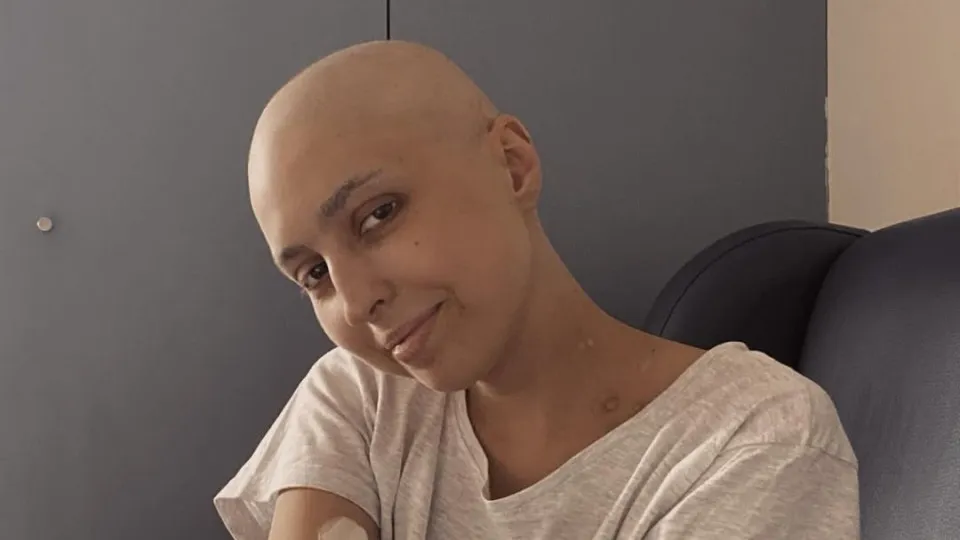
Ângela Pereira, 23, from Viana do Castelo, has been battling cancer for three years. Her journey has involved six different chemotherapy courses, two bone marrow transplants, and lung surgery. Despite these efforts, the cancer persists.
Angela openly shares her journey on social media. In a December 7 Instagram post, she describes herself as “a young girl with a life ahead”, yet doctors have indicated her life may soon end.
“After undergoing a bone marrow transplant, during which I faced various complications, they found a very hard-to-treat fungus, an aspergilloma”, she explains.
The fungus is common in the environment and usually harmless unless inhaled by someone with a weakened immune system, like Angela. In such cases, it lodges in the lungs, forming small balls that make breathing difficult and might result in pneumonia.
“This fungus is slowly killing me,” Angela adds. “They have given up on me here, stopped my medication, ceased testing. To them, I’m dead,” she states.
“I am out of strength. Today, a doctor told me ‘it’s just a matter of time until everything ends’. But I have a strong desire to live and hope that everything will turn out well,” she confides. “I need your help, your sharing, a second opinion, and a transfer to a hospital willing to try to treat me.” Her desperation is evident as she appeals for help as if she were a sister or daughter.
Angela is receiving treatment at the Portuguese Oncology Institute in Porto (IPO Porto), which issued a statement in response to her story.
IPO Assures All Possible and Appropriate Procedures Were Taken
“The patient is in a very high-risk clinical context,” the institute stated. “The therapeutic path included six different chemotherapy lines, an autologous bone marrow transplant, and an allogeneic transplant from a related donor,” it detailed.
However, due to her weakened immune system, “resulting from previous therapies, she developed a case of invasive aspergillosis that proved resistant to all available antifungals, including drug combinations”.
As a result of the antifungals failing to control the infection, she underwent lung surgery.
Unfortunately, “none of the medical or surgical approaches demonstrated clinical efficacy, and the prognosis is currently very reserved”, the statement continues.
The IPO further notes that palliative care support was sought and, together with the transplant team, decided on “a therapeutic adjustment according to Angela’s clinical condition”—a decision Angela described as the institute “giving up” on her. The decisions were “based on the best scientific evidence and with profound respect for patient dignity”.
Angela, the institute continues, is receiving psychological support “to help her cope with the severe clinical condition she faces”.
It stresses: “The patient is being monitored at a highly specialized center for the condition in question, by teams with extensive experience in hematology, bone marrow transplantation, opportunistic infections, and associated complications”.