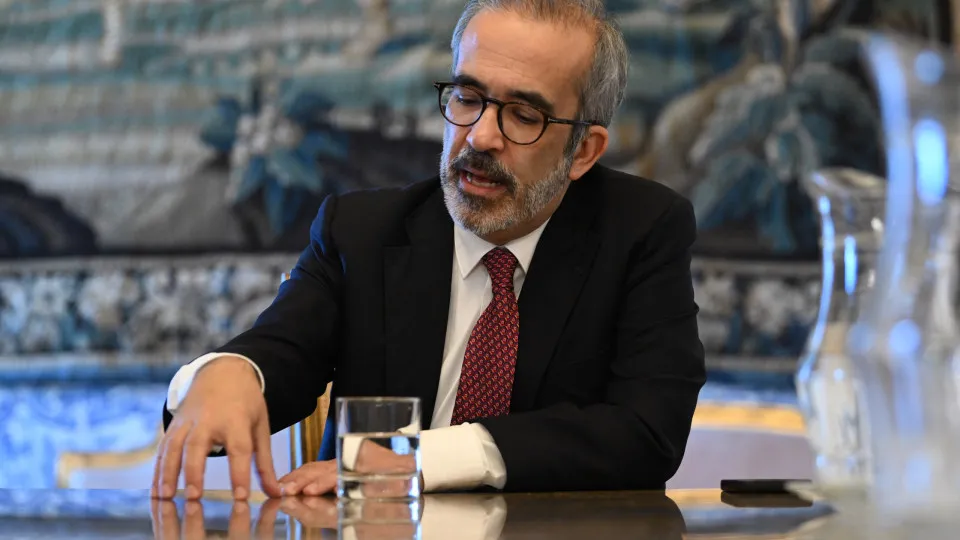


The Minister of Economy and Territorial Cohesion, Manuel Castro Almeida, stated unequivocally on Monday that the recognition by The Economist in naming Portugal the “economy of the year” for 2025 is “due to the hardworking efforts of the Portuguese people, without a doubt.”
“It is very gratifying that at this time of year we can see such a prestigious magazine as The Economist say that, globally, using various indicators like inflation (which is controlled), economic growth (which is above the European average, and significantly so), stock market performance, employment growth… All of this forms a mix that places Portugal in the first place,” he explained in an interview with Primeiro Jornal from SIC Notícias.
The British magazine chose Portugal as the “economy of the year” for 2025 on Sunday, December 7, dethroning Spain, which had won the previous year.
However, Manuel Castro Almeida acknowledged that despite this “very good news,” people at home might not understand how Portugal could be chosen as the “economy of the year.”
“People at home say: ‘So, we are in first place, it’s this good, and I don’t feel anything in my life, or feel very little?'” he questioned, empathizing with the majority of the Portuguese.
He explained: “What The Economist is saying is that Portugal in 2025 made a bigger leap than others, but we started from far behind.” Portugal, the minister continued, has not gone from “poor to rich.” “We went from very poor to a bit less poor. We made the biggest leap of all, but we remain a country with great inequalities,” he added.
General Strike? “To me, it’s incomprehensible”
While admitting that the socio-economic situation in the country remains difficult, Castro Almeida confessed he finds “the timing of this general strike a bit strange,” which is occurring this Thursday, November 11.
“For me, it’s incomprehensible. The strike is legitimate, I have no doubt about that, but the time it is happening is incomprehensible. And I am convinced that if you ask most Portuguese people—if you go out and conduct a survey—why a general strike is called, most people wouldn’t be able to tell you why,” he stated, without clarifying whether he believes the strike’s call has political motivations.
For the minister, the strike “is a sign that the Government must respect,” but it will not be something that “can change the path when this path is proving to be so correct,” he emphasized, referring again to The Economist’s recognition of the national economy.
“We are considered the best economic performance of the year. Should we change the trajectory? It doesn’t make sense,” he reiterated, adding that the Government aims to modernize the economy and that objective will not be abandoned.
“Now, whether it’s more with this measure, less with that one, whether workers are willing to give more quickly or less quickly, what the pace of this transformation is—it’s something that is being negotiated, will continue to be negotiated, and should be negotiated,” he added, emphasizing that, “ideally, there should be a social concertation agreement before the labor reform is voted on in Parliament.”