
The government aims to allow workers to choose whether they receive holiday and Christmas bonuses in twelfths or the traditional way, with the intent to “enhance work and employment and combat poverty,” according to the program delivered this Saturday in Parliament. It also plans to approve a new Means Law for the National Health Service and increase Defense investment to 2% this year.
Below are the main themes of the new executive’s program by topic.
Workers can choose subsidies in twelfths and more flexible holidays
The government is moving forward with the idea to pay the 13th and 14th-month salary, corresponding to holiday and Christmas bonuses, in twelfths, allowing each worker “the prerogative to choose whether the subsidies are paid in full at two times of the year or in twelfths, that is, distributed over the 12 months of the year.”
Regarding holidays, the executive aims to offer more flexibility at the worker’s initiative, setting a limit with the employer. They also intend to “balance worker protection” through “greater flexibility in labor regimes” concerning working time, the right to vacation, and time banks.

Greater flexibility in taking holidays at the initiative of the worker, with a limit defined with the employer, is part of the government’s plan according to the program submitted to Parliament today.
For parents, it is considered to create a shared parental leave with an alternative caregiver to the parents, particularly for single-parent families.
“Transform Portugal,” but dialogue with oppositions
In Parliament, the government reiterates a promise of dialogue with the oppositions and within social dialogue to achieve “political stability,” while warning that the mandate’s objective is to “transform Portugal.”
They indicate that “the result of the latest elections was clear,” and that the political project of AD (a PSD/CDS-PP coalition) “reinforced its legitimacy and expanded its parliamentary majority.”
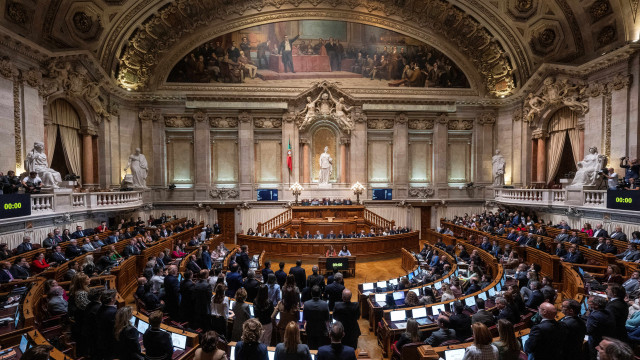
The program of the XXV Constitutional Government reiterates the executive’s promise of dialogue with the oppositions and within social dialogue, but warns that the objective of its mandate is “to transform Portugal.”
Prohibition of phones in schools
In educational institutions, the Government intends to prohibit ‘smartphones’ in the 1st and 2nd cycles and limit their use among 3rd cycle students, making recommendations made at the start of the 2024/2025 school year a rule.
For the specific case of the 3rd cycle, the aim is to “promote a culture of limited, responsible, and adapted use,” with increased freedom for mobile phone use starting in the 10th grade, expecting “responsible and adapted use.”
These measures are currently in effect as recommendations issued at the start of the 2024/2025 academic year, whose implementation is being evaluated to support a decision by the Ministry of Education, Science, and Innovation (MECI).
Plan against drug trafficking and group to end “megaprocesses”
A strategic plan to combat drug trafficking and consumption will be developed, reviewing the legislation associated with this crime, “ensuring the proper legislative framework to the emergence of new substances, human resources, physical and technological means, and equipment to the criminal activity’s evolution in this area, and the operational action to the evolution of criminal strategies in this field.”
The government also aims to reduce “the crime rate, particularly violent and serious crime,” by increasing “perception levels of safety,” intending to strengthen “visibility, proximity, and community policing as a way of enhancing public tranquility.”

The government wants to develop a strategic plan to combat drug trafficking and consumption and review the legislation associated with this crime, according to the program delivered today to Parliament.
In the courts, the government aims to create a working group composed of academics, magistrates, and lawyers to ensure procedural speed and eliminate megaprocesses.
The objectives are to assess the possibility of more specialization in the courts, deepen also the specialization of magistrates, evaluate “the need to expand the application of ‘reward’ mechanisms” and create means to eliminate megaprocesses.
Health? Review foundational law and promote team sharing between hospitals
According to the government’s program, there is an intention to review the Health Basic Law and approve a new Means Law for the NHS, arguing that these legislative changes are crucial to guaranteeing the sustainability of the Portuguese health system, reinforcing it and “assuming a transformation in its fundamental pillars: care organization, human resources, and financing.”
The government further intends to launch new public-private partnerships (PPP) for health units that “meet criteria to ensure better care response” in a private management model of public services in the NHS.

The government wants to review the Health Basic Law and approve a new Means Law for the NHS, stressing these legislative changes are vital for ensuring the sustainability of the Portuguese health system.
The Ministry of Health intends to create regional emergencies constituted by shared teams among hospitals, focusing on the “more critical specialties” in terms of human resources, such as obstetrics and pediatrics, and providing a “better adjustment of the network to population needs and available resources.”
In the area of hospital care, the government led by Luís Montenegro will develop and implement a new National System of Access to Consultations and Surgeries (SINACC), which will also integrate timely access to complementary diagnostic means, replacing the current Integrated Management System of Surgery Waiting Lists (SIGIC).
Government wants emigrants to ‘return’ and supports the exit of immigrants
To bring emigrants back, the executive wants to implement a program entitled “Voltar” to encourage them, whether active workers, investors, or retirees, to return to Portugal.
The initiative should succeed the ‘Return’ program, launched by the government led by António Costa (PS) in 2019, which remains in effect until next year, providing financial and tax support to ease the return and integration of emigrants in Portugal.
For those coming from abroad, it will be more challenging to stay in Portugal, with the executive wanting to extend the deadlines for obtaining Portuguese citizenship, condition family reunification, and create a program to support exiting the country. The plans aim for a “regulated and humanistic immigration.”
In the document, the government advocates for “reviewing the nationality law, extending the minimum residence and effective presence time in national territory, eliminating the possibility of illegal stay being considered for time counting, and ensuring that those acquiring Portuguese nationality have an effective relationship and successful integration in the country.”
Accelerating European funds and reducing state administration entities
A Sustainable Municipal Development Fund is planned for accelerating the execution of European funds, with an initial capital of 25 million euros. The aim is to “leverage investments and execution of community funds and obtain better credit conditions.”
This measure is aimed “particularly at municipalities with smaller sizes and financial capacity,” the government explains.

Regarding entities of direct state administration, the government will proceed with a reorganization, including the extinction of sectoral general secretariats, duplicative structures, and the merger of entities to achieve a “net reduction.”
The goal is the “development of shared services in central administration, leveraging the synergistic and rationalizing potential of Campus XXI,” according to the document.
Tax reduction with “budgetary sustainability”
The government led by Luís Montenegro also advocates tax reduction, but with “budgetary sustainability,” arguing that the fiscal reform planned in the government program will accelerate the economy and enable a rationalization of dispersed fiscal benefits.
This confirms the intention to reduce personal income taxes (IRS) up to the 8th bracket, by two billion euros by 2029, with a reduction of 500 million already in 2025, alongside gradually reducing corporate tax rates to 17% by the end of the legislature.

In terms of income, the government wants to review the regime of assignment and control of the Social Integration Income (RSI) and plans to evaluate its accumulation with other social supports.
It should be noted that in February this year, the monthly RSI amount increased by nearly five euros, to 242.23 euros. This monthly social benefit is for people in extreme poverty, and besides the monetary amount, it includes an integration program with a contract aimed at progressive social, labor, and community integration of the beneficiaries, as per the information available on the Social Security Institute’s website.
Defense with 2% of GDP this year
This government program assumes the goal of reaching 2% of GDP in Defense investment this year, with a fifth of that amount allocated to goods, infrastructures, and equipment.
“Reaching 2% of GDP in National Defense investment in 2025, anticipating the goal of 2029, with 20% of the investment allocated to goods, infrastructures, and equipment, in line with NATO commitments,” reads the document.

Without detailing, this strategic reinforcement plan includes among its main measures “stimulating investments with dual use, military and civilian,” a path already highlighted by the President of the Republic, Marcelo Rebelo de Sousa, as a way for the country to meet NATO commitments, suggesting more elasticity in accounting for the Defense budget area.
AI in public services and national strategy to combat violent content
In digital matters, the government aims to adopt a national strategy to combat the dissemination of violent content in the digital space and recover the guardian program in schools, especially where higher rates of violence are observed.
The main focus is on “reducing juvenile and group delinquency,” aiming to revise the strategy for preventing juvenile, group, and sports-related crime and reinforce the Escola Segura program.
Artificial Intelligence (AI) will be used to deepen public service reform, expanding “services whose processes can be fully processed digitally” while “ensuring in-person or remote assistance for digitally excluded citizens.”

The government also aims to “ensure interoperability between public administration services,” by eliminating redundancies, through “intelligent data sharing among services,” respecting privacy and ensuring the application of the “once only” principle, so that “citizens and companies do not have to provide data already available to the State, and converging towards a single interface platform for central administration with citizens and companies.”