

The Public Prosecutor’s Office (MP) expressed concerns over José Sócrates’ alleged travel to the United Arab Emirates, citing potential flight risk after the former prime minister mentioned his visit to the Middle East. However, the ex-leader dismissed these suspicions as “malicious”.
Suspicions arose after José Sócrates, on trial in the Operation Marquês case, claimed during an interview with CNN Portugal that he spent “two weeks” in the Middle East.
“I arrived yesterday from the Middle East, and a CMTV journalist asked me what I was doing in Abu Dhabi [capital of the United Arab Emirates] over the past two weeks. It seems the Public Prosecutor’s Office conducts clandestine investigations into those on trial and then directs journalists to ask these questions,” he stated in the interview.
He questioned: “Who else would know that I was in the Middle East for the past two weeks? No one else, right?”
On Tuesday, reports indicated that the MP questioned the alleged trip, suggesting that if it did occur, it might be part of a flight plan, and precautionary measures might change.
The Public Prosecutor, in a document accessed by Lusa, stated, “One cannot exclude the possibility that the mentioned trip was not deliberately communicated to the court, potentially as part of a plan to permanently evade national justice.”
“If it is true that he traveled to the Middle East as he mentioned in the interview, it is clear that he violated his terms,” it added.
José Sócrates, on trial for 22 crimes, remains subject to terms of identity and residence, which require him to notify authorities of a new residence or whereabouts if leaving the country for more than five days.
Now, the Public Prosecutor wants Sócrates to clarify to the court his overseas travels and why they were not communicated. They also request that the Border and Foreigners Coordination Unit, the Passenger Information Office, and ANA – Aeroportos de Portugal provide records of the former prime minister’s entries and exits from Portugal.
If unauthorized trips are confirmed, the Public Prosecutor indicates that precautionary measures may be revised.
Flight risk? “The Prosecutor’s suspicions are not comedic, they are malicious,” says Sócrates
In response, Sócrates denied making overseas trips exceeding five days and dismissed any flight risk, emphasizing his consistent return to Portugal, even after his arrest in 2014.
“It is completely false that I made trips abroad exceeding the five-day limit requiring me to notify the court of my absence location. It is false, period,” Sócrates argued in a statement to Lusa.
“The maneuver, well understood, is to switch terms: I accused prosecutors of allegedly leaking information about my private life to journalists; they respond by insinuating illegal travels, suggesting a flight risk,” he criticized, stressing that “the Prosecutor’s suspicions are not comedic, they are malicious.”
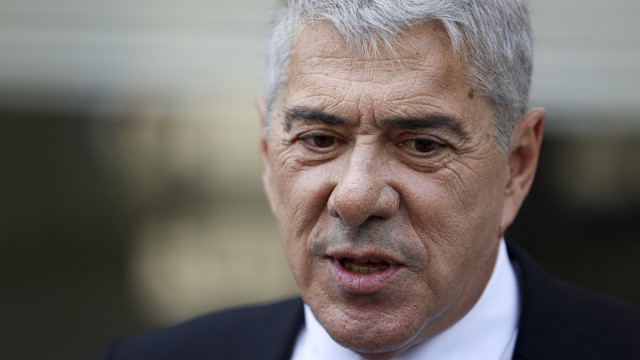
Former Prime Minister José Sócrates denied making overseas trips exceeding five days and dismissed any flight risk, stating he always returned to Portugal, even when detained in 2014 during the Operação Marquês.
Justice Minister assures “measures are in place” to prevent flight risk
Justice Minister Rita Alarcão Júdice argued, on Tuesday afternoon, in statements to the press that, “if there is fear of anyone on trial fleeing, there are measures to prevent such a situation.”
Refusing to comment specifically on José Sócrates’ case, the minister reiterated: “If there is a suspicion of anyone on trial fleeing, measures must be applied. That’s all.”
José Sócrates faces 22 charges in Operation Marquês
José Sócrates, 68, is indicted on 22 charges, including three of corruption, for allegedly receiving money to benefit Lena Group, the Espírito Santo Group (GES), and the Algarve resort Vale do Lobo.
The case involves 21 defendants, who generally deny the 117 economic-financial crimes collectively charged against them.
The trial began on July 3 at the Central Criminal Court of Lisbon, which clarified on November 11 that Vale de Lobo-related corruption charges could expire in the first half of 2026.