

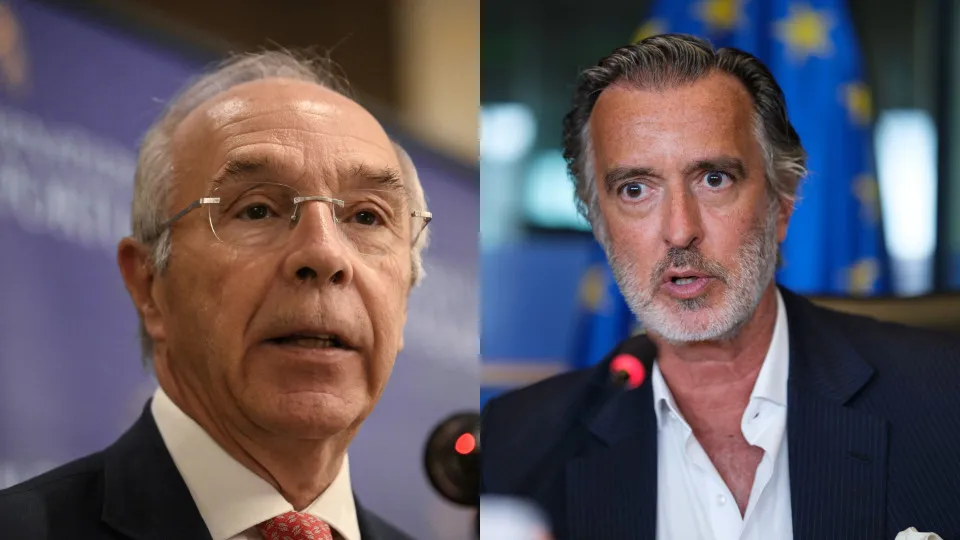
The two candidates faced each other today in a televised debate on TVI as part of the presidential elections scheduled for January 18.
At the start of the debate, Luís Marques Mendes complained of being “a victim of a very ugly, very regrettable personal attack” by João Cotrim Figueiredo. The candidate supported by IL had mentioned in an interview being pressured by Marques Mendes’ campaign to withdraw from the race.
The former PSD leader requested the IL MEP to publicly clarify who exerted the pressure, arguing that “such severe accusations should not be made without providing proof or justification.”
“You are acting like a sort of embarrassed André Ventura because you make accusations without evidence. This does not recommend you for President of the Republic; it even disqualifies you,” he criticized.
João Cotrim Figueiredo clarified that he never claimed the pressure came directly from Marques Mendes but refused to name who allegedly urged him to withdraw. The liberal candidate reiterated that it involved “prominent supporters of Luís Marques Mendes,” whom he assumed were part of his campaign and had the candidate’s authorization.
The IL-backed candidate also noted that his opponent attached “extreme importance” to this issue, unlike when Gouveia e Melo complained of pressures.
“Luís Marques Mendes believes my candidacy is much more threatening to him than Gouveia e Melo’s,” he commented.
Figueiredo further argued that the Portuguese want transparency from the President of the Republic and stated, “my entire professional life is published,” while in the case of Marques Mendes, a book summarizing his “18 years since leaving the Government up to now in five pages” will soon be released.
The former IL leader also emphasized that although he lacks the political experience of his adversary, he possesses “a vision regarding Portuguese society and its future that is much more modern and refreshed than most other candidates.”
Cotrim also argued that Luís Marques Mendes “favors prudence in times of change,” but “prudence can be synonymous with fear of change.”
“I often hear Luís Marques Mendes talk about stability, but stability in the current situation equals stagnation,” he added, with his opponent stressing that his priorities are “stability and ambition.”
Earlier, the former minister asserted that the “President of the Republic holds a mediating power and must be moderate, but not soft or weak, instead firm.”
Throughout the debate, the differences in opinion between the two on various topics became apparent.
João Cotrim Figueiredo criticized Marques Mendes’ proposal to include a young person in the Council of State, arguing that “this will not highlight the youth,” while the social democrat emphasized the importance of the body and described it as an “opportunity to give a voice to the young.”
Faced with changes to labor law, the two also disagreed on the stance candidates should take, with the liberal saying he would sign it even if not in complete agreement, and Luís Marques Mendes preferring to comment after the legislative process, advocating for “balance and social dialogue.”
To combat poverty, both agreed that economic growth is essential, but Marques Mendes stated that it should not be expected “for the market to solve the problems of the elderly, pensioners, and retirees with pensions of 300, 400, or 500 euros.”
Luís Marques Mendes also criticized proposals already defended by IL, such as a flat tax rate and the privatization of Caixa Geral de Depósitos.