


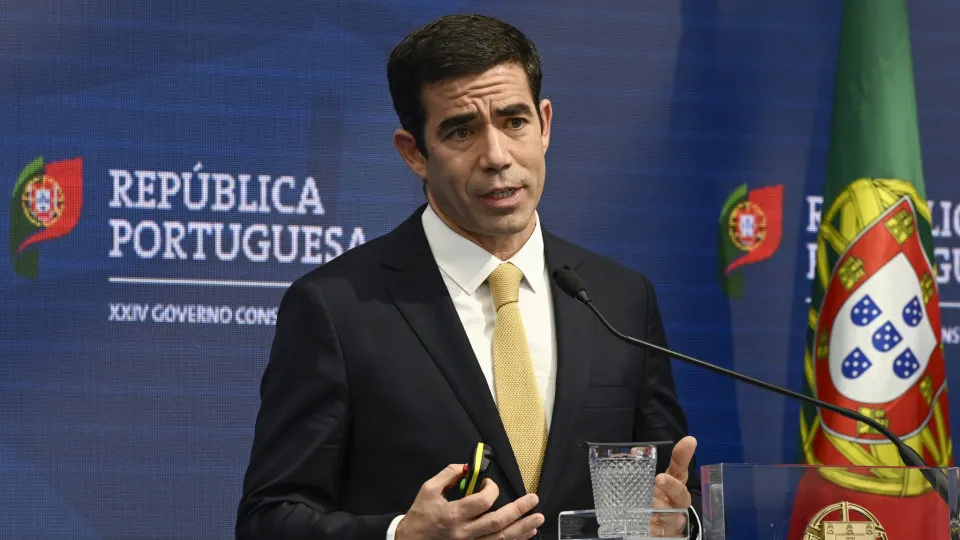
“We are working with the European Commission constructively so that, within the flexibility mechanisms, the rules allow accommodation for the change in Portugal’s situation,” said António Leitão Amaro.
Speaking on the sidelines of a migration initiative at the European Parliament in Brussels, the official indicated that the European executive “knows that the report, which concluded its analysis in June and is now being published, does not describe the Portuguese situation as it exists today.”
“Portugal appeared in the report [on migratory pressure in European Union countries, released on November 11], because that was the past reality, reporting 400 returns per year, making it the European country with the fewest returns, according to the old statistics,” he explained, adding that this year the number increased from 400 returns to 23,000: “We moved to the top six or seven in that report.”
Pointing at the government of socialist António Costa—now President of the European Council—António Leitão Amaro stated that in the past Portugal “wasn’t identified on the secondary movement routes, which all converged towards the center of Europe due to the manifestation of interest.”
This instrument was utilized by people “who were barred in another European country and then went to Portugal because at the time there was practically no need to provide information, and the information went onto the pile” of processes, the minister elaborated.
The tool implemented by the previous government generated “very significant secondary movements,” the social-democrat official noted, which “for European situation purposes lead to either a declaration of migratory pressure or alternatively to the derogation of placement obligations.”
Once more criticizing the previous government, the Minister of Presidency stated that Portugal also faces a capacity challenge to execute the returns of people not permitted to remain in the country: “Portugal has around 20,000 returns to perform,” yet the capacity of temporary installation centers where people in return situations are placed is limited to 86, “because for years it was not expanded.”
On Monday, the European Union’s Home Affairs ministers reached an agreement to relocate 21,000 asylum seekers awaiting processing in reception centers in Greece, Italy, Spain, and Cyprus to other member states by 2026.
The decision is part of the solidarity mechanism of the EU’s New Pact on Migration and Asylum.
However, the proposal is only set for approval on December 16.
Portugal expressed opposition to the proposal, arguing that the report on which the European Commission based its decision did not account for the current reality of the country, particularly in recent months and the processes the government is handling.