


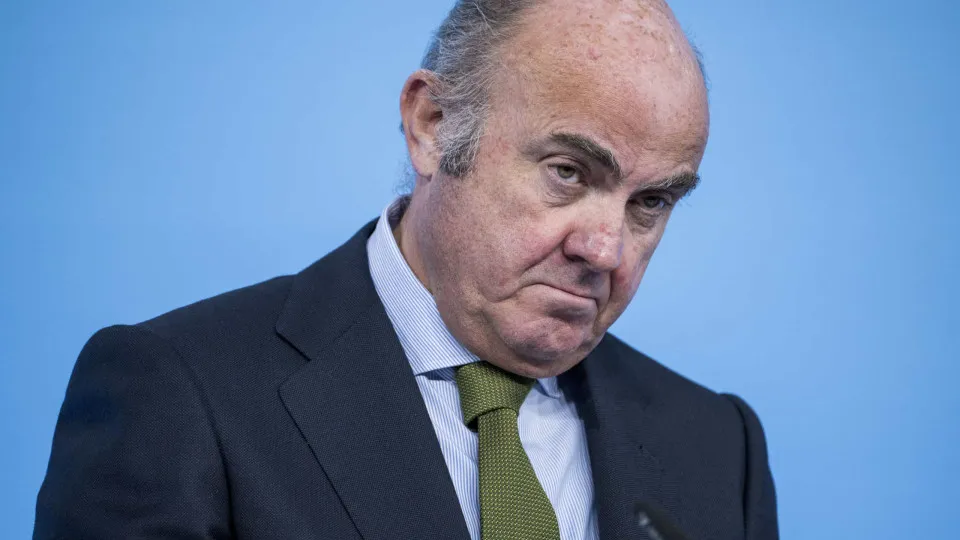
The European Central Bank (ECB) remains concerned about the eurozone’s low growth, although an improvement is observed, Vice President Luis de Guindos stated today.
“After double-digit inflation in 2022 and overcoming a ‘difficult path,’ inflation is now near 2%, and we expect it to reach our medium-term target,” Guindos said at the opening of the inaugural conference of the Euro Finance Week financial event.
“We remain concerned about low growth, but we see an improvement in the overall macroeconomic environment compared to a year ago,” added the central bank’s vice president.
Trade policy uncertainty has decreased thanks to agreements between the U.S. and several of its main trading partners.
Markets have shifted their attention “from the risk of an immediate escalation in geopolitical tensions to the long-term economic and financial effects of tariffs and trade frictions,” he added.
“Although the risk of a large-scale trade war has been avoided, the adverse spillover effects beyond the trade sphere have highlighted risks to financial stability,” warned De Guindos.
The ECB’s vice president will present the Financial Stability Report next week, which semiannually analyzes risks to the financial system.
Guindos today outlined some of the main risks to financial stability.
The first risk is sharp declines in the stock prices of technology companies.
Stock prices fell significantly in April due to tariff threats from U.S. President Donald Trump, but since then, stock markets worldwide have recovered, and there is optimistic sentiment among markets that has further increased the prices of some shares that were already high.
Guindos warned that there has been increased market concentration and interconnection among some major U.S. technology companies, particularly in artificial intelligence.
The rise in market prices does not match political uncertainty, and therefore, sudden declines may occur.
The balance sheets of non-bank financial intermediaries could be pressured if sudden market drops occur, Guindos warned.
The ECB’s vice president also mentioned possible liquidity issues in open funds and the high indebtedness of hedge funds, which could trigger mass sales and generate market tensions.
Some eurozone countries have high budget deficits and debt.
The ECB estimates that “high budget deficits will persist in the coming years,” given the need to increase defense spending to meet NATO’s objectives, said Guindos.
Investors could lose confidence in the debt repayment capacity of some European countries, especially those with a more fragile political situation.
The same could happen in global sovereign bond markets since the U.S. and other advanced economies also have high deficits and are heavily indebted.
Therefore, risk rates for some countries may increase significantly, creating tensions in both eurozone and global benchmark bond markets.
Fiscal fragility in major advanced economies, including the U.S., could heighten concerns about sovereign debt sustainability, trigger tension in global benchmark bond markets, and prompt a broad reassessment of sovereign risk both globally and within the eurozone, according to Guindos.
Banks may also face credit quality issues and will need to increase their provisions as the effects of tariffs and euro appreciation reach the companies they’ve lent to, especially those in the manufacturing industry.