
The Lisbon Municipal Assembly gathered today to discuss various matters, including amendments to the local accommodation regulations. During the public intervention period, several comments were made regarding an incident involving a group of volunteers who decided to tackle the weeds along the central divider of Av. dos Estados Unidos da América last Sunday.
Nuno Prates, identifying himself as a citizen without any political affiliation, frequently engages in public space rewilding initiatives with volunteers. Recently, they undertook the removal of dead weeds and dry tree trunks initially planted by the Alvalade Parish Council.
The group, as stated in a note sent to Lusa, decided to “replace the specimens” that the local authority “planted and let die” in that city artery’s divider. After receiving a “donation of cork oaks,” they planted them “in the correct season to withstand the total negligence and disinterest” displayed by both the parish council and the city council regarding the city’s vegetation.
“700 specimens, 10 centimeters tall, were planted in a row at the exact locations where the shrubs planted by the council were situated,” the volunteers explained. Despite the seemingly large number, the group assured that “the success and survival rate is low due to the lack of maintenance by the council’s and parish’s services.”
“We chose cork oaks because they are resilient, grow slowly—ideal for the location—are native, and are the national tree of Portugal,” the note highlighted. It considered that “in a city where green spaces are left to fend for themselves, the population feels the need to act, to recover, to plant the future, even without the municipality’s support or understanding.”
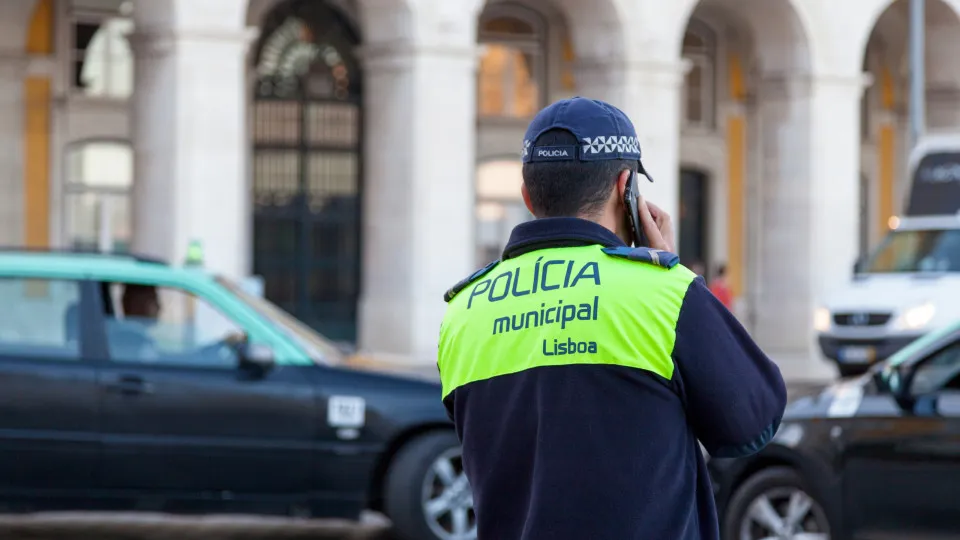
During their operation, they received encouragement from residents and drivers. However, Prates recounted at the municipal assembly that he now faces a fine, along with another 78-year-old volunteer, after being identified by the Municipal Police at the request of a resident, an employee of the council, for not having authorization for the action.
“I am here to ask if the city council could assist us since this lady, this employee, took an authoritarian stance and did not even try to understand what we were doing there,” said the activist, noting the attitude of the two Municipal Police officers who listened and stated that they had to enforce the law.
The resident mentioned that the employee “was a leader of a program called Renaturalize the City,” and her first action was to penalize them.
Another citizen lamented that the “city council often does not give due care to green spaces,” and despite complaints to both the parish council and the city council, there is no response, and “trees continue to be cut daily in the Encarnação area.”
“We aim to have a greener city and rely on citizen participation,” noted the volunteer, regretting the whistleblower’s attitude during the Av. dos EUA action and hoping “the situation will be adequately clarified at the council.”
For another volunteer, it is an “absurd situation; how can someone connected to the council’s Environment department be shocked to see volunteers doing work that supports” the municipality, “voluntarily.”
The resident emphasized that in some European cities, such citizen groups composed of technically knowledgeable volunteers have existed for some time and even receive official support.
The president of the municipal assembly, André Moz Caldas (PS), stated that the questions raised by the residents would be forwarded to the executive to receive a response.
In the note sent by the volunteers, the moral of the story is revealed in the understanding that what they do “is illegal, should be stopped, and penalized” by those in power. Thus, they concluded: “We are criminals. We plant and care for green spaces.”