
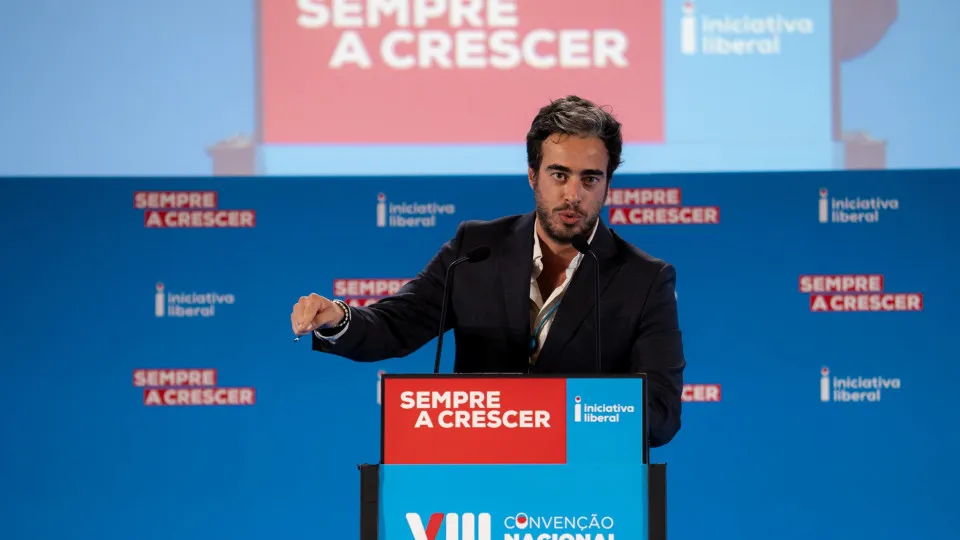

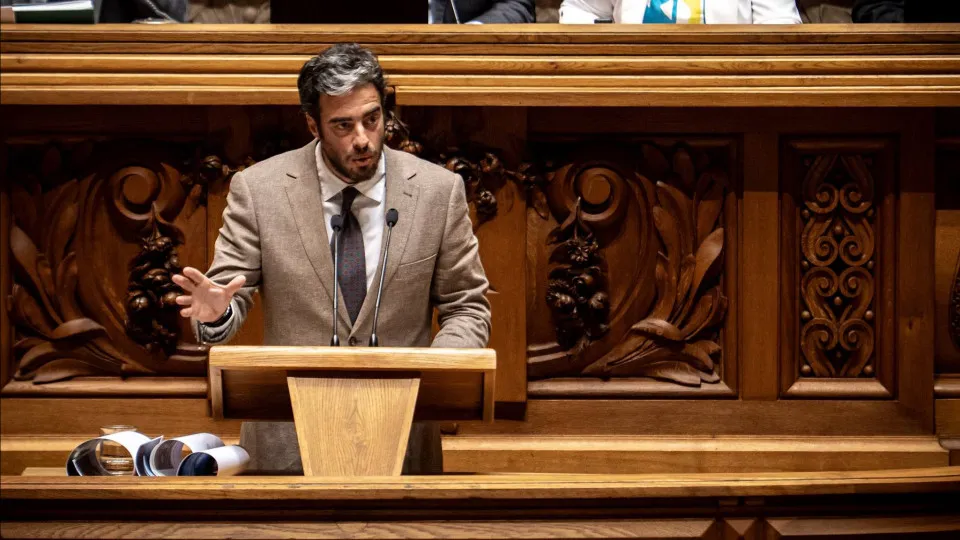
Mário Amorim Lopes, a member of the Liberal Initiative Party, expressed concern over judicial delays and questioned the integrity of the system that monitors mundane conversations between government officials in a political address on the state of justice.
“They are our political opponents, yes. Yet, a fundamental principle of a democratic state is that the ends do not justify the means, even when dealing with adversaries,” he stated while holding a copy of a Sábado magazine, which revealed recorded conversations between Prime Minister António Costa and his government members as part of Operation Influencer.
The deputy argued for a more efficient judicial system, advocating for faster court processes, equality for citizens regardless of their financial status, and simpler, more easily interpretable laws. He criticized the ineffectiveness of bipartisan agreements between the Socialist Party (PS) and the Social Democratic Party (PSD) that have not led to real changes.
Mário Amorim Lopes declared that too much time has been spent waiting for consensus between socialists and social democrats and that it is time to implement a comprehensive legislative package aimed at establishing a more effective, modern, and accountable justice system.
The Liberal Initiative Party proposes eliminating complex procedures that undermine trust in the judicial system, enhancing the role of judicial officers, introducing plea bargaining, and reformulating preliminary hearings to address delays and prevent procedural exploitation as a stalling tactic.
To modernize justice, the party suggests developing Citius 2.0, an AI-driven system with human oversight, for process distribution and detecting baseless appeals, and appointing professional managers in each district to free judges for trials.
To ensure accountability, the party recommends scaling back automatic reimbursement of 100% of court fees when the state misses deadlines and resorting to arbitration if administrative and fiscal courts cannot respond promptly, which could otherwise deter businesses and foreign investors.
During follow-up queries, PSD’s Paulo Marcelo concurred with some of the Liberal Initiative’s observations and expressed discomfort over how recorded conversations of former prime ministers become public, which undermines trust in the rule of law.
“As lawmakers, we must act to prevent this in the future,” he added, showing optimism towards the upcoming legislative package by the Liberal Initiative while highlighting government proposals like increased funding for Justice in the state budget.
André Rijo of the Socialist Party assured a “responsible stance” from the socialists on these issues but argued that improving alternative dispute resolution mechanisms should not weaken the judicial system.
Chega’s Vanessa Barata criticized the Liberal Initiative for missing parliamentary hearings on lobbying regulations, to which Mário Amorim Lopes explained that the responsible deputy was abroad for political work.
From Livre, Paulo Muacho pointed out an inconsistency in the liberals’ stance, suggesting that while they claim there are too many public servants, they criticize judicial delays resulting from a lack of personnel. Paula Santos from the Communist Party criticized the Liberal Initiative for not supporting communist proposals for increased human resources in courts during budget discussions.