


The operational reorganization of the National Institute of Medical Emergency (INEM) is grounded in a recent assessment conducted by an Independent Technical Commission appointed by the government. This commission was tasked with studying and proposing measures for the institute’s restructuring, complemented by findings from the audits of the Health Activities General Inspectorate (IGAS) and the General Finance Inspectorate, as stated by the institute’s president in a statement.
The report from the Independent Technical Commission is described as another piece of the puzzle regarding the operational changes to be implemented, which have been presented to the workers’ committee and INEM leaders to gather feedback in the coming days, emphasized Luís Mendes Cabral.
The restructuring, as announced by the government, involves a change in the structure and organization of INEM, a task for the Ministry of Health, with plans to enact the new regulations by the end of January 2026.
According to Luís Mendes Cabral, the operational changes aim to refocus INEM on its primary mission, considering that the public evaluates emergency services by the institute’s ability to handle calls and dispatch ambulances within set timeframes.
On Friday, the INEM president advocated for a swift restructuring of the institute, which ensures pre-hospital medical emergencies, warning that those resisting change will not be part of this process.
“I intend to include everyone willing to be part of the new INEM. However, I am also obliged to ensure a quick restructuring process, so those who remain stagnant or resist change without justification will remain in the old INEM,” stated Luís Mendes Cabral in a message to employees.
The Independent Technical Commission report, already in the hands of the Ministry of Health, highlights command, control, and audit deficiencies in the pre-hospital emergency service.
“There persists an attitude of non-recognition of the governance and strategic management model’s failure, with successive changes in goals and objectives, lacking preparation, prior planning, or impact assessment,” the document concluded.
The commission also noted a “progressive deterioration in performance indicators,” including call handling times and the number of missed calls, along with a “significant asymmetry” in response times and resource deployment in coastal and inland regions.
In response to this diagnosis, the Independent Technical Commission proposed that diverse resources from the medical emergency helicopter service, emergency medical vehicles (VMER), and immediate life support (SIV) units “should be allocated to local health units,” suggesting this would represent a “sharing of resources and career advantages.”
“Basic life support means [ambulances] should be outsourced to external public, private, social, or other entities,” the report advises, arguing that, in the field of health and pre-hospital emergency, “there should be a single point of contact, with centralized medical coordination, combining resources from the current CODU and the SNS 24 Line.”
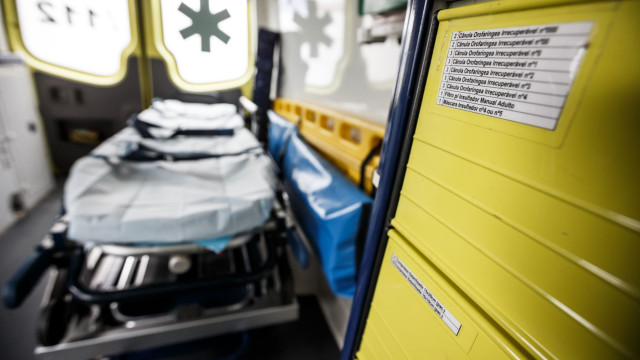
The restructuring plan of the National Institute of Medical Emergency will ‘hand over’ ambulances to firefighters and private companies, who will be responsible for pre-hospital care.
Notícias ao Minuto | 09:15 – 10/12/2025