


The retired professor from the Institute of Hygiene and Tropical Medicine (IHMT) at the Nova University of Lisbon stated that “Portugal is not in the risk line” due to a combination of geographical, social, and structural factors.
While the disease is endemic in the Democratic Republic of the Congo (DRC), “the area with the most cases, particularly of the clade Ib variant, is far from the regions that border Angola,” he noted.
However, even with thousands of Portuguese living and working in Africa, the researcher believes the risk of the disease being imported is low.
“It’s a matter of probabilities. So far, we’ve been lucky,” he admitted, also highlighting the existence of a functional Portuguese healthcare system, with the capacity for rapid and efficient laboratory response.
Portugal recorded cases of clade II, the West African variant – from Nigeria to Senegal – starting in 2022 due to transmission through social contact. However, as most cases in Portugal, and in European countries, were confined to homosexual men, it was possible “to contain the spread to the general population,” explained Nina.
The researcher emphasized the need for global investment and a worldwide homogeneous action to combat viral diseases.
“These diseases are either eradicated worldwide or not at all,” he stressed.
In his opinion, the solution would be a massive vaccination program in Africa, supported by developed countries.
“They should vaccinate the entire population from Sub-Saharan Africa downwards. This way, they would ensure no mpox is leaving Africa—with protection for themselves as well,” he reiterated.
According to the World Health Organization (WHO), the disease was first identified as “monkeypox” because, in 1958, it was detected in several laboratory monkeys in Denmark and resembled smallpox, which was officially declared eradicated in 1980.
However, viral isolation proved it to be a “cousin” of smallpox, originating from animal reservoirs, especially African rodents, in forested zones, the professor emphasized.
Jaime Nina also clarified that the name “Monkeypox” is a misnomer: “It’s neither smallpox nor related to monkeys,” he lamented.
The first human case was reported in 1970 in the DRC, according to the WHO.
The professor explained that this virus circulates between animals and humans (it is a zoonosis) and, unlike smallpox—which only had humans as a reservoir—it cannot be eradicated by simply cutting human transmission. For the researcher, this situation could worsen if humans in other parts of the globe begin to transmit the disease to other animals.
The professor also highlighted that there are two major clades (genetic groups) of the virus: clade I, from Central Africa (more lethal), and clade II, from West Africa.
The African Union’s health agency declared mpox a public health emergency of continental security on August 13, 2024, and the following day, the WHO announced an international health alert for the disease, a measure they have decided to prolong.
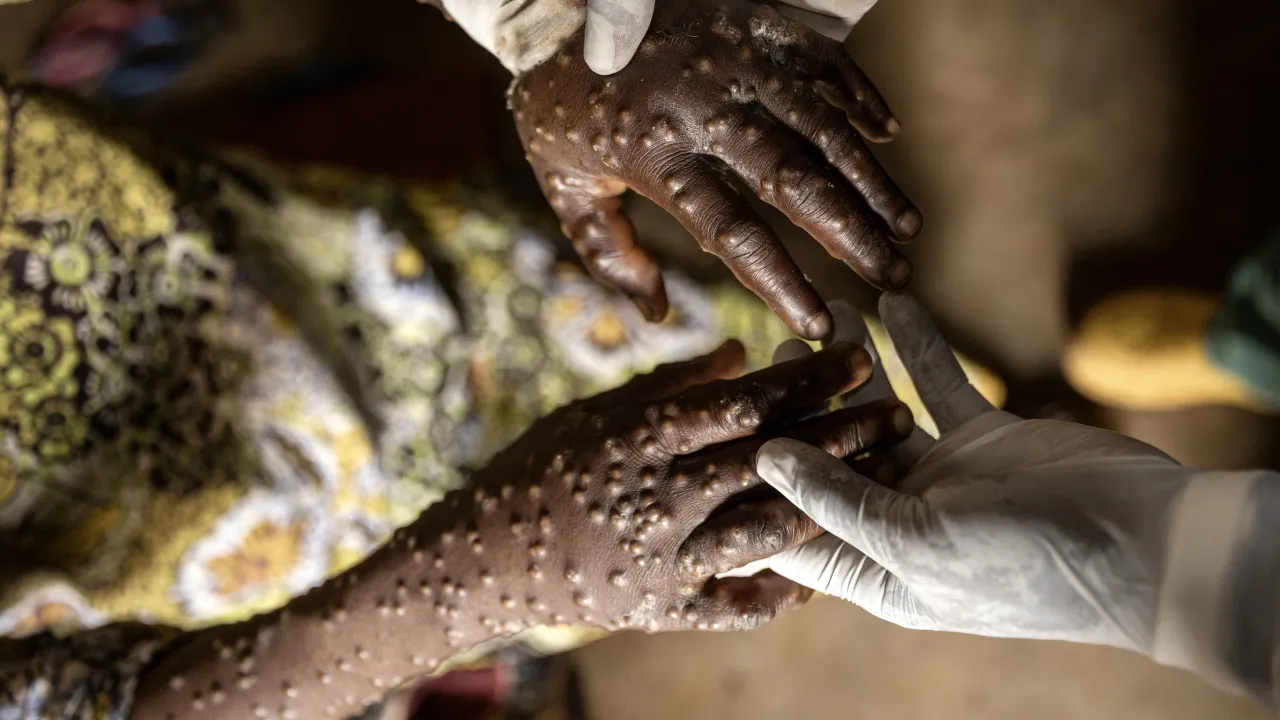
Mpox is an infectious disease that can cause painful skin rashes, lymph node swelling, fever, headaches, muscle pain, back pain, and lack of energy.