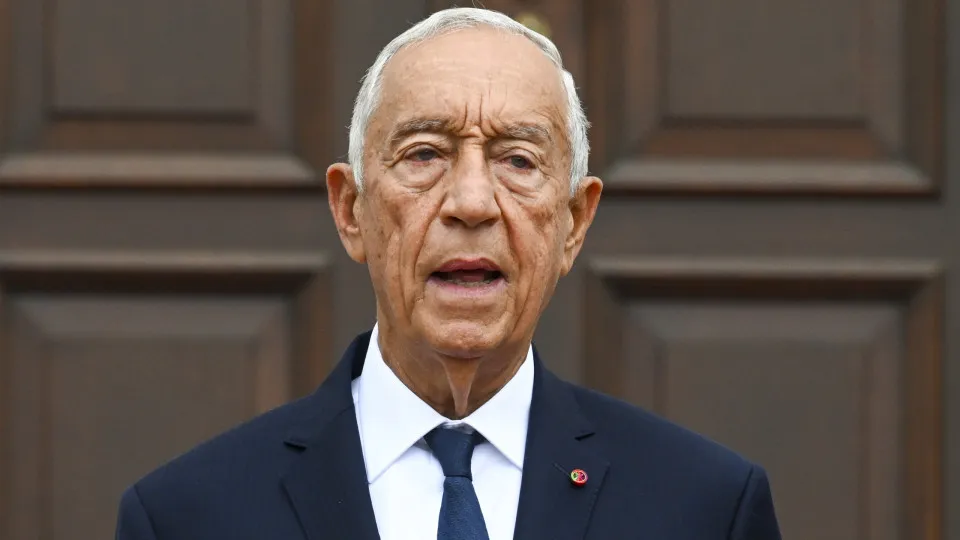

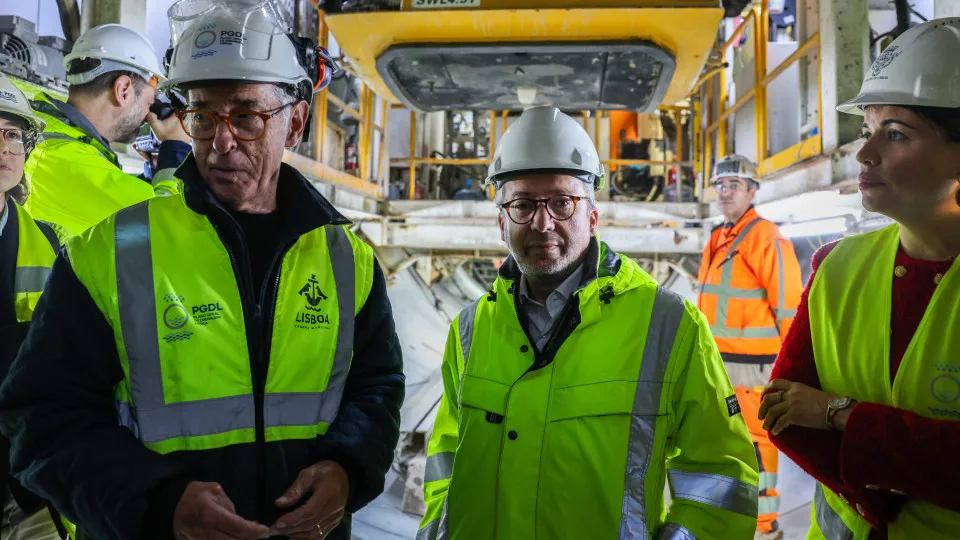
Since taking office in January, U.S. President Donald Trump has expressed interest in annexing Greenland to U.S. territory and increasing control over the Panama Canal. Denmark, however, has shown no interest in ceding this autonomous region, yet the head of state continues his push.
In Portugal, the U.S. holds some influence in the Azores, where they have a military base on Terceira Island. Is there a danger of Trump wanting to annex this Portuguese territory as well? For now, national experts consider there is “no danger” and it’s merely a “theoretical possibility.”
Adérito Vicente, an assistant professor of International Relations at the Faculty of Law, Lusíada University of Porto, and a researcher at the Nova University of Lisbon, cites three reasons to justify the response: the “historical relationship” between Portugal and the United States, the “absence of barriers to strategic trade routes”, and the Chinese threat, which, although “growing,” still “does not justify extreme measures.”
“The alliance between the United States and Portugal in the Azores is historical and predates the founding of NATO in 1949. It is one of the oldest relationships in foreign policy. Portugal was the first neutral nation in 1791 while maintaining an alliance with the United Kingdom. The U.S. consulate in Ponta Delgada, for example, holds symbolic value as the oldest continuously operating one in the world,” explains Adérito Vicente to Notícias ao Minuto.
Unlike Greenland and the Panama Canal, the Azores do not interfere with trade routes strategic to the United States.
“The Azores pose no specific trade restrictions on American ships, as confirmed by the historical bilateral agreements such as the Technical and Labor Agreement of the Lajes and the 1951 military agreement. Their geostrategic importance lies mainly in military logistics, including support for naval and air operations, rather than control over free transatlantic trade routes,” the International Relations professor justifies.
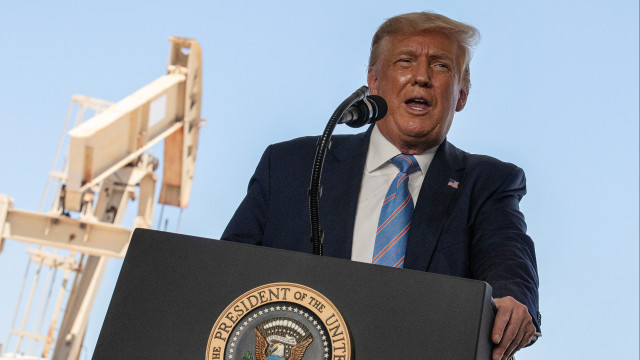
Formerly addressing the difference in situations between Greenland and the Azores, Vítor Gabriel Oliveira, Secretary-General of SEDES Europe, notes that the annexation of the Portuguese archipelago by the United States “remains a theoretical possibility,” as previously discussed publicly.
“The U.S. has about 750 military bases outside the American continent. They need allies and support outside the country to maintain their status as a global power. Beyond weapons, they require strategic locations to position these weapons. If they decided to reclaim these 750 foreign bases, the world would be very different from what we know today,” Vítor Gabriel Oliveira argues.
He cites India and Madagascar as examples, where the United States has also established military bases and moved bombers in anticipation of a potential conflict with Iran.
“Their global projection is only possible because they have local bases and local partners there. In the Azores, it’s crucial to have high-level coordination with Portuguese authorities, such as the Navy, which ensures the U.S. greater operational capacity. It’s not just about having a base to land aircraft and station military material; they need allies to project their power,” emphasizes the Secretary-General of SEDES Europe.
The expert believes that while Portugal “is small in territorial terms,” it has the advantage of possessing “a wide breadth of relationships” with different countries.
“We can connect from China to the United States, from the Middle East to Africa or Latin America. Portugal should maintain and reinforce this role within the CPLP and enhance its operability towards an Atlantic vision. For over 20 years, a Portuguese government leader, a prime minister, has not officially visited the American presidency. We had a President visit, but not a prime minister. It is essential to signal that the United States remains our key partner and to keep this role active and our channel open, even if maintaining dialogue with Donald Trump is challenging,” he advises.
China’s Investment Increase in the Azores: “Potential Military Interests”
The reduction of the U.S. presence at the Lajes Base in the Azores has allowed China’s influence in the region to grow through investments in logistics centers, research, and agriculture.
“One illustrative case is the project for the port of Praia da Vitória on Terceira Island, where local interest sought to accept Chinese investment. However, due to American influence, the project stalled. Washington is concerned with the strategic implications of Chinese investments in Azorean infrastructure. There’s fear that these investments, though presented as commercial, could have military potential, similar to Chinese activities in Gwadar, Pakistan,” shares the researcher from Nova University of Lisbon.
The island of Santa Maria, aspiring to become a hub for launching rockets and satellites into space, already received Chinese investment of “50 million euros” for constructing a “microsatellite launch platform.”
“The project represents significant scientific and technological collaboration between China and Portugal in the space sector, leveraging the Azores’ geostrategic location,” reveals Adérito Vicente.
There’s also interest in the agricultural sector, with the purchase of land and investment in beef production by Chinese parties.
“Even if this initiative alone doesn’t satisfy the global market needs of China,” he concludes.
Greenland’s Future Divides Experts
The International Relations professor outlines two plans the United States could adopt to annex Greenland. The Plan A involves persuading Denmark to sell the territory.
“Something Greenland rejects. Legally, the U.N. Charter doesn’t prohibit the purchase of territories as long as it doesn’t violate sovereignty. However, abrupt processes could affect NATO cohesion, given Denmark’s membership in the alliance,” states Adérito Vicente.
A Plan B could focus on another strategy, as mentioned by the American newspaper The New York Times, emphasizing persuasion rather than the much-discussed invasion.
“Persuading Greenland to gradually detach from Denmark and starting future political negotiations with the U.S. should be phased, since even the most voted party in Greenland prefers broad autonomy without entirely breaking with Denmark,” stresses the researcher.
Vítor Gabriel Oliveira holds a different opinion, believing that “Greenland will not be taken by the United States.”
“I believe the U.S. could have a much larger military presence than currently, as Denmark has already shown openness to this,” Vítor Gabriel Oliveira admits.
Nevertheless, he considers Trump’s ambitions for the Panama Canal “more sensitive” due to its direct link to U.S. commerce.
“Donald Trump wants much more control. We know that investment banks are negotiating the purchase by the United States of the company managing the Panama Canal. China has expressed discomfort with this pressure, having become a player growing in influence over the last two decades, getting close to the global top,” adds the Secretary-General of SEDES Europe.