
“We wanted to show the relationship with the ocean in Portugal,” states Kengo Kuma, when asked about the inspiration for his project.
Portugal participates in Expo Osaka under the theme “Ocean, Blue Dialogue.” It is located in the “Empowering Lives” zone, occupying a plot of 1,836.75 square meters near the Japan Pavilion.
Kengo Kuma’s project captures the dynamism of oceanic moments using 9,972 suspended cables weighing over 60 tons and recycled nets to create a perennial effect exposed to natural elements like the sun and wind, as explained by the organization.
The lives of Portugal and Japan are “closely connected with the ocean,” in the sense that “we eat fish, travel a lot by the oceans, and history and life are intimately connected to the ocean,” the architect adds.
There is this “singularity of Portugal and Japan and we want to show” this similarity between the two countries.
The volume of the Portugal Pavilion is characterized by a scenic installation symbolizing the suspended upper square like a wave.
“This design is very, very new in the history of art. For a long time, we have tried to use lines as a resource for navigation. With these lines, we aim to show the beauty of natural phenomena,” in the sea “we see the natural light and the breeze,” he explains.
“We tried to bring that kind of natural phenomenon to the Expo, maybe it is the first attempt in the history of Expos to bring nature itself into the pavilion,” emphasizes the architect.
When questioned whether artificial intelligence (AI) is a friend or foe of architecture, Kengo Kuma chooses the former.
“Yes, it is a friend,” and in fact, in the design process, “we are working with AI.”
Artificial intelligence “is a very strong team among us” and “we like working” with this technology, he notes.
Regarding what will happen to the pavilion after the Expo ends, the architect expresses a desire to take the project’s diversity (including cables of various diameters and lengths) to different places.
“I want to take this diversity to different places” and “now we are planning to work with some artists” on this endeavor.
Kengo Kuma adds that the Matadouro project in Porto is nearing completion and he has two more projects in Portugal.
The architect expresses a love for the big cities in Portugal, as well as the country’s mountainous areas and ocean.
“We want to enjoy the diversity of Portugal,” he highlights.
Asked how architecture can be more sustainable today, Kengo Kuma considers that “the most important thing for sustainability is to leave the memory of architecture forever.”
That is, “architecture, life, basically, are not so permanent.”
However, “we can leave the memory of architecture forever, which is the connection between architecture and humanity,” and this “is the most important thing for sustainability,” he concludes.
Commenting on the controversy surrounding his choice to design the Portuguese Pavilion, the architect points out that he has an international office working in Portugal.
“Perhaps that’s why we were invited,” he concludes.
Regarding the challenges architecture currently faces, Kengo Kuma notes that its cost is rising “drastically” and everyone wants to reduce it.
“But at the same time, people want to create a new monument” for this pillar.
“And the cost and monumentality should go together” nowadays.
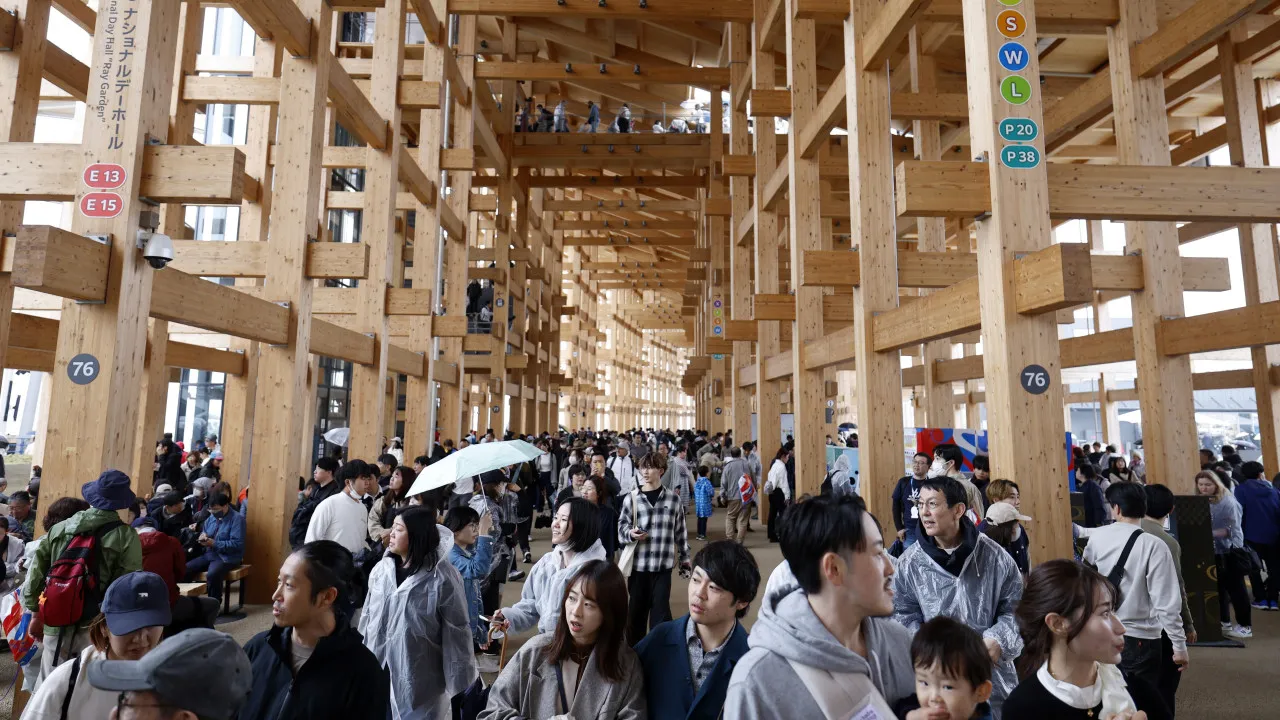
The Expo 2025 takes place from April 13 to October 13 on the artificial island of Yumeshima, located on the outskirts of Osaka, Kansai, Japan.