

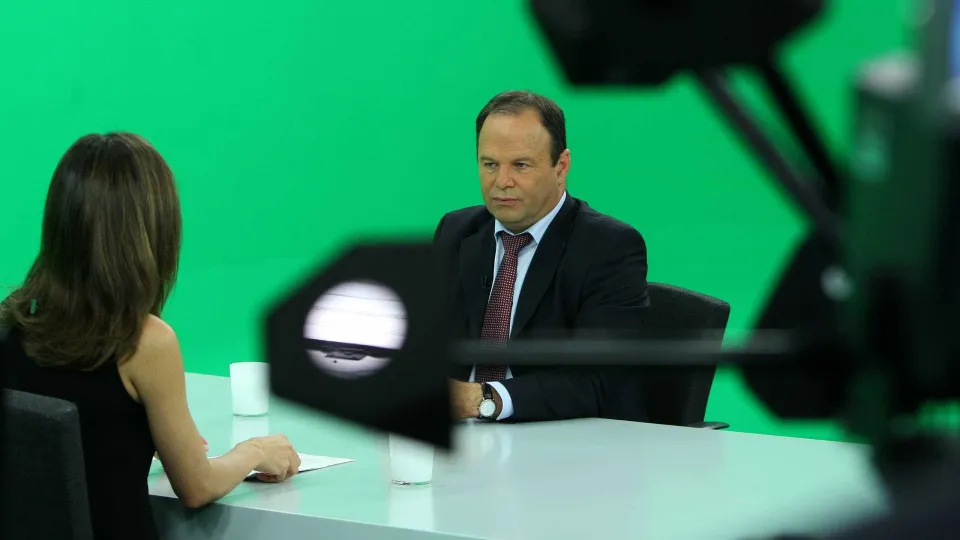
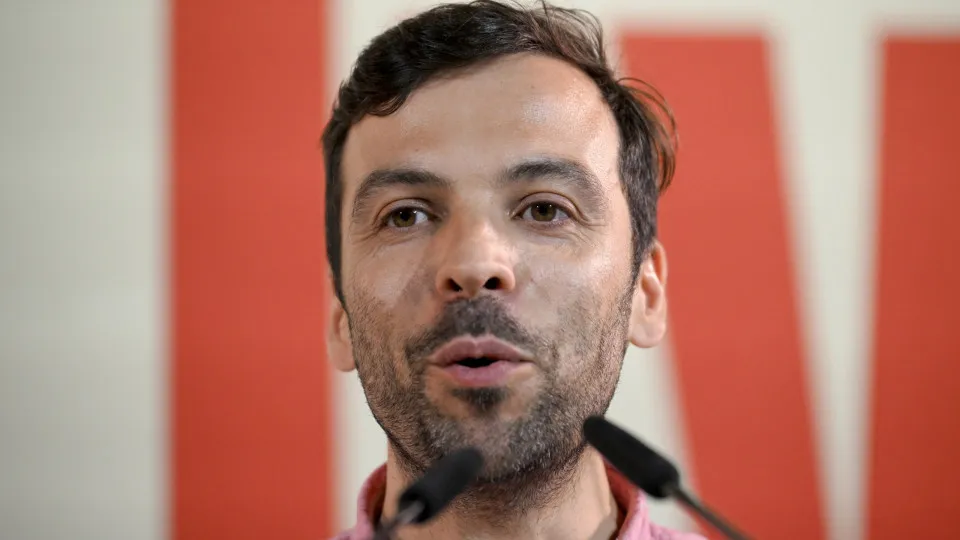
“I am very favorable to this. I am well aware of the challenges, particularly at the national level, with respect to, for example, Belgium, which is perhaps the main obstacle to the use of these sovereign assets, but from my perspective, I think it would be a good signal that we would give, not only in the present but also for the future, if the use of these sovereign funds was directed towards the recovery and reconstruction of Ukraine,” stated Jorge Pinto, speaking to Portuguese journalists in Brussels.
On the day he is in the Belgian capital to meet with the Portuguese community, a city where he lived and worked as a European Commission official, the candidate pointed out that, “in the face of a new world” given the Russian invasion of Ukraine in February 2022, “the European Union must be able to define new policies for this new world.”
“That is precisely why this week is so important, and I fear that there are still European leaders who are not aware of the enormous challenge we face in the coming years, which will indeed mark the coming years but will especially define what the coming decades will be like for us in Portugal,” he noted.
Emphasizing that the “defense of Portugal is being played out in Kyiv,” the presidential candidate expressed his desire for “the coming decades to be of peace, dignity, human rights, and ecological transition.”
“For this, the European Commission, the European countries, will have to be much braver than they have been,” he concluded.
The topic will be discussed by EU leaders at the summit taking place next week, in a high-level meeting considered decisive, as Ukraine will run out of available funding next spring.
On Friday, the EU member states’ ambassadors overwhelmingly approved, with votes against from Hungary and Slovakia, a decision to keep Russian assets indefinitely immobilized in the community space, serving as a basis for a reparations loan to Ukraine.
This was a preliminary step towards a possible approval at next week’s summit for a reparations loan to Ukraine based on immobilized Russian assets in the EU.
Currently, diplomatic efforts persist to achieve a just and lasting peace in Ukraine, with the EU wanting to strengthen Kyiv’s negotiating position by increasing pressure on Moscow.
Discussions are also underway in the EU to unlock European funding options for the country invaded by Russia.
The measure that gathers more support concerns a reparations loan to Ukraine, but faces opposition from Belgium, the country hosting most of the frozen Russian assets (through Euroclear), which demands clear guarantees and commitments from other member states to protect itself legally, as it does not want to risk being deprived of funds if Russia does not pay reparations.
The reparations loan would entail the community executive borrowing from EU financial institutions holding immobilized balances of the Russian Central Bank’s assets, thus being a credit based on the immobilized Russian assets in the EU due to European sanctions applied to Moscow for the invasion of Ukraine, which amount to 210 billion euros.
Portugal would be responsible for budget guarantees of about three billion euros.