
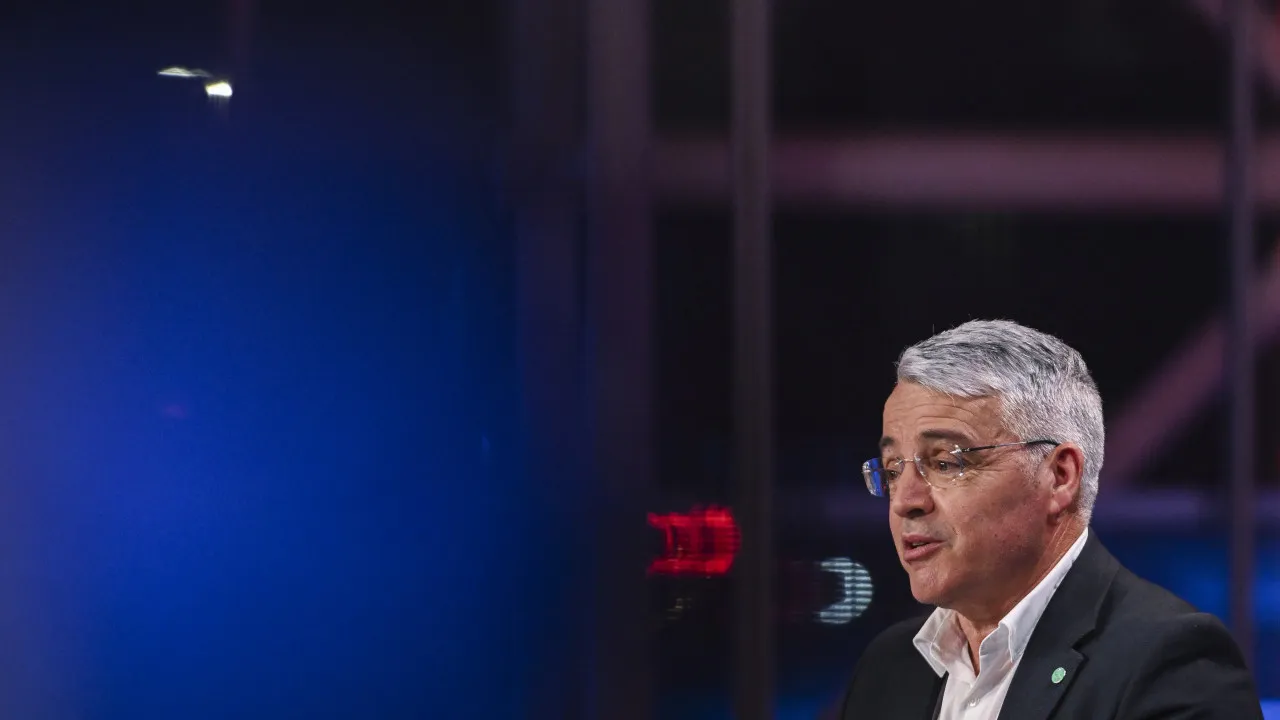
“The program of the Republic government of the PSD/CDS alliance presents a generic and unfocused approach concerning the Autonomous Region of Madeira. Despite some mentions of insularity and autonomous regions, there is no clear, scheduled, or financially supported strategy for Madeira,” stated the deputy in a communiqué.
Filipe Sousa, elected from the Madeira constituency where Juntos Pelo Povo (JPP) was founded and is based, argued it is necessary to dismantle the notion that governments of the same political color on the mainland and in Madeira, as is currently the case, benefit the region.
“The reality, documented and verified, says precisely the opposite,” he asserts, emphasizing his increasing awareness that “PSD and PS have been using this argument merely to hunt for votes over the years.”
The JPP deputy lists several “weak points” in the Government Program concerning the autonomous regions, notably the “lack of budgetary commitment” and the absence of specific measures for Madeira, as the region “is treated in a bloc with the Azores, without distinction of context.”
The absence of references to upholding the principle of territorial continuity is another flaw highlighted by Filipe Sousa, as well as the “centralist approach without guarantees of greater administrative decentralization and strengthening the power of regional autonomies.”
“The Central Government, in its discourse, recognizes the importance of territorial cohesion but fails to translate those words into specific actions and public policies for Madeira,” he argues, adding that the Government Program “fails in its mission to respond to the challenges of insularity and to promote true national cohesion.”
The Program of the XXV Constitutional Government, emerging from the May 18 legislative elections, was submitted to the Assembly of the Republic on Saturday by the Minister of Parliamentary Affairs, Carlos Abreu Amorim, and will be discussed in the Assembly on Tuesday and Wednesday.
The PCP has already announced it will present a motion of rejection, but the communists’ initiative is destined to fail, as besides PSD and CDS, it will also lack support from Chega and PS.
The second PSD/CDS-PP government led by Luís Montenegro took office at the end of last week and comprises 60 members (in addition to the Prime Minister, 16 ministers, and 43 secretaries of state), one-third of whom are women.
The AD coalition (PSD/CDS-PP) won the legislative elections without an absolute majority, electing 91 deputies out of 230, of which 89 belong to PSD and two to CDS-PP.
Chega became the second-largest parliamentary force with 60 deputies, followed by PS with 58, IL with nine, Livre with six, PCP with three, and BE, PAN, and JPP with one each.
Luís Montenegro has been the Prime Minister since April 2 of last year, following an eight-year governance cycle of the PS.