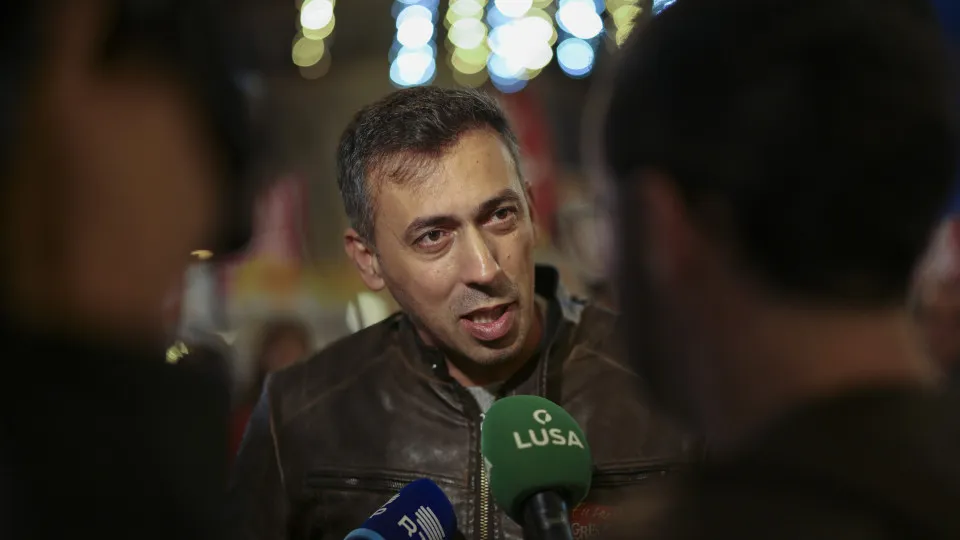



“That is the great challenge facing Portugal: having the capability for temporary accommodation,” in order to “meet its obligations under the European Pact on Migration and Asylum” and to build “the foundation of all return policy, all migration policy” in Portugal, stated João Ribeiro to reporters, on the sidelines of a meeting organized by the General Inspection of Internal Administration on “Forced Returns and Monitoring”.
The aim is “to have the capability for humane accommodation,” with resources for gender differentiation, legal and medical assistance, but currently, “we have limited capacity and are seeking solutions to quickly achieve the desired capacity by the end of 2026, 2027.”
Currently, the Temporary Installation Centers (CIT) have a capacity for 80 people, and two new projects have been announced that will increase this capacity to 300 beds.
The new legislation extends from 60 days to a maximum of one and a half years the detention period for foreigners subject to expulsion processes, but new measures are planned, such as open detention regimes, the delivery of travel documents, or the payment of bail.
The goal is “to provide differentiated treatment for differing situations,” seeking to separate the “most vulnerable people,” such as children or “victims of human trafficking,” and to promote “partnerships with other civil society entities,” explained the deputy national director of PSP.
Currently, UNEF is using an application from AIMA [Agency for Integration, Migration, and Return], inherited from the former Immigration and Borders Service, with the objective of creating their own means.
“The development of an application for process management is planned for 2026, and we are making protocols with AIMA in terms of collaboration to deepen relations” between the two entities, he added.
João Ribeiro mentioned that the “law has several aspects” like “procedural simplification,” the end of initial voluntary departure notifications, “faster procedures,” and “greater involvement of judicial authorities in the process,” considering it would be “a significant step in implementing these measures.”
“A foreign citizen, even if in an irregular situation, is not a criminal, is not committing a crime,” said the UNEF head, emphasizing that the organization, created in August, is also strengthening itself by “focusing on recruitment,” which “does not only involve police” and includes “collaboration with civil society.”
At the meeting, Paulo Ornelas Flor, director of the UNEC’s Central Unit for Return and Readmission, highlighted that the process “complies with best practices” and has been implementing expulsion processes.
In total, since the SEF ended on October 29, 2023, the PSP has enforced 238 forced returns and 556 voluntary returns.
Today, the Government placed the changes to the diploma regulating the regime of illegal foreign returns under public consultation.