
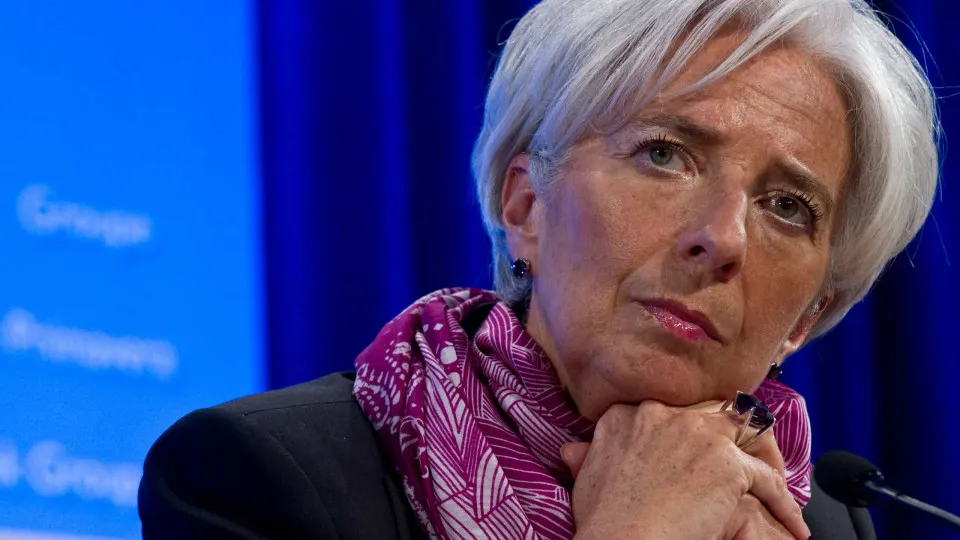
“We anticipate that inflation will remain close to our target of 2% in the coming months. The risks to the outlook remain two-sided, while uncertainty remains high due to volatile global trade policies,” stated Christine Lagarde during a hearing at the European Parliament’s Economic and Monetary Affairs Committee in Brussels.
This indicates that “inflation remains near the 2% target in the medium term” set by the ECB for price stability, she pointed out.
“The reduction in inflation towards our goal has been supported by a gradual moderation of wage growth,” with estimates forecasting “slower wage growth for the remainder of this year and the first half of 2026,” added Lagarde.
Nevertheless, she noted that “the outlook remains uncertain due to ongoing volatility in global trade, a potential deterioration of sentiment in financial markets, and geopolitical tensions.”
All this will be considered in the next ECB monetary policy meeting, where the course of action will be decided, after the central bank chose to keep the main interest rates unchanged during the October meeting.
In mid-November, the European Commission estimated that eurozone inflation would remain around 2%, the ECB’s target for price stability, until 2027, following record highs due to war and energy crises.
“Inflation in the euro area is expected to continue to decrease, reaching 2.1% by 2025 and stabilizing around 2% over the horizon. In the EU, inflation is expected to remain slightly higher, decreasing to 2.2% by 2027,” stated the EU executive in its autumn economic forecasts released three weeks ago.
Having faced a significant inflation surge mainly due to the abrupt increases in energy and food prices after the Ukraine war, the EU executive now predicts that inflation in the single currency area will ease from 2.4% in 2024 to 2.1% in 2025, and then remain largely stable at 1.9% in 2026 and 2.0% in 2027.
In the EU, inflation is projected to decrease from 2.6% in 2024 to 2.5% in 2025, before dropping to 2.1% in 2026 and reaching 2.2% in 2027.
Since the onset of the Ukraine war, triggered by Russia’s invasion in 2022, the eurozone faced a significant inflation escalation.
These external shocks pushed inflation far above the 2% target set by the ECB to ensure price stability, impacting household purchasing power and business costs.
Although inflation has started to slow with the normalization of energy markets and the execution of monetary policy, it remains above desirable levels, keeping price stability as a central challenge for the ECB.