
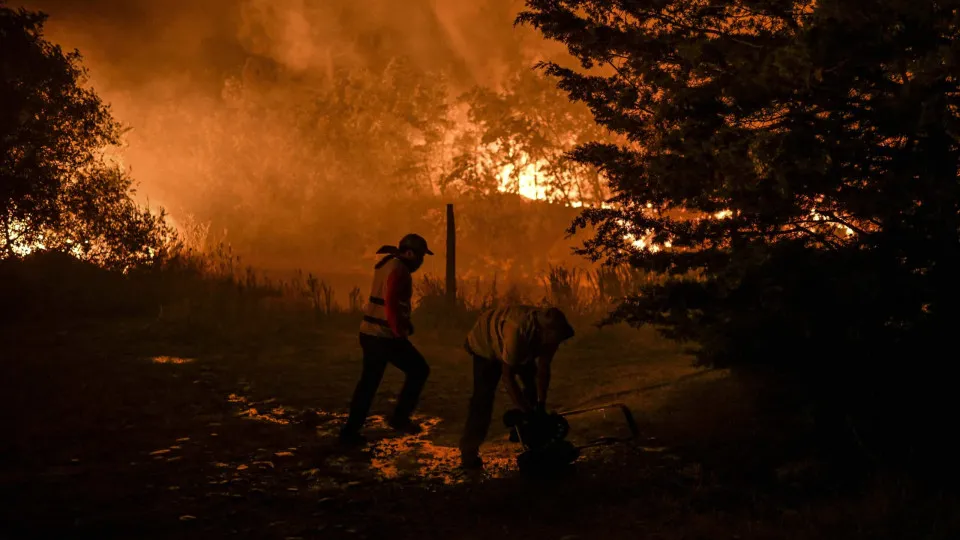
The Agência para a Gestão Integrada de Fogos Rurais (AGIF) has reported that 2025 ranks as the fourth worst year since 2001 in terms of burned area, with a total of 270,000 hectares affected. The northern and central regions of the country were the hardest hit.
The number of fires this year remains “significantly below” the historical average, with 8,284 incidents recorded, according to AGIF.
Preliminary data indicate that 44 fires exceeded 500 hectares during the past summer, including 21 in the North, 17 in the Center, five in Alentejo, and one in Algarve. These incidents represented only 0.5% of the total wildfires but accounted for 91% of the burned area.
AGIF highlighted a “significant reduction” in the number of fires between 2001-2017 and 2018-2024. However, a “notable increase” in large-scale fires was observed in 2025, with six fires exceeding 10,000 hectares, representing 59% of the total burned area this year.
Investigations suggest a “strong decrease in fire usage and arson since 2017,” although there was a 16% increase in deliberate arson in 2025 compared to 2024.
Among the fires investigated this year, 34% were attributed to arson, 11% had inconclusive investigations, 9% were due to controlled burns, 9% to agricultural machinery, and 5% to natural causes like lightning. The largest fire this year, sparked by lightning, lasted 12 days and began in Arganil on August 13.
Notably, accidental fires surged by 65% in 2025 compared to the previous year.
Most of the land affected by the fires consisted of scrubland, pastures, and sparse vegetation (52%), followed by forests (38%), and agricultural areas (10%).
The preliminary analysis reveals that 56% of the burned forest area comprised maritime pine and other conifers, 23% cork oak, holm oak, and other hardwoods, and 19% eucalyptus. A fifth of the burned area was within Forest Intervention Zones (ZIF), and 34,000 hectares of the National Network of Protected Areas (RNAP) were affected, representing 4% of its total area.
The report emphasizes that carbon emissions from the 2025 fires reached a substantial 3.6 million tons, doubling the historical average (2003-2024).
Provisional data also indicate that 2025 ranks as the fifth year with the highest meteorological severity, with August experiencing particularly severe conditions. This month recorded the longest consecutive stretch of days conducive to major fires since 2001, lasting 29 days from July 23 to August 20.
“On average, 68% of the annual burned area and 92% of mega fires, involving over 5,000 hectares, occur during critical days with high meteorological severity, underscoring the importance of preventive behavior during these times,” the analysis states, noting a “significant increase” in rekindled fires in 2024 and 2025.
Additionally, AGIF notes that the number of large fires and the extent of the burned areas in 2025 significantly exceeded targets set in the National Plan for Integrated Management of Rural Fires.
This year, the fires have resulted in six fatalities, including four firefighters and two civilians.